





 Finance
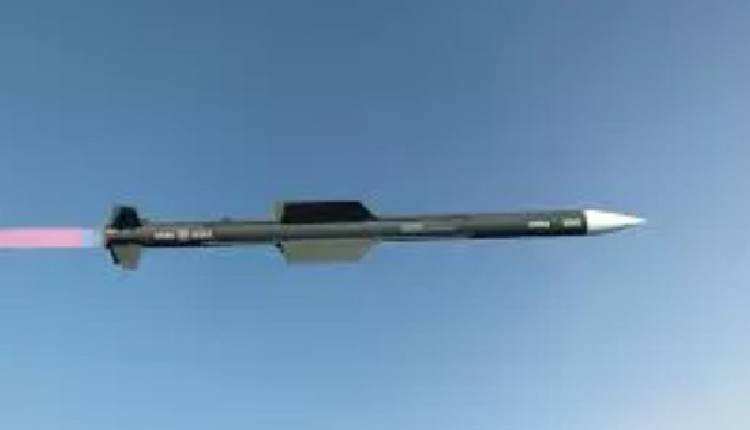
The Defence Research and Development Organisation (DRDO) and the Indian Air Force (IAF) successfully tested an ASTRA, Beyond Visual Range Air-to-Air Missile (BVRAAM) equipped with an indigenous radio frequency seeker, from a Sukhoi-30 Mk-I fighter aircraft off the coast of Odisha on Friday, according to Ministry of Defence officials.
During the mission, the Ministry of Defence reported that two missiles were launched against high-speed unmanned aerial targets at varied ranges, target aspects, and launch platform conditions.
In both cases, the Astra missiles intercepted and destroyed their targets with pinpoint accuracy, demonstrating the system’s effectiveness.
According to the Ministry of Defence, the indigenous radio frequency seeker, conceived and built by DRDO, performed exceptionally well, as did all other missile components.
The tests were extensively watched using flight data obtained by tracking sensors at the Integrated Test Range (ITR) in Chandipur, validating the missile’s reliability and accuracy.
The Astra missile, which has a range of over 100 kilometers, is outfitted with sophisticated guidance and navigational systems.
The missile was developed in collaboration with numerous DRDO laboratories and over 50 Indian enterprises, both governmental and commercial, including Hindustan Aeronautics Limited.
Defence Minister Rajnath Singh thanked the DRDO, IAF, and industrial partners on the successful creation and testing of an indigenous radio frequency seeker.
He hailed the achievement as a major milestone in critical defence technology, reinforcing the vision of Atmanirbhar Bharat.
Samir V. Kamat, Department of Defence Research and Development Secretary and DRDO Chairman, also extended his congratulations to all teams involved, commending their dedication and efforts in achieving this significant breakthrough in air-to-air missile capability.