




 Finance
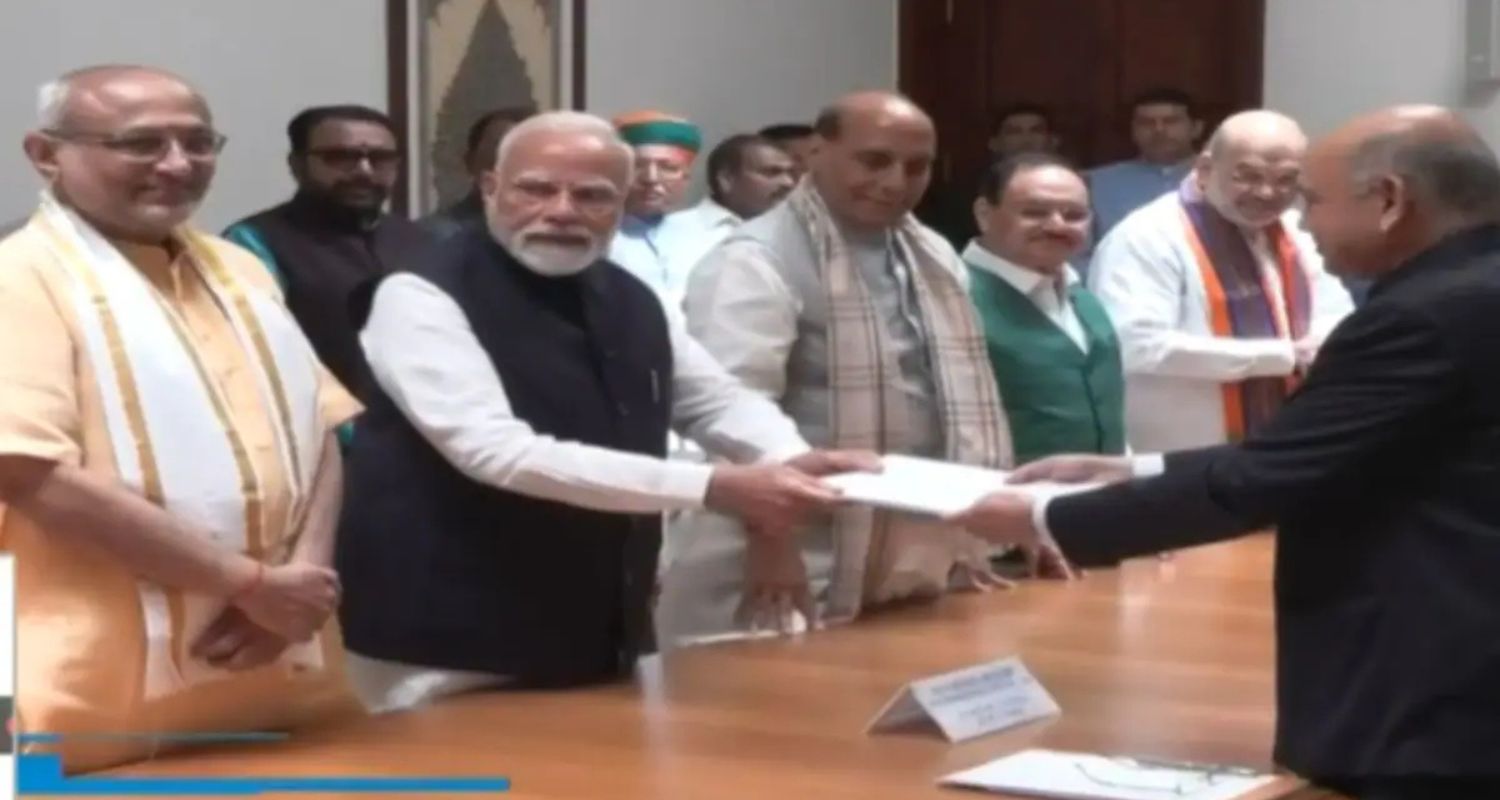
The high-stakes elections began on Wednesday when C.P. Radhakrishnan, the National Democratic Alliance’s (NDA) nominee for vice president, submitted his candidacy papers.
Alongside Radhakrishnan, Prime Minister Narendra Modi filed the nomination. Other prominent Union ministers, such as Home Minister Amit Shah and Defence Minister Rajnath Singh, as well as other NDA leaders, also participated.
Twenty proposers and twenty seconders signed each of the four sets of nominations that were filed. The first set of nomination papers was signed and submitted by PM Modi, who was the chief proposer. Other Union ministers and NDA leaders signed the other sets.
Many of the key ministers of the BJP-led NDA administration, including Anupriya Patel, Jitan Ram Manjhi, and Chirag Paswan, joined CP Radhakrishnan in filing nomination papers, marking a significant occasion for the BJP-led NDA and a sign of strength.
NDA’s Radhakrishnan has a significant advantage over INDIA bloc contender Sudarshan Reddy in the math and numbers game.
Out of a total of 245 MPs, the Lok Sabha currently has 543, while the Rajya Sabha has 233. With the help of the partners, the NDA’s overall strength rises to 421, 298, and 128 MPs in both Houses, with the BJP holding 240 MPs in the Lower House and 102 in the Upper House.
Conversely, the INDIA bloc parties hold 77 Rajya Sabha MPs and 235 Lok Sabha MPs. Their combined strength is 312. If the AAP adds 11 MPs to their backing, that number will rise to 325.
The YSRCP, one of the non-aligned parties, has declared that it will back the NDA candidate. With 11 MPs, the total number of people who support Radhakrishnan is 433; this gives him a clear and comfortable lead against the INDIA bloc nominee.
In the meantime, the BJP has urged the Tamil Nadu opposition parties to “correct their historic blunder” and support Radhakrishnan, in contrast to when they opposed him for a second term as president under APJ Abdul Kalam.