


 Finance
On Saturday, Prime Minister Narendra Modi congratulated Sushila Karki on her appointment as the interim Prime Minister of Nepal, emphasizing that India is committed to the Himalayan nation’s stability and prosperity.
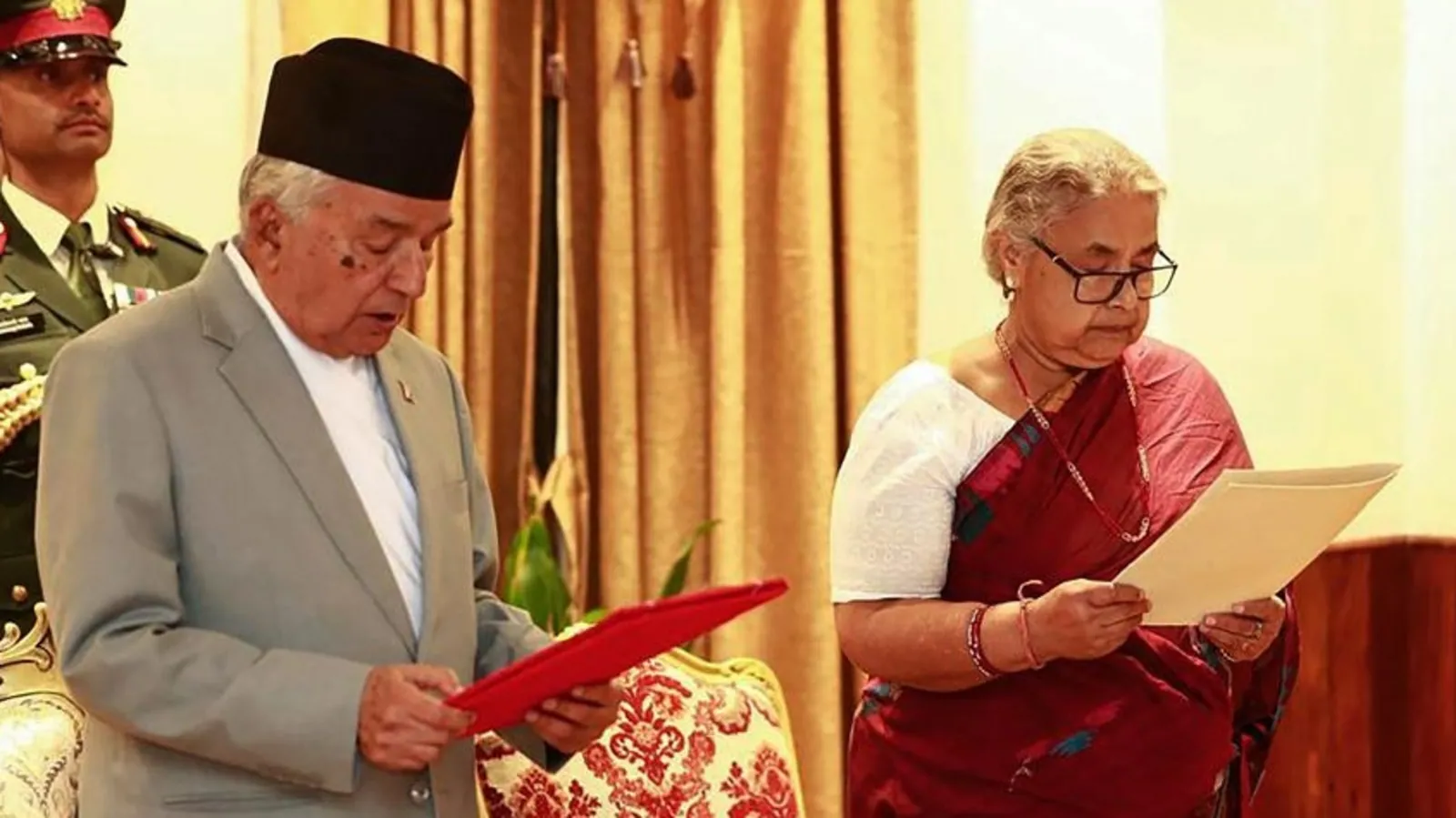
Sushila Karki, 73, was sworn in as Nepal’s interim Prime Minister late Friday evening, becoming the Himalayan nation’s first female prime minister.
Karki, Nepal’s first woman head Justice, took the oath of office from President Ram Chandra Poudel, who spent the day consulting with Gen-Z protest leaders, constitutional experts, and the Army head.
In a post on X, PM Modi said, “I extend my best wishes to Right Hon. Mrs. Sushila Karki on assuming office as the Prime Minister of the Interim Government of Nepal. India remains firmly committed to the peace, progress and prosperity of the people of Nepal.”
Earlier in the day, India welcomed the formation of a new interim government in Nepal under the leadership of former Chief Justice Sushila Karki, expressing hope that the political transition would contribute to peace and stability.
In a statement released by the Ministry of External Affairs (MEA), it reiterated its commitment to strengthening ties with Kathmandu during this period of change.
“We welcome the formation of a new Interim Government in Nepal, led by Right Honourable Mrs Sushila Karki. We are hopeful that this would help in fostering peace and stability,” the MEA said.
The ministry added, “As a close neighbour, a fellow democracy and a long-term development partner, India will continue to work closely with Nepal for the well-being and prosperity of our two peoples and countries.”
Following the fall of the K.P. Sharma Oli-led government during the violent Gen-Z protests on Monday, Karki was the pick of activists who have taken to the streets, protesting against Oli’s rule.
Discussions with Gen-Z protestors and other stakeholders dragged on over whether the House of Representatives, the lower house, should be dissolved before or after the new Prime Minister is sworn in.
Despite other non-political candidates being proposed as alternatives, Gen-Z demonstrators agreed on Karki’s name, paving the door for her appointment as Prime Minister.
There is no constitutional provision that allows someone who is not a member of the House of Representatives to hold the position. Karki was appointed based on the “principle of necessity”.
According to Article 76 of Nepal’s Constitution, only a member of the House of Representatives can be Prime Minister.
This criterion disqualifies Karki because even members of the National Assembly, the upper house of Parliament, are forbidden from holding the position.
Similarly, Article 132 (2) of the Constitution prohibits her from becoming Prime Minister. It stipulates that no person who has previously held the position of Chief Justice or Judge of the Supreme Court is eligible for nomination to any government post, unless otherwise allowed by the Constitution.
Source: IANS