


 Finance
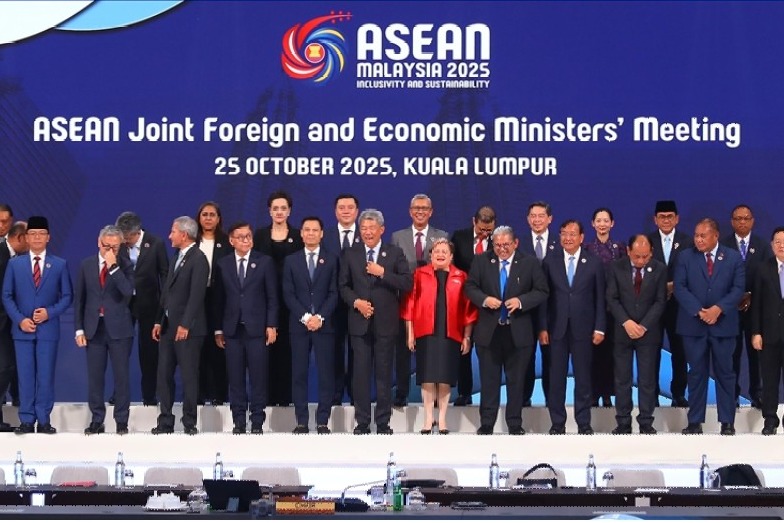
The 47th ASEAN Summit and related meetings began on Sunday in Kuala Lumpur, Malaysia, with the theme “Inclusivity and Sustainability.”
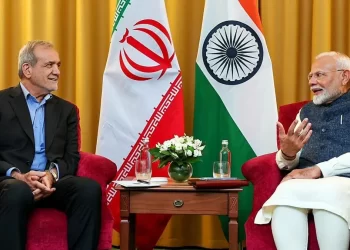
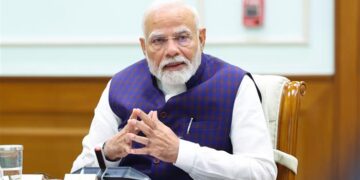
Prime Minister Narendra Modi will not fly to Malaysia, instead attending the ASEAN summit virtually on Sunday.
In a social media post on Thursday, PM Modi said he spoke with his Malaysian counterpart, Anwar Ibrahim, and congratulated him on Malaysia’s assumption of the ASEAN Chairmanship.
The Prime Minister also expressed his hopes for the success of the future Summits and reaffirmed his commitment to strengthening the ASEAN-India Comprehensive Strategic Partnership.
Malaysian Prime Minister Anwar Ibrahim will host leaders from ASEAN member states, along with top officials from the US, China, Japan, South Korea, and other key partners, for the three-day summit held from October 26-28.
More than 30 heads of state and government from the 10 member states of the association, commonly referred to as ASEAN, are invited.
Among the invitees from outside the bloc is US President Donald Trump.
More than 10,000 police officers have been deployed to the Malaysian capital to secure the meetings, which begin on Sunday and run through Tuesday.
Trump will attend a dinner with ASEAN leaders and is anticipated to witness the signing of a peace treaty between Cambodia and Thailand, following deadly border fighting in July that ended after Anwar brokered a ceasefire.
Among those in attendance are South African President Cyril Ramaphosa, Brazilian President Luiz Inacio Lula da Silva, South Korean President Lee Jae Myung, Chinese Premier Li Qiang, and Japan’s first female Prime Minister Sanae Takaichi.
Australian Prime Minister Anthony Albanese, Canadian Prime Minister Mark Carney, and New Zealand Prime Minister Christopher Luxon are also participating.
From ASEAN, Brunei’s Sultan Hassanal Bolkiah, Indonesian President Prabowo Subianto, Singaporean Prime Minister Lawrence Wong, Cambodian Prime Minister Hun Manet, Vietnamese Prime Minister Pham Minh Chinh, Philippine President Ferdinand Marcos Jr., Laotian Prime Minister Sonexay Siphandone, Thailand’s Prime Minister Anutin Charnvirakul, and Timor-Leste’s President Jose Ramos-Horta are among those expected.
Timor-Leste, or East Timor, is set to officially become the bloc’s 11th member during the summit.
Representatives from the UN, including UN Secretary-General Antonio Guterres, World Bank, the International Monetary Fund (IMF), and other global organisations, are also expected to attend, while Indian Prime Minister Narendra Modi will join the meetings virtually. European Council President Antonio Costa will also be among the attendees.
Russian President Vladimir Putin and Myanmar’s acting President, Senior General Min Aung Hlaing, will not attend. Russia will be represented by Deputy Prime Minister Alexander Novak.
ASEAN has resolved not to invite Myanmar’s military leadership to summits following the February 2021 coup.
In addition to internal meetings, ASEAN plans summit-level consultations with important dialogue partners such as the United States, China, and Japan.
Brunei, Cambodia, Indonesia, Laos, Malaysia, Myanmar, the Philippines, Singapore, Thailand, and Vietnam make up ASEAN, a regional organization established on August 8, 1967 in Bangkok.
Malaysian Prime Minister Anwar, who is hosting the conference, has expressed confidence that the ASEAN talks will produce “positive” results, with Trump’s tariffs on US allies and rivals being a key topic.
On regional trade, Anwar has emphasized the significance of the world’s largest trade agreement, the Regional Comprehensive Economic Partnership (RCEP), which includes China, since it accounts for approximately one-third of global GDP and trade.
He has emphasized Malaysia’s desire to increase RCEP membership and investigate ways to improve trade.
The condition of one of the world’s most persecuted communities, the Rohingya in Myanmar, which is experiencing internal ethnic strife, will also be addressed, as will probable discussions about tensions in the disputed South China Sea.
ASEAN is also likely to publish a statement on the situation in Gaza, where Israeli forces and Hamas have been under a ceasefire since October 10.
The ASEAN summit will address important concerns such as US tariffs and access to rare earth minerals, which are critical to high-tech manufacturing and are primarily produced in China.
In an effort to reduce the US trade deficit, Trump implemented his “Liberation Day Tariffs” in April on most of the country’s trading partners. Following extensive negotiations, US tariffs on most ASEAN countries vary from 10 to 20%, while Brunei’s tariff rate is 25%. Tariffs for Laos and Myanmar are also 40%.
In reaction to Trump’s tariffs, China tightened export limits on rare earths, causing ripple effects around the world.
Attendees are also expected to debate important concerns such as Myanmar’s civil conflict and the spread of scam centers in Southeast Asia, which have netted criminal networks tens of billions of dollars.
Source: IANS