



 Finance
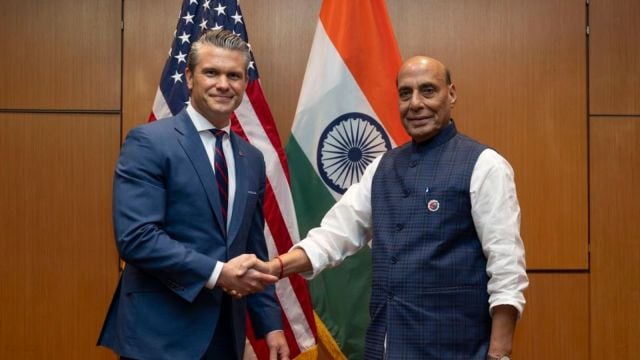
As they continue to negotiate a bilateral trade agreement and the thorny issue of a tariff penalty imposed by Washington for Delhi’s purchase of Russian oil, India and the US signed a 10-year Framework for the US-India Major Defence Partnership on Friday, signaling the two countries’ stable defense ties.
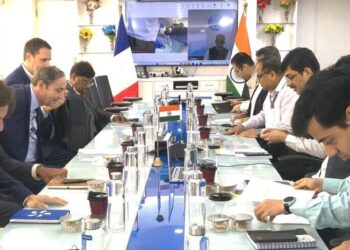
The agreement was inked during a bilateral meeting between Defence Minister Rajnath Singh and his US counterpart Pete Hegseth on the sidelines of the 12th ASEAN Defence Ministers’ Meeting – Plus (ADMM-Plus) in Kuala Lumpur, Malaysia.
In a statement, the Ministry of Defence said the 2025 framework is intended to provide a unified vision and policy direction to deepen defence cooperation. It said the framework will usher in a new era in the already strong defence partnership between the two countries and marks a new chapter in further transforming it over the next 10 years.
Singh said the framework will provide policy direction to the entire spectrum of the India-US defence relationship. “It is a signal of our growing strategic convergence and will herald a new decade of partnership,” he said in a post on X, adding that defence will remain a major pillar in bilateral relations between the two sides.
He stated that the alliance is vital for ensuring a free, open, and rules-based Indo-Pacific area, referring to measures to resist China’s forceful attitude in the region.
Hegseth, Secretary of War, said the 10-year framework advances the India-US defence partnership, a “cornerstone for regional stability and deterrence”.
“We are enhancing our coordination, info sharing and tech cooperation. Our defence ties have never been stronger,” he said in a post on X.
In February this year, following a meeting between Prime Minister Narendra Modi and President Donald Trump, the two sides had announced plans for the new 10-year defence framework. A joint statement after that meeting stated: “Highlighting the deepening convergence of US-India strategic interests, the leaders reaffirmed their unwavering commitment to a dynamic defence partnership spanning multiple domains. To advance defence ties further, the leaders announced plans to sign this year a new 10-year Framework for the US-India Major Defence Partnership in the 21st Century.”
Despite the tension in relations between Delhi and Washington over tariff issues that arose in July and August, military relationships between the two countries have not deteriorated significantly.
The goal for bilateral defence collaboration was articulated in the September 2013 Joint US-India Declaration on Defence collaboration and the 2015 Framework for the US-India Defence Relationship, in which the two nations pledged to increase cooperation in this area.
Between 2016 and 2020, the two sides signed four further agreements: the Logistics Exchange Memorandum of Agreement (LEMOA) in 2016, the Communications Compatibility and Security Agreement (COMCASA) in 2018, and the Basic Exchange and Cooperation Agreement (BECA) in 2020.
In August 2024, both countries signed a Security of Supply Arrangement (SOSA) and a Memorandum of Agreement on the Assignment of Liaison Officers, among other bilateral military accords that have strengthened defense and security cooperation.
In September of this year, Indian and American troops took part in the two-week military exercise Yudh Abhyas at Fort Wainwright in Alaska.
A week earlier, the US submarine support ship USS Frank Cable paid a scheduled port call to Chennai, marking the Military Sealift Command’s second visit to the region in two years.
Big-ticket Indian military procurements from the US include MH-60R Seahawk multi-role helicopters, Sig Sauer rifles, and M777 ultra-light howitzers.
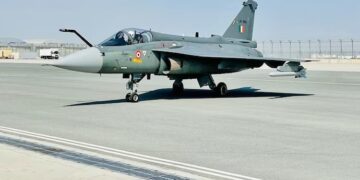
Negotiations are also underway to build GE F-414 jet engines in India for the LCA Tejas Mk2 fighters, as well as to acquire 31 MQ-9B High-Altitude Long-Endurance (HALE) UAVs. The LCA Tejas Mk1A’s GE-F404 engines are currently being delivered.
In an interview in September, Hindustan Aeronautics Limited chairman D K Sunil stated that he did not believe tariff tensions with the United States would have an impact on defense procurement conversations.
The Ministry of Defence stated on Friday that Singh and Hegseth’s bilateral meeting was positive.
“The two leaders appreciated the continuing momentum in the bilateral defence cooperation and reaffirmed their commitment to further build upon the mutually beneficial partnership across all its pillars,” it said.
According to the statement, the two leaders discussed ongoing defense difficulties and challenges, as well as ongoing military industry and technological engagement, and decided to collaborate to overcome challenges.
“The Secretary of War reiterated that India is a priority country for the US in defence cooperation and they were committed to work closely with India to ensure a free and open Indo-Pacific,” the statement noted.
It stated that India and the United States continue to strengthen their defense relationship through military-to-military exercises and activities, information sharing, collaboration with like-minded regional and global partners, defence industrial, science, and technology cooperation, and defence coordination mechanisms.
Source: IE