



 Finance
On December 10 and 11, Rick Switzer, the Deputy US Ambassador for Trade, will travel to India to hold high-level talks with Indian officials. The ongoing efforts to complete a bilateral trade agreement (BTA) depend heavily on these discussions. The US and India are seeking to deepen their relationship and settle current trade disputes at the time of this visit.
During a media briefing on Monday, Randhir Jaiswal, a spokesperson for the Ministry of External Affairs, revealed that the visit is essentially a familiarization trip.
“Ambassador Rick Switzer will be meeting with senior officials in the Indian government to further discussions on trade,” Jaiswal said. Both countries have been actively negotiating a comprehensive trade agreement that would cover multiple sectors, aiming to increase bilateral trade significantly.
Positive for a fair and balanced deal
India and the United States have been working closely toward concluding a fair and balanced trade deal, with both governments emphasizing the importance of an agreement that benefits both sides. Several rounds of negotiations have already taken place, and Commerce Secretary Sunil Agarwal expressed confidence at the FICCI Annual General Meeting on November 28, stating that both countries are optimistic about reaching an agreement by the end of this year.
“We are hopeful that we can finalize a solution within this calendar year,” Agarwal said. However, the timeline for completing the first phase of the agreement had to be adjusted due to recent changes in US trade policies, including the implementation of tariffs on Indian goods.
Challenges amid trade tensions
The Bilateral Trade Agreement’s finalization process has not been without its challenges. US tariffs imposed by previous President Donald Trump have been one of the main obstacles. These tariffs, which were initially established at 25% in August 2021 and then increased by an additional 25% soon after, were imposed on Indian imports, citing problems such India’s continued acquisition of Russian oil. In reaction to trade imbalances with nations like India, this action was a component of larger reciprocal tariff measures.
Both nations have maintained open communication despite these obstacles, carrying on with multiple rounds of talks. Despite the delays, India is still optimistic that the agreement’s first tranche would be completed in the coming months. By 2030, the proposed Bilateral Trade Agreement (BTA) seeks to increase trade between the two nations from USD 191 billion to an ambitious USD 500 billion, more than doubling the existing volume.
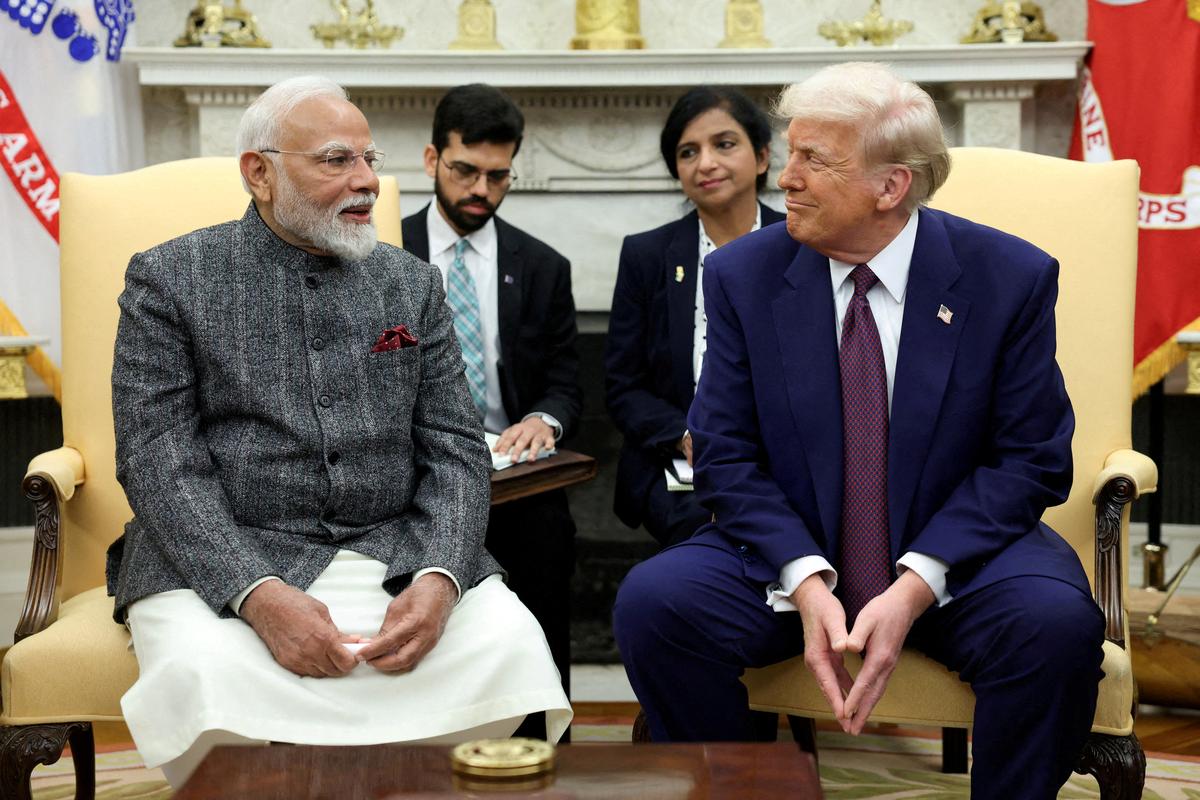
Both parties are keen to finalize the agreement, which was first discussed during Prime Minister Narendra Modi’s trip to Washington earlier this year.
With several international partners, India has been aggressively pursuing such accords. Fourteen free trade agreements (FTAs) and six preferential trade agreements (PTAs) have been signed by the nation thus far, while discussions for FTAs with a number of other significant international actors, such as the European Union, are still underway.