

 Finance
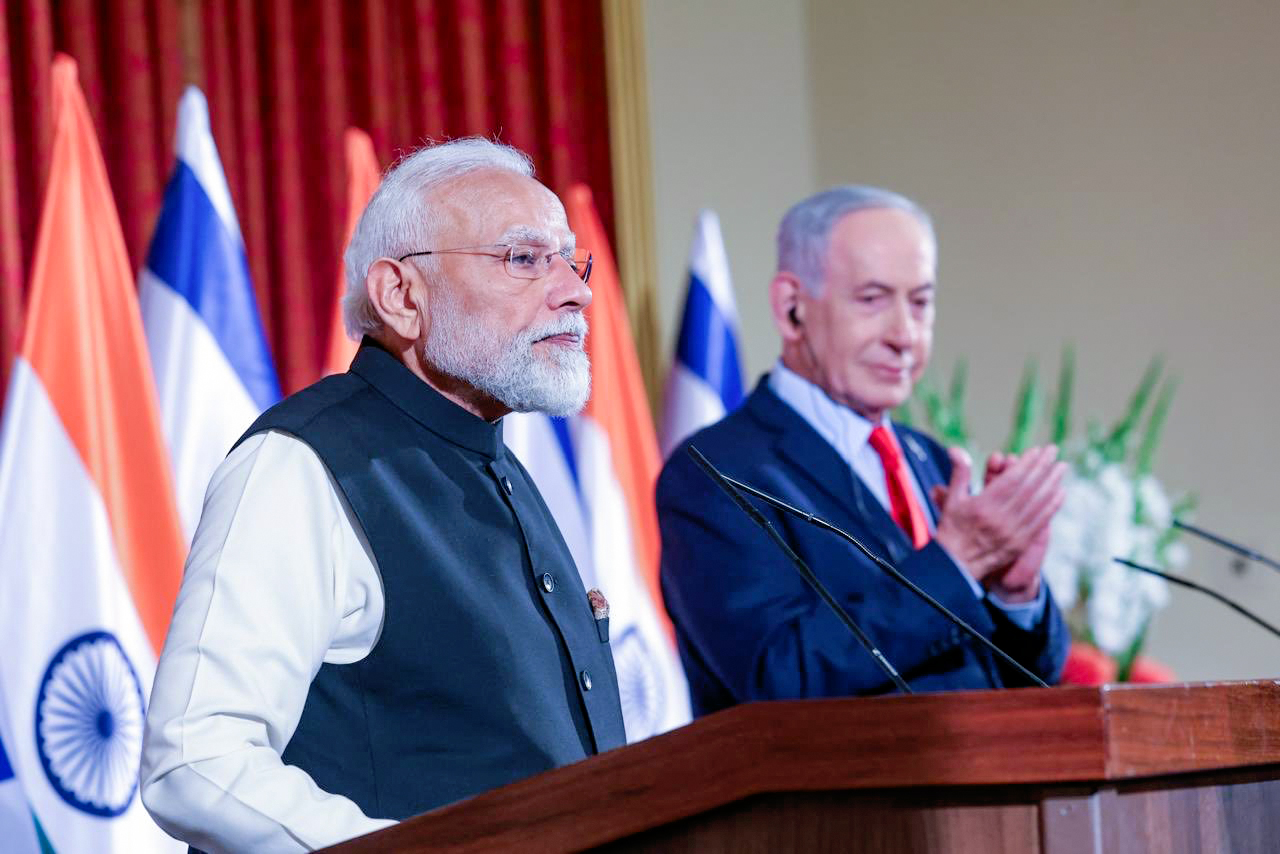
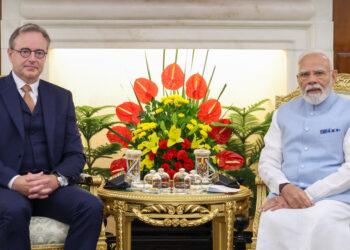
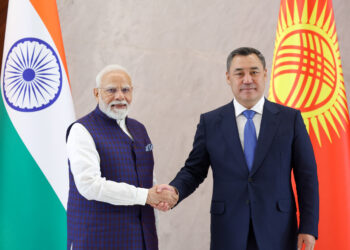
During his official visit to Israel, Prime Minister Narendra Modi and Israeli Prime Minister Benjamin Netanyahu issued a joint press statement on Thursday, declaring the elevation of bilateral ties to a “Special Strategic Partnership” and outlining greater cooperation across many industries.
Prime Minister Modi addressed Netanyahu, his wife Sara Netanyahu, delegates from both countries, and members of the media, saying, “Namaskar! Shalom!”.
He conveyed his heartfelt gratitude to Prime Minister Netanyahu for welcoming him and the Indian delegation. Recalling his 2017 visit to Israel, which was the first by an Indian Prime Minister, he described it as a source of pride and emotion.
During his presentation to the Israeli Parliament on Thursday, Prime Minister Modi thanked the Knesset, its Speaker, Netanyahu, and the Israeli people for bestowing the Speaker of the Knesset Medal upon him. He dedicated the honor to 1.4 billion Indians and the India-Israel alliance.
The Prime Minister stated that the partnership has endured because of profound trust, common democratic values, and human compassion. The decision to upgrade ties to a Special Strategic Partnership represents both peoples’ aspirations.
According to Prime Minister Modi, the two leaders discussed refocusing cooperation and giving it fresh energy. He praised economic cooperation as a driver of growth, innovation, and shared prosperity, pointing to the Bilateral Investment Agreement concluded last year and the upcoming mutually beneficial Free Trade Agreement.
On technology, he announced the establishment of a Critical and Emerging Technologies Partnership to boost cooperation in AI, quantum, and critical minerals.
Prime Minister Modi welcomed the agreement for UPI use in Israel and reaffirmed commitment to sharing experiences in digital health to improve lives.
He highlighted decades-old trusted defence cooperation, with last year’s MoU adding new dimensions in joint development, production, and technology transfer.
The Prime Minister said cooperation in civil nuclear energy and space will also advance.
In agriculture, he noted the long and successful history and said both countries have resolved to give it a futuristic direction. He cited Centres of Excellence in India as excellent examples and set a goal of increasing their number to 100. He added that work is underway on Villages of Excellence to bring Israeli technology to every Indian village, raising income and productivity for millions of farmers. Future-ready farming solutions and the “India-Israel Innovation Centre for Agriculture” will provide a strong foundation.
According to Prime Minister Modi, people-to-people ties are an important component. India’s 2023 Manpower Mobility Agreement has seen Indian workers contribute to Israel’s construction and care-giving sectors through their hard work and expertise. Cooperation is extending into trade and services. The India-Israel Academic Forum will be established to bring together youngsters, scholars, and innovators from both countries.
On regional and global problems, he stated that both countries will go forward with renewed vigour on the India Middle East Europe Economic Corridor (I-MAKE) and the India Israel UAE USA (I-2-U-2) Corridor.
Prime Minister Modi stated that India and Israel agree that terrorism has no place in the world and cannot be accepted in any form. He said both nations have stood shoulder to shoulder against terrorism and its supporters and will continue to do so.
He stated that India’s security interests are inextricably tied to West Asian peace and stability, and that India has always supported discussion and a peaceful settlement – a plea from the Global South and all humanity. He stated that humanity should never become a victim of conflict. The Gaza Peace Plan has created a path to peace, which India firmly supports, and India will continue to communicate and cooperate with all countries.
Prime Minister Modi stated that Netanyahu’s kindness made the visit unique and expressed gratitude for the love, affection, and respect he and the Israeli people had shown him.
He ended with, “Thank you very much.” “Toda Rabba.”