






 Finance
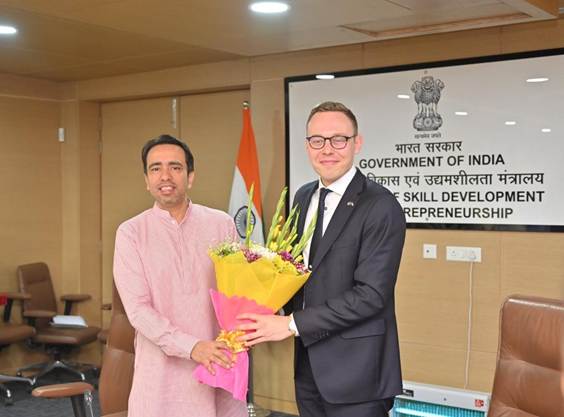
On Thursday, India and Finland conducted a high-level bilateral meeting to discuss potential partnership in skill development, vocational education, and workforce mobility.
The discussion took place between Jayant Chaudhary, Minister of State (Independent Charge) for Skill Development and Entrepreneurship, and Matias Marttinen, Finnish Minister of Employment.
The meeting showed the two countries’ growing convergence in developing resilient and future-ready talent ecosystems, according to the Ministry of Skill Development and Entrepreneurship.
Chaudhary stated that India is slowly advancing towards being the Global Skill Capital, harnessing one of the world’s youngest and most dynamic workforces and a quickly developing skilling environment.
He emphasized India’s ability to deliver trained individuals to global companies, noting that Finland’s technological and vocational competence supplements India’s demographic advantage.
“Our discussion focused on building practical bridges between training ecosystems, strengthening institutional cooperation, and creating pathways for skilled youth to access global opportunities while maintaining high standards of training and mobility,” he added.
Marttinen said Finland values its growing partnership with India in vocational education and workforce development, adding that it deeply appreciates the contribution of highly skilled Indian professionals strengthening Finland’s workforce.
He also highlighted that India’s strong skilling ecosystem and young talent present significant opportunities for further collaboration.
“By strengthening cooperation between our institutions and industries, we can address workforce challenges while promoting innovation, skills development, and sustainable economic growth,” the Finnish minister said.
The discussions emphasized the similarities between India’s growing skilling ecosystem and Finland’s labor market needs in industries such as healthcare, construction, renewable technologies, and sophisticated manufacturing.
Both sides emphasized the necessity of established mobility frameworks, occupational qualification recognition, trainer capacity building, language training integration, and skill standards that are in line with global requirements.
The summit underlined both countries’ commitment to promoting ethical and sustainable labor mobility, strengthening vocational education systems, and continuing participation through institutional partnerships and ongoing communication, according to the administration.
Source: IANS