


 Finance
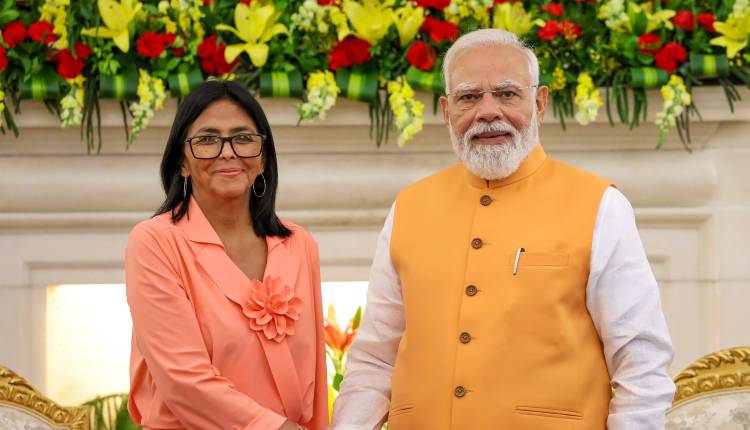
According to a new report, Venezuelan Acting President Delcy Rodriguez’s visit to India from June 3-6 has created potential for bilateral collaboration in energy, vital minerals, automotive, and pharmaceutical sectors between the two countries.
Venezuela has some of the world’s greatest oil reserves, and India, which imports up to 88% of its oil needs and is exploring for new supplies, is interested in Venezuelan oil.
According to The Diplomat, in 2012, India surpassed China to become the largest Asian buyer of Venezuelan crude oil. The US sanctions on the Venezuelan economy, first imposed in 2005, forced India to cut its purchase of Venezuelan crude in 2019-2020, and then again, in 2025, under pressure from the first and current Trump administrations.
Following Nicolas Maduro’s fall from power as Venezuelan president, the Trump administration’s takeover of the country’s oil industry, and the relaxation of economic sanctions, the Latin American country has become more business friendly.
Until last year, India’s main suppliers were Russia, Iraq, Saudi Arabia, and the UAE. However, the United States and other Western countries objected to Delhi’s purchase of discounted Russian petroleum.
While India reduced its oil purchases from Russia in order to increase oil imports from Iraq, Saudi Arabia, and the UAE, this supply chain was disrupted by the Iran conflict, which clogged the Strait of Hormuz, through which 20% of the world’s oil and gas exports transited.
After a five-year hiatus, India and Venezuela are attempting to restore relations, with crude oil at the top of their agenda. India increased its purchases of Venezuelan crude before to Rodríguez’s arrival in Delhi. In May, Venezuela had already become India’s third largest crude oil supplier.
During her visit to India, Rodríguez visited the privately managed Jamnagar refinery in Gujarat, which processes oil supplied from Venezuela. According to the report, the goal is to broaden cooperation to include exploration, production, and refining.
India is also searching for partners in the crucial minerals industry as it wants to lessen reliance on China, which has a monopoly on mining and refining these metals, which are used as inputs in high-tech gadgets, electrical vehicles, and defense hardware. The topic of Venezuela repaying money due to Indian oil and pharmaceutical industries was also raised during the meetings.
The foreign unit of Indian oil major ONGC has failed to receive more than $500 million from its Venezuelan investments, while outstanding debts to Indian pharmaceutical companies are estimated at $700-$800 million. Since 2008, ONGC Videsh has operated the San Cristobal onshore oilfield in conjunction with Venezuela’s state oil company Petroleos de Venezuela SA (PDVSA).
Despite the fact that the fields have commercially attractive reserves, production has collapsed due to restrictions that have prevented access to drilling rigs, replacement parts, services, and funding. Rodríguez saw a pharmaceutical and auto-components manufacturing facility, highlighting potential sectors for India to expand into Venezuela, according to The Diplomat.
Source: IANS