



 Finance
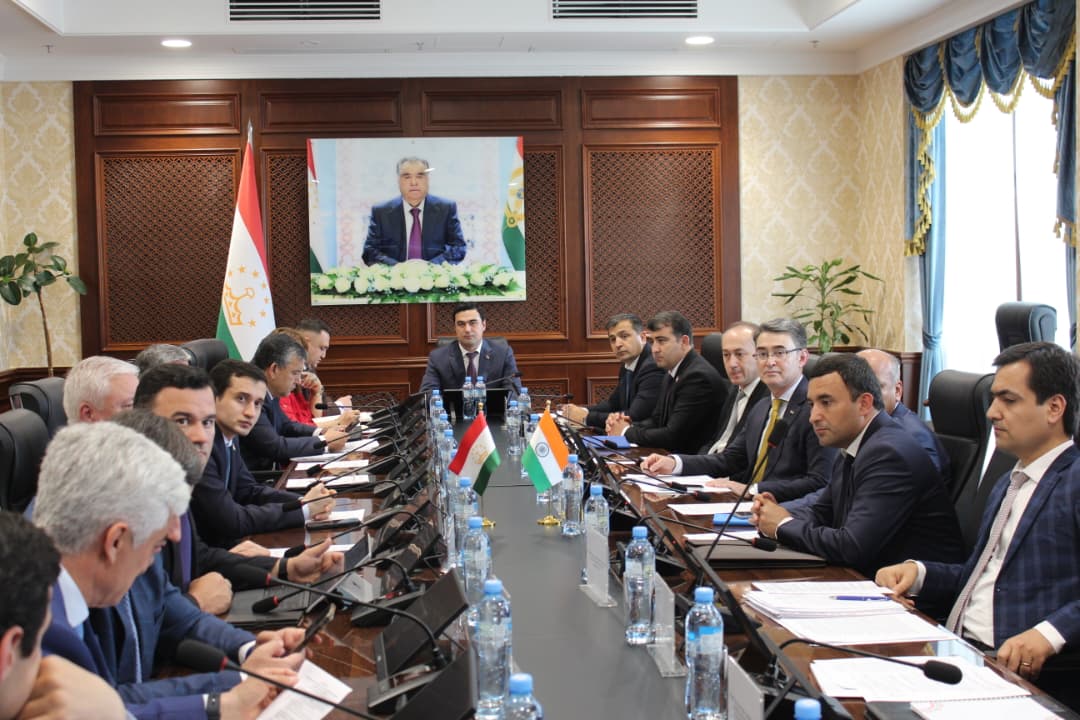
According to the report, India and Tajikistan reiterated their commitment to strengthening bilateral economic connections at the 12th Meeting of the India-Tajikistan Joint Commission on Trade, Economic, Scientific, and Technical Cooperation, which was held by video conference.
The Commission also considered potential collaboration in sectors such as energy, hydropower, renewable energy, mining, vital minerals, textiles, digital economy, transportation, logistics, and finance. According to an article in Asia-Plus, these areas have been highlighted as providing considerable prospects for future collaboration.
Commerce Secretary Rajesh Agrawal delivered the opening remarks, highlighting the changing global trade, supply chain, and technological landscape, emphasizing the importance of both countries translating their longstanding political goodwill and historical links into stronger economic outcomes.
Mohit Yadav, Joint Secretary in India’s Department of Commerce, co-chaired the meeting with Tajikistan’s Deputy Minister of Economic Development and Trade, Nuriddinzoda Ahliddin Nuriddin. Senior officials from both countries’ ministries and organizations also took part.
India highlighted its strong economic performance, with GDP growth of 7.7% in FY 2025-26 and 7.8% in the fourth quarter of the same fiscal year.
Bilateral commerce showed significant pace, with India’s exports to Tajikistan expected to reach $58.12 million in 2025-26, up 27.23 percent from the previous year. Pharmaceuticals, pulses, dairy machinery, medical instruments, tea, herbal products, and refrigeration equipment were among the most popular exports, showing that Indian enterprises and farmers have more opportunities.
Both countries examined market access and regulatory difficulties, and agreed to improve coordination among government authorities, trade organizations, and business chambers to allow smoother commerce and stimulate new investments.
Pharmaceuticals and healthcare have emerged as key areas of cooperation. India emphasized the quality and affordability of its pharmaceutical products, and both parties committed to improve regulatory discussion, accelerate product registration, and strengthen industry-level collaboration.
Agriculture and food goods were also recognized as attractive industries, with discussions centered on rice, sugar, processed foods, animal products, pulses, and agro-technology. During the discussion, the Indian side expressed its willingness to increase agricultural exports in a way that promotes food security and mutual economic benefit for Tajikistan.
During the conference, the services trade was identified as a critical component of bilateral relations. India’s service exports to Tajikistan totaled $123.89 million in 2024, while Tajikistan exported services worth $37.56 million to India. Both parties agreed to look into additional collaboration in IT, digital services, healthcare, education, tourism, start-ups, and talent development.
Energy cooperation has evolved as an important pillar of engagement between India and Tajikistan, reflecting both nations’ strategic ambitions and long-term development objectives. In this backdrop, Tajikistan’s large hydropower potential creates considerable opportunity for Indian public and private sector enterprises to collaborate.
Several Indian companies, notably Bharat Heavy Electricals Limited (BHEL), KEC International, and Kalpataru Projects International Limited, have previously participated in ongoing efforts, reflecting the increasing depth of bilateral cooperation. However, officials point out that there is still significant untapped potential for Indian cooperation in Tajikistan’s energy industry.
Source: IANS