





 Finance
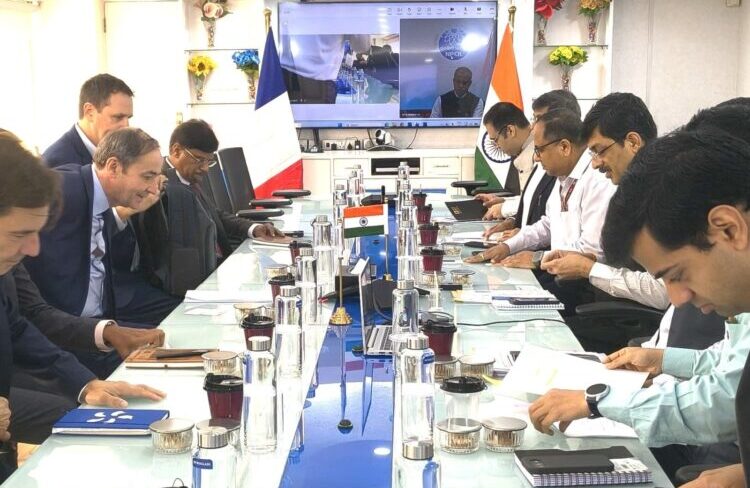
India and France reviewed the deployment of EPR technology, India’s nuclear regulatory changes, cooperation on pumped hydro storage projects, and the path forward for a strong, mutually beneficial alliance, according to an official statement released on Friday.
Pankaj Agarwal, Secretary, Ministry of Power, and Bernard Fontana, Chairman and CEO of EDF, France, met to evaluate India’s continued engagement with EDF on the projected deployment of EPR reactors in India.
According to the official statement, EDF informed the Indian side of its efforts to establish an ecosystem and supply chain in India for large-scale localization, and reiterated that a significant program with multiple nuclear reactors would give suppliers confidence and enable economies of scale by leveraging Indian industry’s capabilities.
Agarwal updated the French delegation on India’s efforts in finalizing its nuclear power regulatory framework, including the Draft SHANTI (Sustainable Harnessing and Advancement of Nuclear Energy for Transforming India) Rules and Regulations.
These guidelines establish a streamlined, time-bound licensing system, allowing private and foreign partners to participate in India’s nuclear power program.
The two sides also discussed collaboration on pumped hydro storage projects, which will build on the proposed NTPC-EDF joint venture in this sector, according to the statement.
India currently runs 24 nuclear power reactors with a total installed capacity of 8.78 gigawatts and has nine reactor units under construction with a combined capacity of 7.5 gigawatts, while the country works toward generating 100 gigawatts of nuclear power by 2047.
Recent governmental measures, such as the Nuclear Energy Mission (2025-26) and the SHANTI Act (2025), are expediting capacity expansion, bolstering domestic manufacturing, encouraging innovation, and allowing for increased private sector participation.
The government has also approved 10 indigenous Pressurized Heavy Water Reactors (PHWRs) in the fleet mode, as well as pre-project activities for two 500 MW Fast Breeder Reactors. India’s nuclear program is directed by a technological self-reliance approach established to overcome previous fuel embargoes while leveraging the country’s massive thorium supplies.
Source: IANS