


 Finance
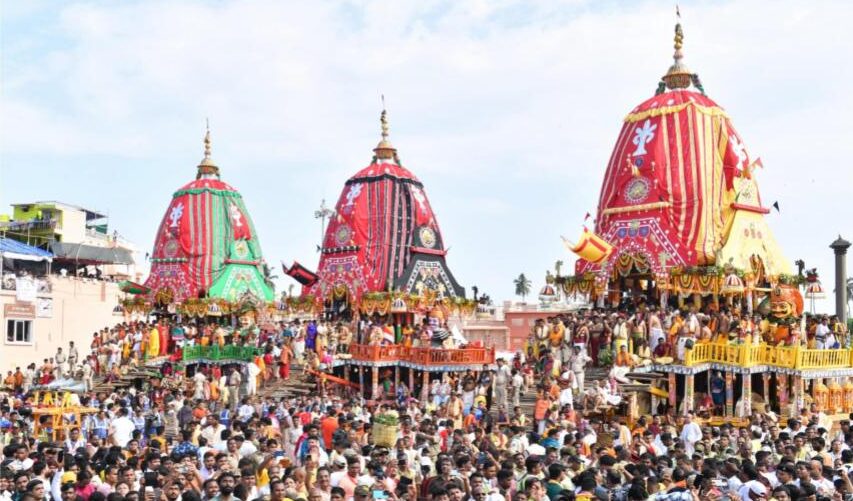
The Ratha Yatra is one of India’s largest and most cherished festivals, attracting hundreds of thousands of pilgrims to Puri, Odisha each year! Following the spectacular procession of Lord Jagannath and his siblings to the Gundicha Temple, the celebration concludes with the Bahuda Yatra, or “return journey,”. This highly important celebration is not only deeply spiritual, but also a magnificent and cultural show in which people see devotees return to their homes after seven incredibly moving days.
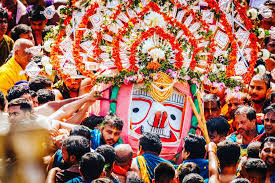
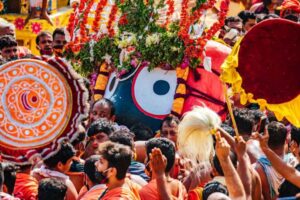
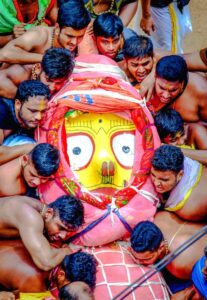
During the Rath Yatra, Lord Jagannath visits Gundicha temple (his aunt’s house) for a few days or a week, and during the Bahuda Yatra, he returns to his home, Shree Mandir. The return journey of the three chariots to the Jagannath Temple is known as the Bahuda Yatra throughout the world.
Bahuda Yatra, which means “return journey” in Odia, commemorates the return of pilgrims to the shrine. After visiting the Gundicha Temple (which is thought to be the birthplace of Lord Jagannath), the three deities will leave and return to their abode at the Shree Jagannath Temple.
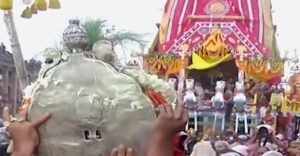
Devotees will return to the magnificent wooden, magnificently decorated chariots of Lord Jagannath, Lord Balabhadra, and Goddess Subhadra, known as the Nandighosha, Taladhwaja, and Darpadalan, respectively.
This journey is more than simply a ritual; it is a time of joy and devotion for the thousands who draw the chariots, sing bhajans, and pray together.
Overview of Bahuda Yatra
Lord Jagannath, Balabhadra, and Subhadra spend some time in the Gundicha temple before beginning their journey back to the Shree Mandir. After spending a week inside the Gundicha temple, the deities commence their Bahuda Yatra on the 10th day. The return journey follows the same protocol and schedule, as is found during the Ratha Yatra. During the return journey, the three chariots stop for awhile at the Mausima Temple, also known as Ardhasani Temple.
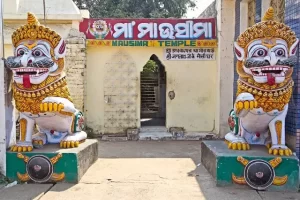
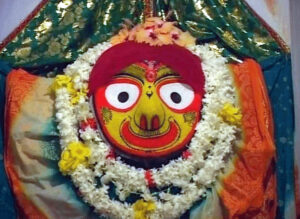
This temple is dedicated to the aunt of Lord Jagannath. Here three deities are offered ‘Poda Pitha’, a special sweet made of rice, coconut, lentils and jaggery. After approaching the Shree Mandir, the raths (chariots) of Balabhadra and Subhadra proceed and park at Singha dwara (Lion’s Gate),
The chariots of Balabhadra and Subhadra move forward and are parked at Lion’s gate (Singha dwara) of the temple where as the chariot of Jagannath halts in front of the Gajapati King’s palace for the divine event ‘Laxmi Narayana Bheta’.
The Laxmi Narayana Bheta
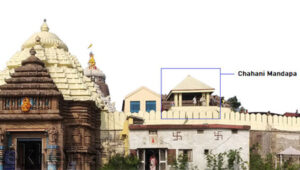
Lord Jagannath, Goddess Mahalaxmi’s husband, did not take her to Gundicha temple during the Car Festival, therefore on Hera Panchami day, Mahalaxmi went to Gundhicha temple to meet Lord Jagannath, but he closed the temple entrance and did not meet her. Goddess Mahalaxmi was enraged by these activities, and her grief continues to this day. She has requested her servants to tell her as soon as they learn of his return. On Bahuda yatra day, when Nandighosa’s chariot arrives at the King’s palace, her servants inform her of Lord Jagannath’s arrival, and she is eager to see her spouse. Her servants detect her emotions and transport Subarna Laxmi (the goddess Mahalaxmi’s representational idol) to the ‘Chahani Mandapa’ in a beautifully decked palanquin. ‘Chahani’ means ‘Glimpse’ in Odia, and ‘Mandapa’ means ‘Podium’. Chahani Mandapa is the viewing platform located on the right side of the temple’s main gate (Lion’s Gate). Goddess Mahalakshmi catches a glimpse of the Lord, who has parked His vehicle in front of Srinahara (the King’s palace). In Odia, the exchange of eye contact is known as ‘Chahani Melana’ (meeting through the eyes).
Goddess Mahalaxmi was displaying anger, but she was also eager to meet her spouse. Her servants detect her uneasiness and transport her palanquin in a parade from Chahani Mandapa to the king’s palace, where the Nandighosa chariot is situated. Lord Balabhadra is Lord Jagannath’s elder brother. In Hindu tradition, the elder brother should not look at or touch the younger brother’s wife. If this occurs, it is considered unlucky. As a result, when Goddess Laxmi begins Her journey from Chahani Mandapa, one parada (screen) is placed in front of Lord Balabhadra’s Taladhwaja chariot, preventing him from seeing Goddess Mahalaxmi during the procession.