


 Finance
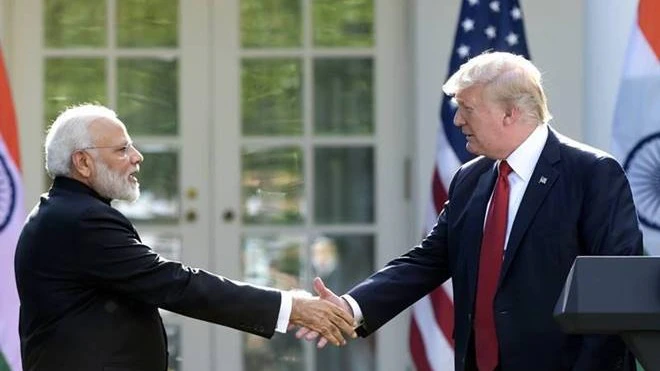
As India and the US resume trade talks after weeks of tensions, a former senior US official emphasized that defense cooperation between the two countries has remained a fundamental pillar of the relationship.
Speaking at a panel discussion on India-US defense ties at the Hudson Institute in Washington on Wednesday (local time), Vikram Singh, the former Deputy Assistant Secretary of Defense for South and Southeast Asia, emphasized that, despite recent hiccups, there has been no “dramatic freezing out” of defense ties.
“Even when you have problems, even as severe as you are seeing now, lines of communication have not broken down. The two sides continue to talk to each other. We don’t have any dramatic freezing out. We have ended up now with a lot of enthusiasm among the war fighters for the partnership, a lot of enthusiasm among the political leadership for the partnership,” he added.
While the US imposed 50 per cent tariffs on India, including 25 per cent for buying Russian oil in August, armies from both countries were preparing to conduct joint exercises.
The 21st edition of Exercise Yudh Abhyas 2025, India and the United States’ annual bilateral Army-to-Army exercise, ended on Sunday (US time) after two weeks of hard training in Alaska.
The Indian embassy in Washington described the exercises as a “hallmark of the growing military-to-military interaction between India and the US, aligned with the Comprehensive Global Strategic Partnership between both countries” in a statement issued Monday.
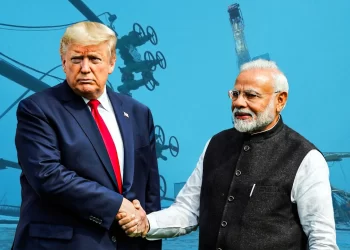
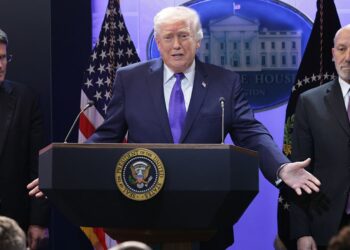
Singh further emphasized Trump’s personal contact with Prime Minister Modi, claiming that the American President “believes in the US-India partnership”.
“I don’t think he (Trump) ever said anything critical about Prime Minister Modi at all. I think a moment of crisis can easily flip to a moment of opportunity. I’ve seen no indication from across the Department of Defence or State or others that there’s a turning away,” he asserted.
Dr Sameer Lalwani, a non-resident Senior Fellow at the Centre for Strategic and Budgetary Assessments, termed the rising threat of China’s military power as a “key driver” of the US-India defence ties.
He recalled India’s border skirmishes with China in Doklam in 2017, along with Trump 1.0 assessment of Great Power Competition with Beijing, as contributing factors to the strengthening of the India-US defence relationship.
“The Trump administration declared we are in the era of Great Power Competition, which immediately makes India sort of a favoured partner, both in public and private strategy documents. And simultaneously, India has one of its many face-offs with China in Doklam. And so, thanks a lot, China. They’ve really helped us out on this relationship,” he pointed out.
However, during his second term, Trump has taken a much more nuanced approach to China. While slapping tariffs of over 50% on the country, he has often emphasized his close connection with Chinese President Xi Jinping.
This Monday, both sides struck a framework deal on TikTok, which would allow the social media app to continue functioning in the United States.
However, Lalwani stressed that long-term relations with China remain antagonistic.
“You might get a trade deal here and there, but I still think the general expectation I have over the average or long term, the relationship with China is going to rest on a mean, and that mean is adversarial, and it oftentimes has a lot to do with China’s own behaviour,” he added.
Singh concurred with the assessment.
“Let’s say we do get a deal with China. Clearly, the President wants an economic deal with China. If the economic deal with China doesn’t happen, that’s going to amp up the strategic rivalry. And if it does happen, maybe that tamps it down to some degree. I think it would feel a little bit more like pre-2015, you would still probably be looking for these deeper relationships with other partners in the region, and keeping our alliances strong and building up the India relationship would be a part of that,” he assessed.
Source: IANS