




 Finance
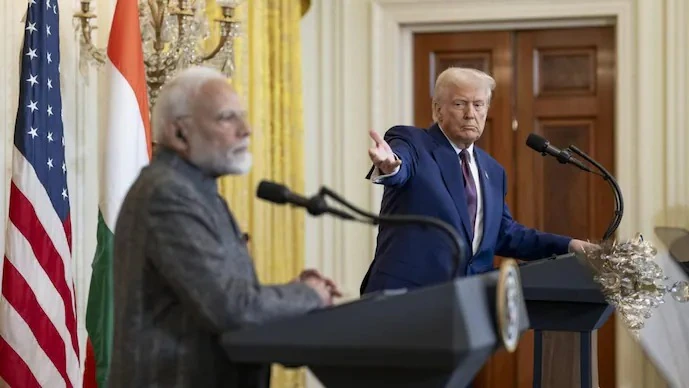
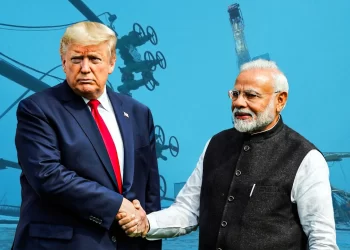
Indian exports to the United States are now subject to 50% tariffs, with President Donald Trump’s additional 25% penalties imposed as a “penalty” for New Delhi’s purchase of Russian oil taking effect on Wednesday, putting some sectors at risk.
Some segments of India’s export ecosystem have long counted on the United States as their primary overseas market. While key sectors such as cellphones, pharmaceuticals, and energy have been spared, others, including gems and jewellery, textiles, car parts, and seafood, are suffering severe losses.
Sectors hit the most by Trump’s India tariffs
Gems and jewellery: The United States is the largest importer of Indian gems and jewellery, accounting for roughly 30% of the sector’s global sales. Trump’s tariffs threaten the export sector, which generated $10 billion (about ₹87,600 crore) last year.
Surat, the global diamond polishing hub, is already feeling the pressure as US orders decrease drastically, according to a Reuters article.
Small exporters have limited options, while larger businesses are considering transferring operations to countries with lower US tariffs, such as Botswana, which pays only 15% tax, according to the article.
Shrimp and seafood: According to a Reuters report, India shipped $2.6 billion (₹22,800 crore) in seafood to the US last year, with shrimp accounting for 40% of the total.
Walmart and Kroger are apparently among the company’s major US clients.
Exporters say additional duties have caused a slowdown in orders, and some shrimp producers are considering leaving the sector entirely.
Textiles and apparel: India shipped more over $2 billion in textiles and garments to the United States in 2024, with an additional $1 billion in the first half of 2025. Major garment and textile exporters include Shahi Exports, Welspun, Indo Count Industries, Trident, and Gokaldas Exports. Walmart, Target, Costco, and Gap are among the company’s key clients.
Auto components: The US is the top export market for Indian auto components, with $6.6 billion ( ₹58,000 crore) worth exported in 2024.
Car and small truck parts worth $3.5 billion ( ₹30,738 crore) will face 25 per cent tariffs. Larger vehicle components (used in trucks and farm equipment), worth another $3 billion ( ₹26,355 crore), are now hit with the full 50 per cent tariff.
Big exporters like Bharat Forge, Sona Comstar, and Motherson are likely to feel the pinch.
Who’s been spared the tariff hit for now
Smartphones and electronics (win for Apple): Despite the tariff storm, smartphones and electronics have been spared. According to Reuters, Apple’s manufacturing partners — Tata Electronics, Foxconn, Wistron, and Pegatron — contributed about $7 billion (approximately ₹61,495 crore) to India’s gadget exports in 2024. Apple now manufactures the majority of iPhones for the United States in India and plans to release a new model, the iPhone 17, next month.
Pharmaceuticals: The United States relies substantially on low-cost generic medications from India, which is reflected in Trump’s tariffs.
In 2024, Indian pharmaceutical companies shipped $3.6 billion (about ₹31,626 crore) to the US, with an additional $3.7 billion (approximately ₹32,505 crore) in the first half of 2025. Major players such as Dr. Reddy’s, Sun Pharma, Lupin, and Aurobindo are currently safe.
Renewable energy: Tariff exemptions also apply to solar cells, wind turbines, and other similar equipment. Exporters include Reliance, Adani’s Mundra Solar, Waaree, LM Wind Power, and Schneider Electric continue to export to the United States without interruption.
Source: HT