
 Finance
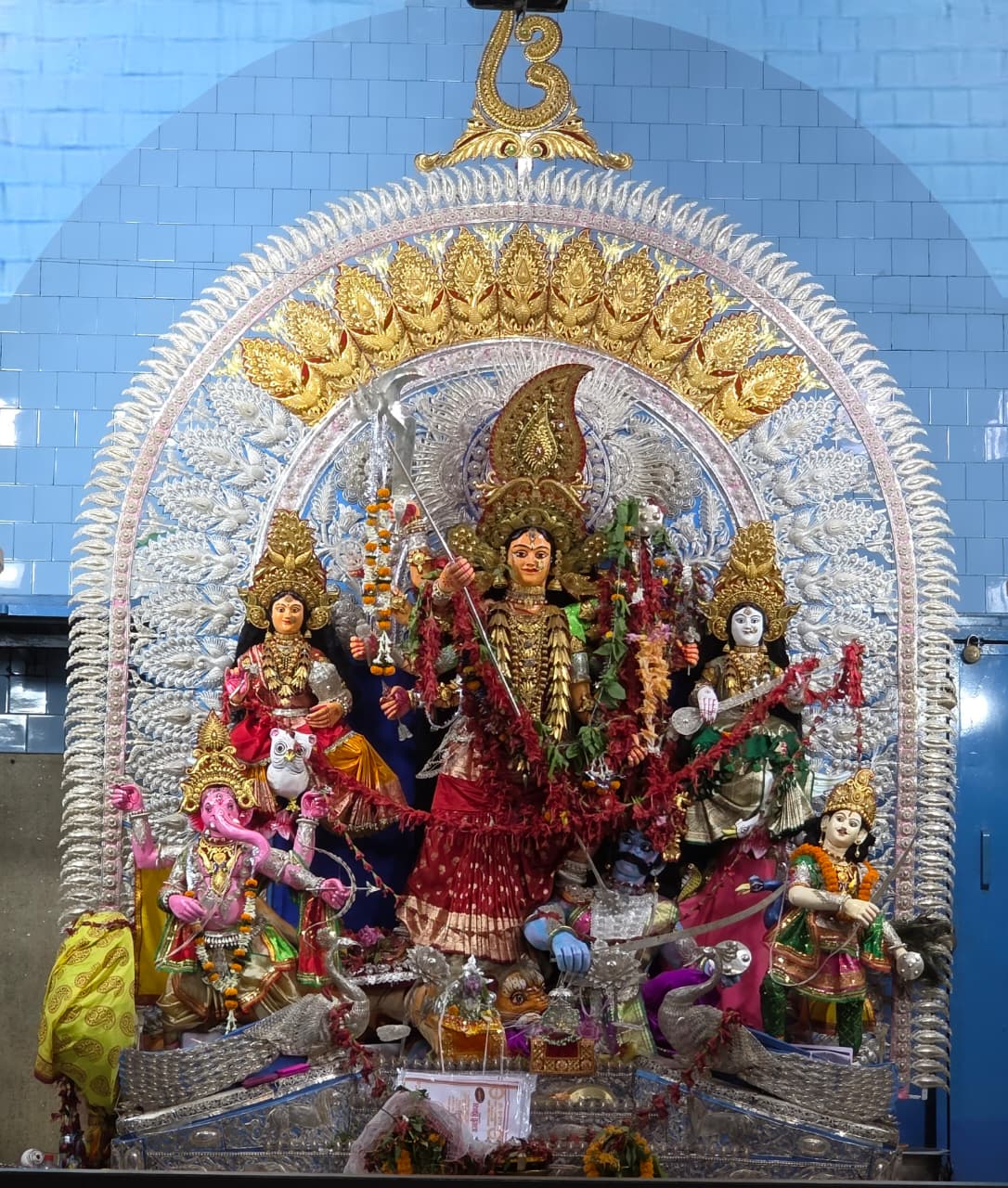
Dussehra is a ten-day long Hindu festival that is celebrated at the end of Navratri every year. This year Dussehra will be celebrated on Saturday, September 30, 2017. Dussehra is celebrated on the tenth day of the Hindu month of Ashvin which usually corresponds to September or October in the popular Gregorian calendar. Dussehra is one of the major festivals of India and is celebrated throughout the length and breadth of the country. Dussehra or Dusshera is celebrated to mark Lord Rama’s victory over the demon Ravana that signifies the triumph of good over evil. On Dussehra, huge effigies of Ravana are burnt with fireworks which symbolize the quelling of darkness by light.
Dussehra also paves the way for the next big festival of Diwali (the festival of lights) which is celebrated across India with great pomp and fervour. Diwali is celebrated twenty days after Dussehra and signifies the return of Lord Rama, Sita and Lakshman to Ayodhya after killing the demon Ravana.
The word ‘Dussehra’ signifies the meaning of the festival itself. The word is formed from two words – Dus and Ahara. ‘Dus’ means ten and ‘Ahara’ means day, so tenth day. Another meaning comes from the mythology of the festival where ‘Dus’ signifies the ten heads of Ravana or bad or evil and ‘hara’ means to defeat or removal. In the northern and western states of India Dussehra is celebrated in the honour of Lord Rama who was an avatar of Lord Vishnu. Plays based on Ramayana and Ramcharitmanas called Ramlila are performed at outdoor fairs by theatre troupes. Dussehra is also celebrated as Vijayadashami and also signifies the killing of demon Mahishasura by Goddess Durga on the tenth day of Navratri.
Date:
The Hindu festival is observed on Shukla Paksha Dashmi during the month of Ashwin as per Hindu lunar calendar and a day after Maha Navami or at the end of Shardiya Navratri.
Significance of Navratri
The 9 days preceding Vijayadashami are celebrated as Navaratri, where Goddess Shakti or Durga is worshipped in 9 different forms, namely:
- Shailaputri – represents Parvati in her stage of childhood
- Brahmacharini – represents Parvati in her phase of asceticism
- Chandraghanta – represents Parvati in her married aspect
- Kushmanda – represents Devi Parvati in her stage of discovering that she is none other than the supreme power Mahashakti
- Skandamata – represents Devi Parvati in her stage of motherhood
- Katyayani – represents Parvati in her warrior stage
- Kaalratri – represents Parvati in her phase of destruction
- Mahagauri – represents Parvati in her phase of recovery
- Siddhidhatri – represents Devi Parvati in her stage of reaching her highest and supreme form, knowing who she is, the complete manifestation of Goddess Mahashakti
Story behind the festival Dussehra related to Lord Rama
According to Hindu mythology, Ravana was a demon king of Lanka, a territory to the south of India who desired Lord Rama’s wife Sita. Ravana kidnapped Sita and took her to his kingdom Lanka where he held her captive. Lord Rama traveled to Lanka with an army of monkeys and with the support of his brother Lakshman and Lord Hanuman he killed Ravana on the tenth day of the battle. The first nine days are celebrated as Navratri and the tenth day when Ravana is killed Dussehra is celebrated. The Navratri festival is concluded by burning huge and gigantic effigies of the demon Ravana. The killing of Ravana signifies the triumph of good over evil.
Story behind the festival Vijayadashmi related to Goddess Durga
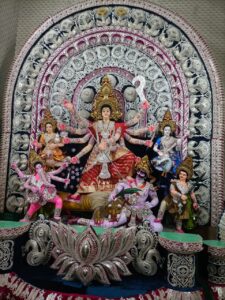
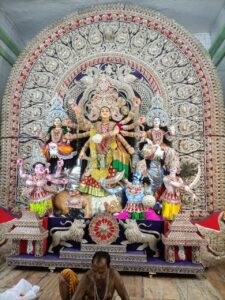
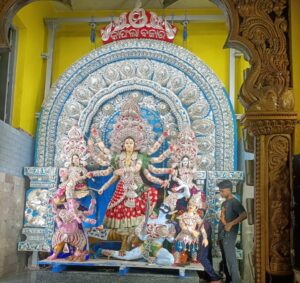
In another mythology found in India’s eastern and northern states, Goddess Durga destroys the demon Mahishasura to bring peace to the world. The Navratri festival is celebrated because the struggle between the Goddess and the demon lasts ten days. The Goddess Durga kills Mahishasura on the tenth day, and the day is celebrated as Vijayadashmi, which means ‘success that was attained on the tenth day’. Each of the preceding nine days of Vijayadashami is dedicated to a specific powerful incarnation of Goddess Durga, and residents in the region’s north and west fast while adoring the Goddess in her nine manifestations.
The eastern and north-eastern regions of India do not fast during Durga Puja because it is a festive time for them, and they enjoy the event with much pomp and fervor. Goddess Durga is worshipped for five days in the eastern and northeastern areas of the country, and on the tenth day, the idol is immersed in water, marking the end of the festivities.
In the West, especially in Gujarat, people gather and perform every evening of Navaratri period to music with the local ’Garba’ dance and lots of food and sweets. People dress in traditional and colorful attire and celebrate into the night.
In the East, Durga Pujo is the most awaited festival of the year and is marked by dancing, food, pandal hopping and revelry. It is also a ten day festival in which there are thousands of clay scultptures of Durga and other Gods that are placed across cities and towns on stages called pandals.
In the South, miniatures of Gods and other artifacts are placed on steps at people’s homes to commemorate the Gombe Habba or Golu celebration. The Mysore Dasara celebration is the most sought-after event in the country, held amongst the monarchy of the Mysore palace with firearms, horses, and elephants that people travel from all over the world to witness!
While the event is celebrated differently around the country, it has a strong connection to education and learning. This festival is dedicated to Saraswati, the Hindu goddess of education, learning, music, and the arts, which is a well-known tradition in numerous South Indian regions. During this occasion, she is worshipped with tools of trade. During this occasion, people in South India maintain, clean, and worship their working instruments, tools, books, and livelihood implements in honor of Goddess Saraswati and Durga. Children who are starting school are accepted to their new schools on Vijayadashami day, which is considered an auspicious day for new beginnings such as purchasing a new home or vehicle.
“HAPPY DUSSEHRA”