




 Finance

The Government of India will apply the updated GST structure on Monday, marking the most substantial revision of the Goods and Services Tax (GST) regime.
The broad adjustments, authorized earlier this month by the GST Council, would implement a simplified two-tier tax system and revise rates for over 375 items, directly affecting household budgets across the country.
The new framework will tax the majority of products and services at either 5% or 18%, replacing the previous four-slab system. A higher levy of 40% will apply only to ultra-luxury items, sin goods, and other depreciating things.
Essential commodities like as food grains, medicines, and daily-use consumer goods will remain in the 5% range, ensuring affordability for the average person. Meanwhile, mid-range products that were previously taxed at 12% may suddenly be less expensive because the 12% slab has been lifted.
Ghee, butter, paneer, coffee, snacks, jams, ketchup, dried fruits, and ice cream are among the items that would have their GST rates reduced. The government claims that this change is intended to bring financial relief to urban and semi-urban people, particularly ahead of the holiday season.
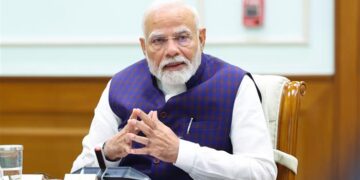
To mark the start of the new GST regime, Prime Minister Narendra Modi declared on Sunday that a statewide “GST Utsav” would begin on the first day of Navratri, calling it a “festival of savings” for all Indians.
“Next-gen GST reforms are being implemented from tomorrow. It is like a GST saving festival,” PM Modi said in his national address. “From September 22, people will be able to buy their favourite items at lower prices. The poor and the new middle class are getting double benefits after the GST rate cuts.”
On September 18, the Union Finance Ministry declared the increased Central GST (CGST) rates, while state governments issued comparable notifications for State GST (SGST). The combined effect of these adjustments will be felt starting Monday.
With the new system, known as GST 2.0, the government hopes to increase consumption, simplify compliance, and make the indirect tax structure more visible and user-friendly. Small enterprises, MSMEs, farmers, women, and youth are likely to profit greatly from the reforms.
Source: IANS