




 Finance
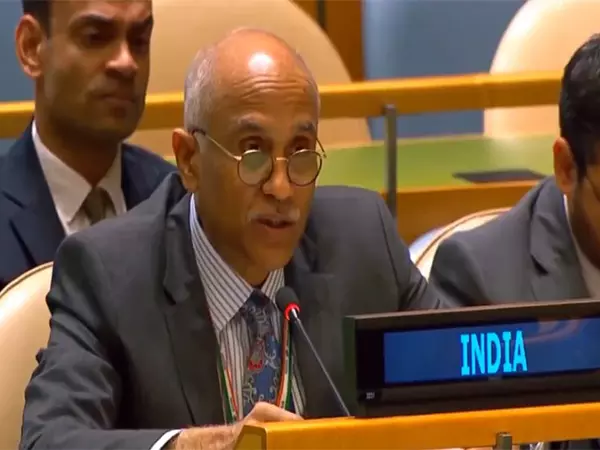
India abstained from voting on the United Nations General Assembly resolution on the situation in Afghanistan on Monday, citing ongoing concerns about the use of the country’s territory by designated terrorist groups.
(Video Souce: @IndiaUNNewYork)
The resolution, titled “The situation in Afghanistan,” was adopted with 116 votes in favor, two against (Israel and the United States), and 12 abstentions, including India.
India’s Permanent Representative to the United Nations, Ambassador Parvathaneni Harish, noted that a “business as usual” approach without new and targeted initiatives is unlikely to achieve the outcomes the international community envisions for the Afghan people. He added that India is closely monitoring the security situation in Afghanistan.
Explaining India’s abstention, Ambassador Haris emphasized the country’s focus on humanitarian aid and capacity-building initiatives for the Afghan people. He also stressed the need for coordinated global efforts against terrorism and called for balanced policies to address Afghanistan’s challenges.
On social media platform X, Ambassador Parvathaneni Haris wrote:
“India as Afghanistan’s contiguous neighbour has been guided by our longstanding friendship and special relationship with Afghan people.
India’s immediate priorities in Afghanistan include the provision of humanitarian assistance and the implementation of capacity-building initiatives for the Afghan people.
The international community must direct its coordinated efforts towards ensuring that entities and individuals designated by the UNSC—Al Qaeda and its affiliates, ISIL and its affiliates including Lashkar-e-Tayyiba and Jaish-e-Mohammed—along with their regional sponsors who facilitate their operations, no longer exploit Afghan territory for terrorist activities.
External Affairs Minister Dr. S. Jaishankar recently spoke with the Acting Foreign Minister of Afghanistan. We welcome the strong condemnation of the Pahalgam terrorist attack on April 22, 2025, by the Afghan side.
Any coherent policy to address a post-conflict situation must incentivize positive behaviour and disincentivize harmful actions. An approach focused only on punitive measures is unlikely to succeed. No new policy instruments have been introduced to address the worsening humanitarian crisis in Afghanistan since August 2021. A ‘business as usual’ approach, without new and targeted initiatives, is unlikely to deliver the outcomes the international community envisions for the Afghan people.
While we remain committed to continued engagement with all relevant stakeholders and broadly support the international community’s efforts towards a stable, peaceful and prosperous Afghanistan, India has decided to abstain on this resolution.”