



 Finance
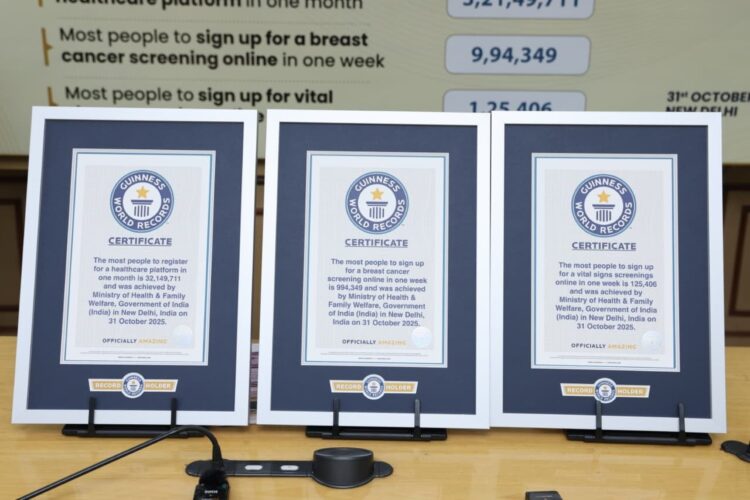
Union Health and Family Welfare Minister J.P. Nadda stated on Saturday that India had acquired three Guinness World Records titles as part of the statewide ‘Swasth Nari Sashakt Parivar Abhiyaan,’ marking a significant milestone in preventative and women-centric healthcare.
Taking to X, Nadda, who is also the BJP President, wrote: “A Record-Breaking Milestone for Women’s Health! India achieves three GUINNESS WORLD RECORDS titles under the nationwide #SwasthNariSashaktParivarAbhiyaan, reaffirming our commitment to preventive and women-centric healthcare.”
“Held from 17th Sept to 2nd Oct 2025 in conjunction with Poshan Maah, the campaign focused on improving health & nutrition among women, adolescent girls, and children, ensuring early detection, essential healthcare access, and empowering families for a healthier Bharat. Over 19.7 lakh health camps were organised under this campaign with a footfall of more than 11 crore people across all districts,” he added.
The Health Minister further said that this achievement marks a proud stride towards a Swasth Nari, Sashakt Parivar & Viksit Bharat.
“Inspired by the vision of Hon’ble Prime Minister Shri @narendramodi Ji and the spirit of Seva and Bharat First, this achievement marks a proud stride towards a Swasth Nari, Sashakt Parivar & Viksit Bharat,” he said.
The Swasth Nari Sashakt Parivar Abhiyaan, a pioneering program launched by the Ministry of Health and Family Welfare in partnership with the Ministry of Women and Child Development, aims to improve healthcare services for women and children by focusing on access, quality, and awareness. Envisioned as a Jan Bhagidaari Abhiyaan, it brings together government entities, private hospitals, and healthcare experts to develop an inclusive model of healthcare delivery that touches every corner of the country.
Aligned with India’s larger developmental aims, the campaign uses platforms like Anganwadis to broaden its reach and sustain mother and child health programs. It complements key efforts such as Mission Shakti, which focuses on women’s safety and empowerment, and Poshan 2.0, which combats malnutrition among women and children.
The Abhiyaan prioritized women’s health through comprehensive screening and personalized medical care. The initiative’s health camps provide checks for dermatological concerns, hypertension, anemia, reproductive health problems, breast and cervical cancer, diabetes, tuberculosis (TB), and sickle cell disease. Specialized counseling sessions were also offered in tribal areas to guarantee equal healthcare access.
These services, funded by the Ministry of Health and Family Welfare, sought to close gaps identified in national health surveys, assuring early detection and treatment to enhance women’s health in both urban and rural settings.