



 Finance
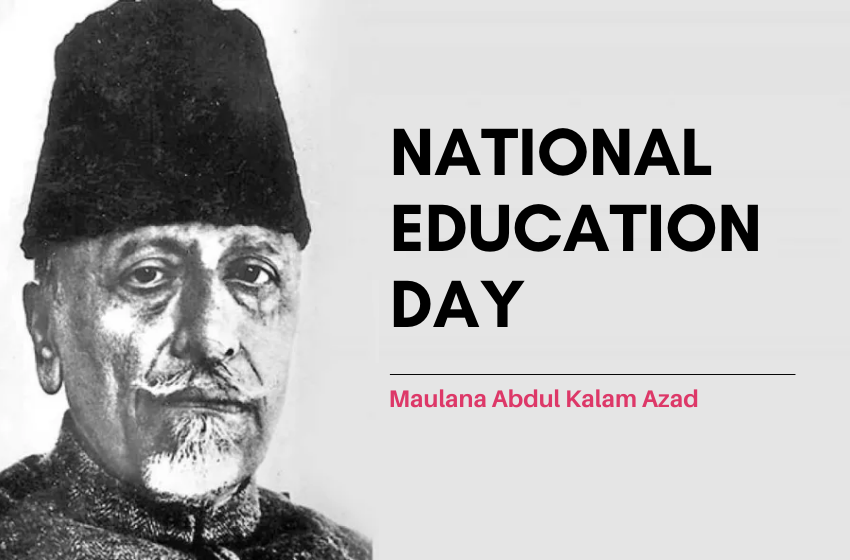
National Education Day 2025 Date, and Significance: Every year on November 11, India observes National Education Day to honor the vision and efforts of Maulana Abul Kalam Azad, the country’s first Education Minister.
In September 2008, the Ministry of Human Resource Development (now the Ministry of Education) announced that November 11 will be designated as National Education Day to honor his birthday and remember his contributions to education.
Why is National Education Day celebrated on November 11 each year?
Every year on November 11th, National Education Day commemorates Maulana Abul Kalam Azad’s birth anniversary. Since its establishment in 2008, educational institutions around India have commemorated this day with a variety of activities such as seminars, essay competitions, workshops, and awareness rallies that highlight the importance of literacy and the country’s dedication to making education available to all.
The day is celebrated to encourage discussions about improving India’s education system, addressing contemporary challenges, and reaffirming the constitutional commitment to education as a fundamental right. It reminds us that education is not just about academic achievement but about fostering critical thinking, innovation, and social progress.
Maulana Abul Kalam Azad and a life of learning
Maulana Abul Kalam Azad, born on November 11, 1888 in Mecca, was a well-known scholar, freedom fighter, and visionary leader. His family eventually moved to Calcutta (now Kolkata), where he acquired a basic education in Arabic, Persian, and Islamic theology. Despite his conventional background, Azad had a strong interest in Western philosophy, science, and literature, which helped build his progressive perspective.
As a journalist and thinker, Azad’s writings challenged colonial power and promoted national unity. In 1912, he launched the Urdu weekly Al-Hilal, followed by Al-Balagh, both of which were major outlets for anti-colonial beliefs. His active role in India’s independence movement saw him become one of the youngest presidents of the Indian National Congress in 1923, and later, a close associate of Mahatma Gandhi.
After independence, Maulana Azad was appointed as the first Education Minister of independent India. His tenure was marked by visionary reforms that laid the foundation for the country’s educational framework. He firmly believed that education should be a tool for social transformation and national development, emphasizing universal primary education, adult literacy, and technical training.
In 1992, he was posthumously awarded the Bharat Ratna, India’s highest civilian honor.
Azad’s legacy in Indian education
Maulana Azad’s contribution to Indian education remains immense – he was instrumental in the establishment of premier institutions such as the University Grants Commission (UGC), the Indian Institutes of Technology (IITs), and the Indian Institute of Science (IISc) in Bangalore.
He also played a significant role in strengthening the All India Council for Technical Education (AICTE) and promoting research and scientific learning.
Azad’s vision extended beyond formal education; he emphasised cultural and literary development and worked to promote Indian languages as mediums of learning. His efforts also led to the formation of the Sahitya Akademi, Lalit Kala Akademi, and Sangeet Natak Akademi, institutions that continue to promote India’s rich cultural heritage.
Why do we celebrate Education Day to commemorate Maulana Azad?
The day is named after Maulana Azad, who made outstanding contributions to the modern Indian educational landscape. Every policy decision he made was influenced by his belief in education as the foundation for a just, cohesive, and progressive society. Azad saw that genuine independence necessitated not just political liberties but also educational opportunities for all citizens, regardless of caste, class, or gender.
Source: IE