





 Finance
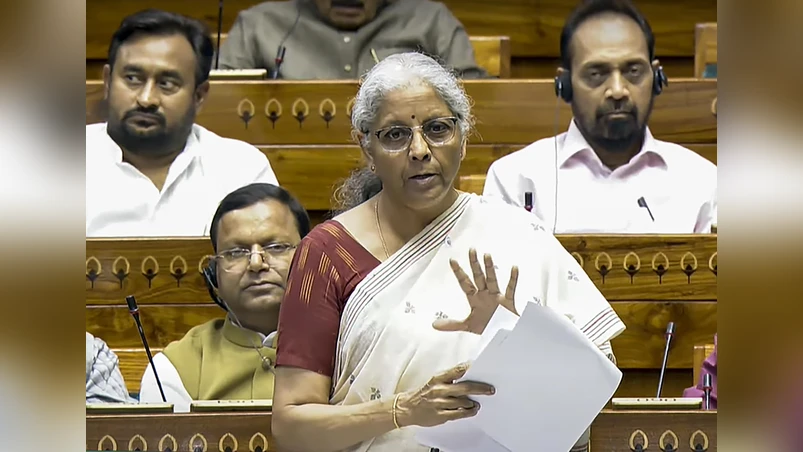
The Income Tax Bill 2025 was approved by the Lok Sabha on Monday after it incorporated “nearly all of the Select Committee’s recommendations.” According to Union Finance Minister Nirmala Sitharaman, the 1961 act will be replaced by the new income tax bill, which, along with the Taxation legislation (Amendment) Bill, was also passed, aims to update and consolidate existing legislation on the subject.
Next, it goes to the Rajya Sabha and, if and when cleared there, to the President for a formal nod.
After being first introduced in February, the income tax bill was sent to a Parliamentary Select Committee for review. On July 21, the committee sent in its recommendations. On Monday, August 11, a revised measure was therefore introduced.
Why new bill, will it change income tax rates?
Following the withdrawal of an earlier draft, concerns were previously addressed by Parliamentary Affairs Minister Kiren Rijiju. He claimed that it would have been time-consuming to introduce each amendment separately, which is why the new bill was necessary.
The Select Committee of the Lok Sabha, chaired by BJP member Baijayant Panda, made 285 suggestions. “It will be the same bill incorporating all the amendments accepted by the government,” Rijiju said.
The income tax department said last week that the new income tax bill does not seek to change tax rates.
“It is clarified that the Income Tax Bill, 2025 aims at language simplification and removal of redundant/obsolete provisions,” the department said in a post on X.
According to TOI, the bill includes measures to increase revenue collection through technical and data-driven means, rules for digital taxes, and dispute resolution procedures.
“Almost all of the recommendations of the Select Committee have been accepted by the government. In addition, suggestions have been received from stakeholders about changes that would convey the proposed legal meaning more accurately,” the bill’s Objectives section said.
The corrections include those in drafting, in the use of phrases and cross-referencing of older or other laws, the report said.
In July, the 31-member Select Committee delivered over 4,500 pages of findings and recommendations.
The changes include provisions for refunds even in cases where returns are delayed, but only for smaller taxpayers.
The terms “parent company” and “non-performing assets (NPAs)” have been clarified. The committee further recommends that the tax exemptions granted to charitable trusts and NGOs should not be impacted by anonymous contributions.
The ideas include providing ‘nil’ tax-deduction certificates to individual taxpayers in order to facilitate a more thorough and organized record of all income.
Additionally, it permits the forgiveness of some penalties in the event that non-compliance is shown to be inadvertent.