



 Finance
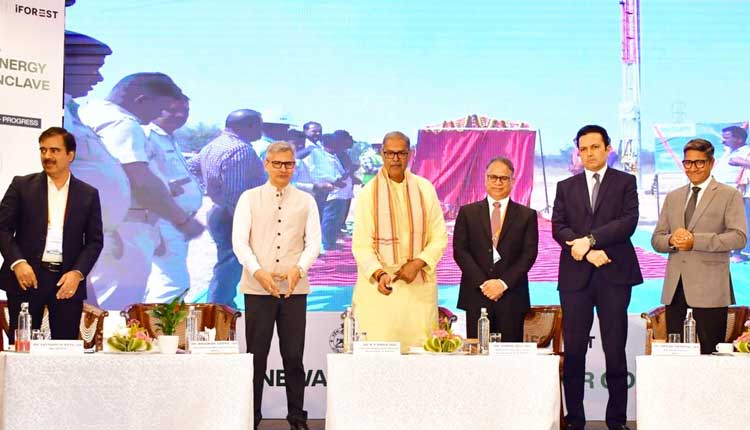
The third edition of the Odisha Renewable Energy Investor Conclave 2026 in Bhubaneswar resulted in ₹67,000 crore in renewable energy investments against 6.8 GW of proposed capacity. Five significant MoUs were also signed.
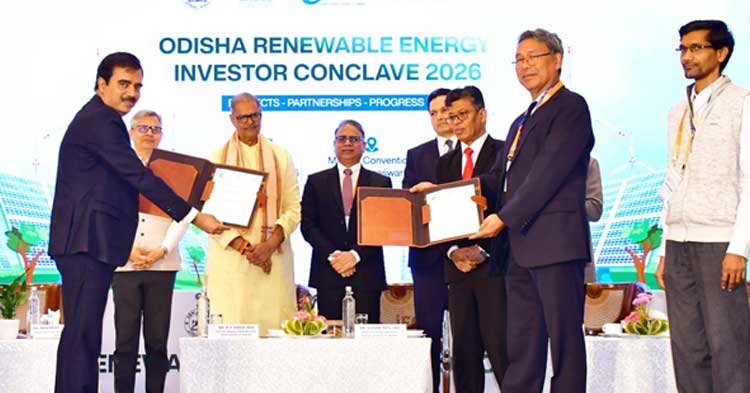
Five Memorandums of Understanding were signed by GRIDCO on behalf of the Energy Department with a variety of investors and knowledge partners. These include agreements with NHPC for 1,000 MW of pumped storage projects, NEEPCO for 800 MW of pumped storage capacity, BPCL for ground-mounted solar, floating solar PV, and pumped storage projects, and Axis Energy Ventures India Pvt. Ltd.’s combined 5,000 MW portfolio across wind, agro-voltaic, solar power, hybrid projects with battery storage, and green hydrogen and its derivatives. Another MoU was signed with Vasudha for collaboration on floating solar PV and agri-PV projects as a knowledge partner.
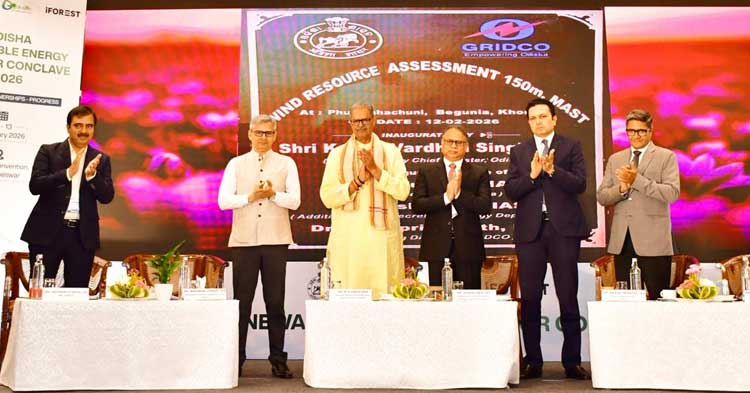
The two-day conclave, hosted by the Energy Department of the Government of Odisha in collaboration with GRIDCO Limited, brought together policymakers, investors, developers, financial institutions, technology suppliers, and industry experts to expedite renewable energy investments in the state. The International Forum for Environment, Sustainability, and Technology (iFOREST) acted as the knowledge partner.
The summit was opened by Deputy Chief Minister Kanak Vardhan Singh Deo, who also announced the state’s first wind resource assessment project and a City Accelerator Program for six Odisha cities. Addressing the opening session, Singh Deo stated that Odisha is dedicated to become a leader in India’s renewable energy transformation. Referring to India’s ambitious target of achieving 500 GW of non-fossil fuel energy capacity by 2030, he said Odisha is contributing meaningfully to that national goal. He highlighted that the state’s long coastline provides a distinct advantage for wind energy development alongside solar and small hydro projects, and added that robust policies and a favourable approval process have made Odisha an attractive investment destination.
Vishal Kumar Dev, Additional Chief Secretary of the Energy Department, emphasized that the state’s renewable energy plan focuses on both capacity addition and system integration. He stated that the advancement of pumped storage and battery systems, along with renewable generation, will provide grid stability and long-term energy security. The scale-up of renewable energy in Odisha is supported by a strong policy framework and dedicated institutions at the state and district levels. This year’s conclave resulted in ₹67,000 crore in investments and 6.8 GW capacity through commitments and agreements signed.
According to Akash Tripathi, Managing Director of SECI, renewable energy adoption is both a climate and economic imperative. He stated that Odisha has enormous potential in floating solar and wind energy and could become a major storage hub through pumped storage projects. Dr. Chandra Bhushan, CEO and President of iFOREST, expressed similar sentiments, stating that Eastern India has enormous untapped renewable potential and that Odisha’s proactive push for floating solar, pumped storage, and battery storage solutions could play a critical role in India’s next phase of renewable energy expansion.
During the conclave, the state showcased a diverse renewable energy project pipeline that included generation and storage technologies. This includes around 5,000 MW of floating solar PV projects, 18,000 MW of pumped storage projects spread across 36 identified sites, and 500 MWh of battery energy storage systems backed by viability gap finance. Odisha’s clean energy roadmap includes included opportunities for wind energy, distributed renewables, small hydro, agrivoltaics, and waste-to-energy.
Dr. Satyapriya Rath, Managing Director of GRIDCO Limited, stated that through the Renewable Energy Nodal Agency (RENA) Cell, GRIDCO facilitates projects from idea to commissioning, assuring transparent procurement, assured offtake, and speedy bid processes. Bhaskar Jyoti Sarma, Chairman-cum-Managing Director of OPTCL, attended the summit, which drew a large number of private-sector developers and investors.
The event also included technology-focused talks on small hydropower, battery storage, and biomass energy, as well as high-level Business-to-Government meetings that facilitated collaboration among developers, OEMs, financiers, utilities, and industrial offtakers. With a well defined project pipeline and an investor-ready policy environment, Odisha demonstrated its willingness to rapidly scale up clean energy deployment, reaffirming its position as a key driver of renewable growth in Eastern India.