


 Finance
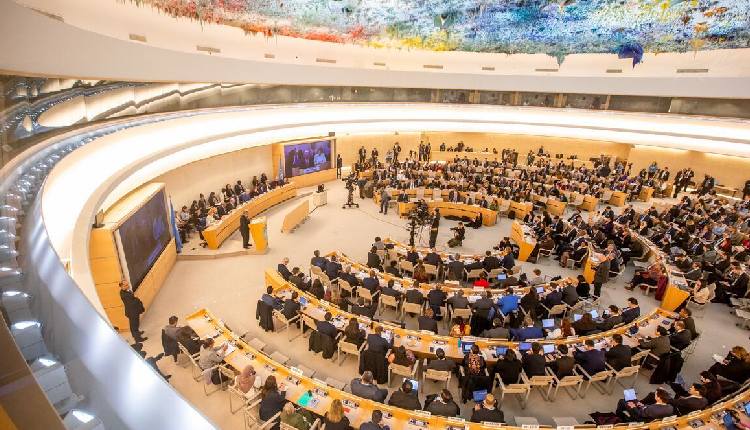
India was voted unopposed to the Human Rights Council (HRC) for the seventh time, serving a three-year term beginning next year with a vow to be a bridge builder.
When India’s election to the General Assembly was announced on Tuesday, Permanent Representative P Harish stated, “This election reflects India’s unwavering commitment to human rights and fundamental freedoms.”
He added in his X post “We look forward to serve this objective during our tenure”.
Making its nomination, India said its candidature “is a reflection of India’s dedication to advancing the principles of human rights globally, fostering dialogue and bridging divides to achieve collective progress”.
“India’s enduring philosophy of ‘Vasudhaiva kutumbakam’ (‘The world is one family’) underscores its unwavering commitment to global unity, openness and mutual respect”, it said.
India said its commitment to human rights is rooted in its constitution that “guarantees the fundamental rights of its citizens and promotes the ideals of justice, liberty and equality”.
The 47-member Human Rights Council, situated in Geneva, is the primary UN organization in charge of promoting and safeguarding human rights around the world, monitoring the situation in member countries, and providing a venue for discussion.
The members are allocated by region, with Asia-Pacific nations receiving 17 seats, four of which are up for election this year under the rotating system.
Although India was unopposed for one of the four Asia-Pacific group seats, it received 177 votes out of 188 cast.
India last served on the Human Rights Council in 2024, when it completed its second consecutive term.
Because countries are not permitted to serve more than two consecutive terms, India took a sabbatical this year and will run for the term beginning next year.
The HRC was established by the General Assembly in 2006, when India was elected for its first term.
Angola, Britain, Chile, Ecuador, Egypt, Estonia, Iraq, Italy, Mauritius, Pakistan, Slovenia, South Africa, and Vietnam were the remaining 13 countries elected on Tuesday.
The polarization that plagues the UN system is replicated in the Human Rights Council, where India has committed to heal the divide.
In February, US President Donald Trump said that his country will no longer cooperate with the Human Rights Council.
Source: IANS