


 Finance
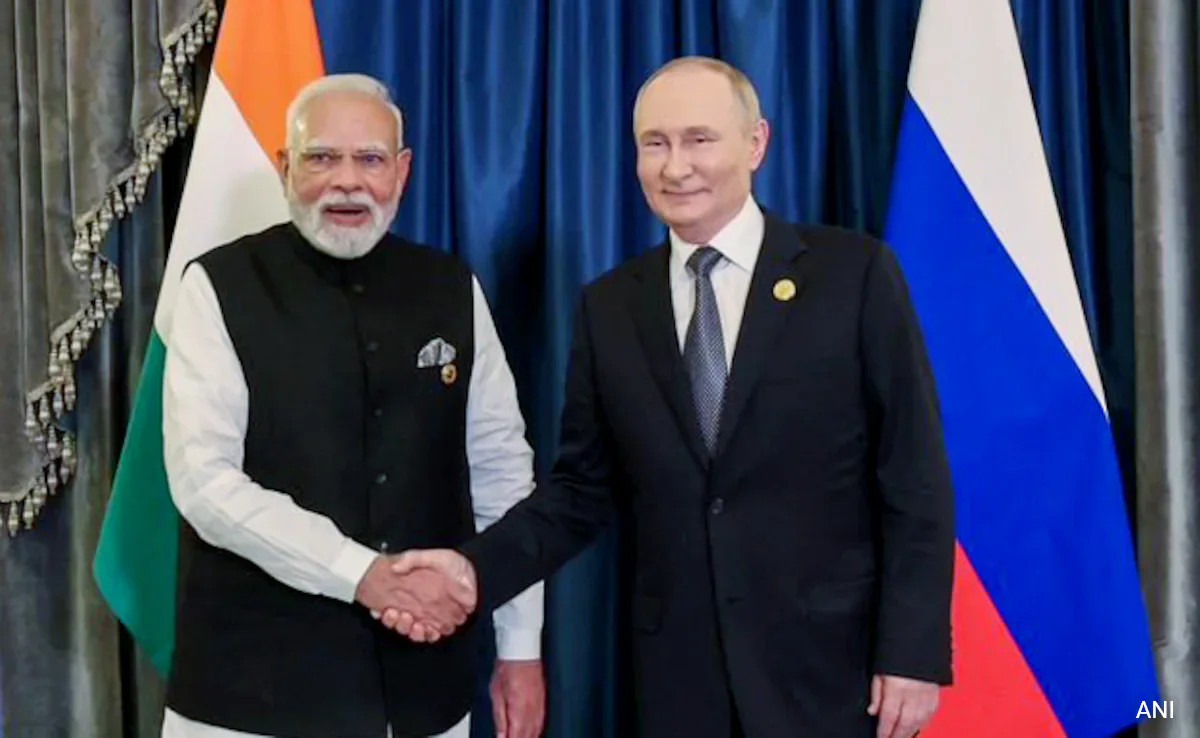
Russian President Vladimir Putin’s visit to New Delhi on December 4-5, his first in four years, will kick off a renewed push to expedite India-Russia economic collaboration, with a slew of agreements on trade, health care, mobility, media, and economic cooperation due to be signed.
Along with the ongoing debate on defense, security, space, and nuclear cooperation, the visit is expected to focus heavily on closing the growing trade imbalance. Bilateral commerce between India and Russia reached a record USD 68.7 billion in FY 2024-25, owing partly to a strong increase in energy imports. India exported USD 4.9 billion in products, while Russia imported USD 63.8 billion, demonstrating the severity of the disparity.
Fertilizer imports remain a vital part of India’s relationship with Russia. New Delhi already imports 3 to 4 million tonnes of fertilizer from Moscow each year, and both sides want to strengthen this supply agreement to assure long-term agricultural security. The India-Eurasian Economic Union Free Trade Agreement, which was negotiated in its first round last year, is a crucial economic deliverable. Officials from the Ministry of External Affairs stated that the goal is to “have the agreement soon,” with the FTA likely to considerably improve market access on both sides.
Another significant accomplishment is the completion of an agreement on the mobility of skilled and semi-skilled employees. The agreement, which is currently undergoing internal procedures, is expected to facilitate worker movement.
Coinciding with Putin’s visit, a two-day India-Russia Business Forum will be held in New Delhi, with the goal of increasing Indian engineering exports to Russia, increasing Russian imports of Indian medicines and food items, and improving collaboration in digital services. These conversations are consistent with the ambitious bilateral aim of generating $100 billion in commerce by 2030.
Putin will be accompanied by Defence Minister Andrei Belousov and a high-level delegation from business and industry, indicating Moscow’s intention to widen its strategic agenda beyond traditional defense relations.
“India and Russia have had one of the most stable relationships in modern times. It has contributed to peace and stability. On both sides, there is deep understanding of how important this relationship is,” officials said.
In a key pre-visit signal, Russia’s State Duma ratified the Reciprocal Exchange of Logistic Support (RELOS) treaty, a historic military logistics arrangement agreed earlier this year. The agreement enables both countries’ military planes, ships, and troops to use each other’s facilities for joint exercises, training, humanitarian missions, and disaster relief activities. Duma Speaker Vyacheslav Volodin said the measure reaffirmed the “strategic and comprehensive” nature of India-Russia relations.
Health cooperation is emerging as a strategic area. Both governments are laying the groundwork for deeper collaboration in pharmaceuticals and medical technology, including increased Indian exports of medicines and devices, promotion of local manufacturing by Indian firms in Russia, and joint development of modern pharma and MedTech units — a key step toward building “resilient healthcare systems.”