



 Finance
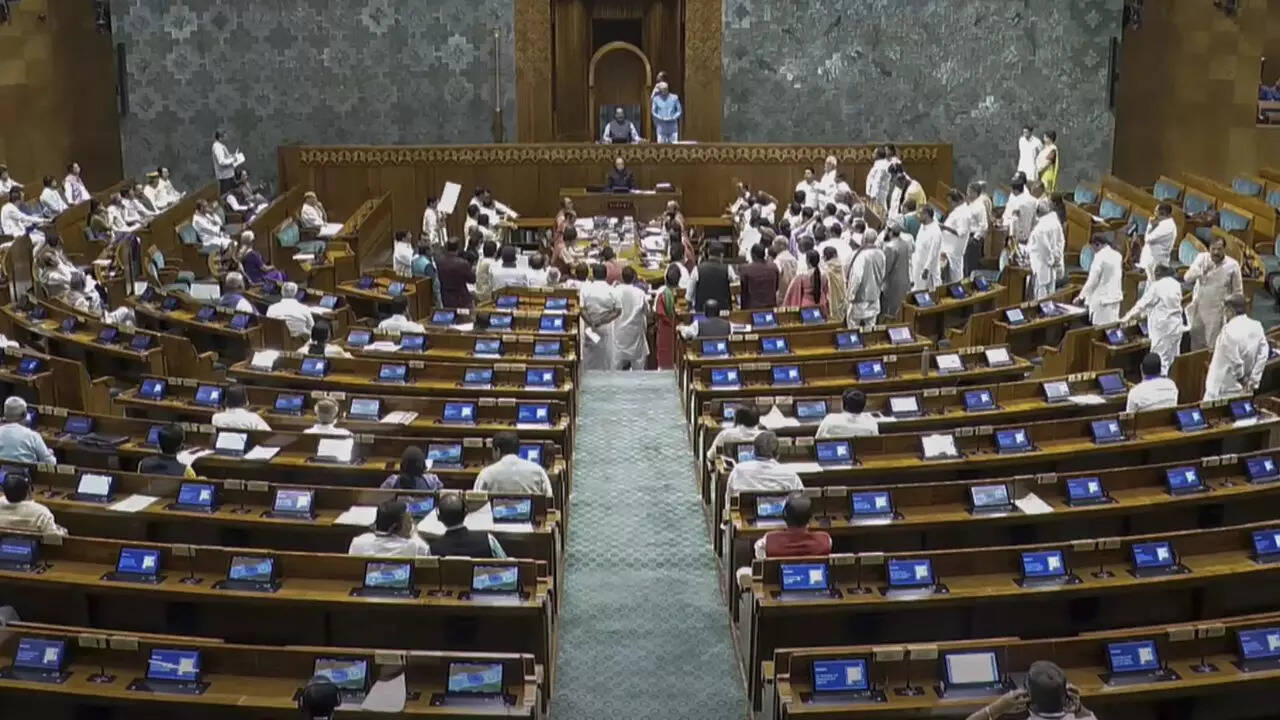
The Rajya Sabha adjourned sine die on Thursday following the approval of “The Promotion and Regulation of Online Gaming Bill, 2025,” which was sponsored by Union Minister Ashwini Vaishnaw. The session was characterized by loud protests and constant sloganeering.
Notwithstanding a contentious dispute over the Special Intensive Revision (SIR) of Bihar’s voter lists, the Bill—which had already passed the Lok Sabha—was approved by voice vote. The goal of the law is to provide a national framework for regulating the online gaming industry, which includes social gaming, instructional games, and e-sports. Additionally, online money games that involve betting or gambling are strictly prohibited, particularly those that operate from foreign jurisdictions or across state lines.
The Bill suggests establishing a centralized authority to manage the sector’s strategic planning, policy coordination, and regulatory enforcement.
Speaking in favour of the Bill, Minister Vaishnaw underlined the government’s choice to put the welfare of young people and the middle class ahead of possible income increases.
“There are social evils in every era,” he said, “but under the visionary leadership of Prime Minister Modi, we have chosen to act decisively.”
He gave concerning statistics, stating that around 45 lakh people are impacted by internet gambling, with losses estimated to be above Rs 30,000 crore.
The minister cautioned that the problem has grown into a public health emergency, with families losing important members and breadwinners to addiction. The World Health Organization has categorized online money gambling addiction as a psychological condition.
The minister also raised concerns about the misuse of online gambling platforms for terror funding and drug trafficking, calling them “safe havens” for illicit activities. “This problem has grown like the drug menace,” he said, warning that powerful interests may attempt to challenge the Bill in court or sway public opinion through social media.
“But our Prime Minister stands firmly with the youth and middle class,” he added.
The Bill suggests establishing a centralized authority to manage the sector’s strategic planning, policy coordination, and regulatory enforcement.
Despite the importance of the Bill, opposition lawmakers kept interrupting the session to demand a discussion on the amendment of the Bihar voter list.
Mallikarjun Kharge, the leader of the opposition, tried to speak but was cut off by the deputy chairman. As they brought up the subject of SIR, other members including John Brittas and Dr. R. Sivadasan attempted to make modifications but were turned down because their voices were overpowered by the chaos.
BJP MP Kiren Rijiju questioned the opposition’s dedication to public welfare and criticized them for not discussing the Bill’s content.
Deputy Chairman Harivansh adjourned the Rajya Sabha for ten minutes after the Online Gaming Regulation Bill was passed, adding a little respite to a session that had already been plagued by numerous interruptions.
He gave the members an honest assessment of the conduct and output of the 268th session when the House met again. He pointed out that the session was marred by chaos and cost a great deal of important legislative time, even though the chair made a concerted attempt to keep things civil.
The House only operated for 41 hours and 15 minutes, resulting in a dismal 38.88 percent productivity rate, which he said called a situation that needed careful consideration.
The Deputy Chairman emphasized that members might submit 285 Zero Hour alerts, make 285 Special Mentions, and ask 255 starred questions. Only seven Zero Hour submissions and 61 Special Mentions were raised during the proceedings, and only 14 questions were truly addressed.
The House passed or returned 14 government bills, including the one governing online gaming, in spite of the disturbances.
It also said goodbye to six departing members and held a discussion on Operation Sindoor, which was started in reaction to the recent terror assault in Pahalgam.
As Vice President Jagdeep Dhankhar resigned on July 21, Deputy Chairman Harivansh also recognized that he now had a constitutional obligation. His comments emphasized the seriousness of the situation, both with regard to the ongoing constitutional transition and legislative accountability. He then declared the House adjourned sine die.
Source: IANS