




 Finance
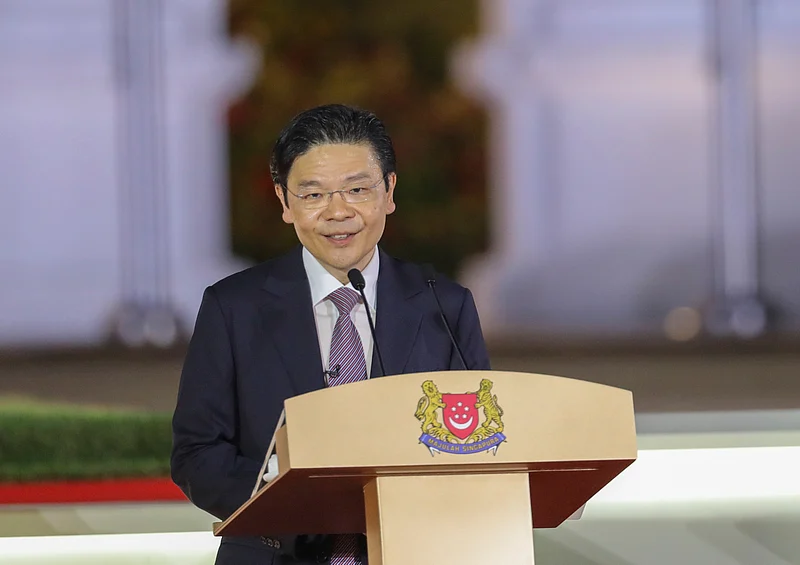
Singapore’s Prime Minister Lawrence Wong is set to arrive in India on Tuesday for a three-day official visit, marking a key moment in the deepening strategic partnership between the two nations.
Several high-level agreements in a variety of fields, including finance, digital innovation, skill development, civil aviation, maritime cooperation, and space technology, are anticipated to be signed during the visit, which takes place in conjunction with the 60th anniversary of India and Singapore’s diplomatic ties.
In New Delhi, Prime Minister Wong and Prime Minister Narendra Modi will meet bilaterally. It is anticipated that the two leaders would talk about regional and international events and look into potential new areas of cooperation.
The visit is intended to further advance the Comprehensive Strategic Partnership, which was formally created during PM Modi’s visit to Singapore in September 2024, according to officials from both sides.
The third India-Singapore Ministerial Roundtable (ISMR), which was conducted in New Delhi earlier this month, precedes the visit.
The six main pillars of cooperation—Advanced Manufacturing, Connectivity, Digitalization, Healthcare and Medicine, Skill Development, and Sustainability—were examined by the ministers of both nations during the roundtable. A number of fresh projects were found to improve cooperation in various fields.
A solid bilateral relationship based on close cultural, defense, and economic connections has existed between Singapore and India. Cooperation has grown in recent years to include new fields like cybersecurity, green energy, finance, and smart urban development.
Both nations have stated a willingness to further institutionalize and future-proof its collaboration in a rapidly changing geopolitical context, while trade and investment flows are growing and people-to-people links are being strengthened through tourist and educational exchanges.
India’s biggest ASEAN trading partner is Singapore. It is the main source of foreign direct investment (FDI) and one of the biggest sources of foreign portfolio investments and external commercial borrowing.
Source: IANS