




 Finance
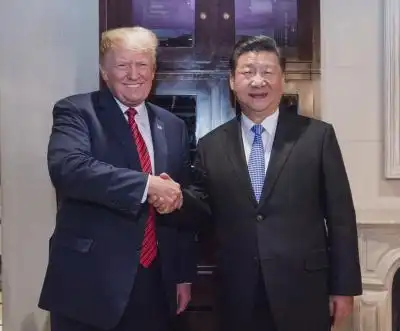
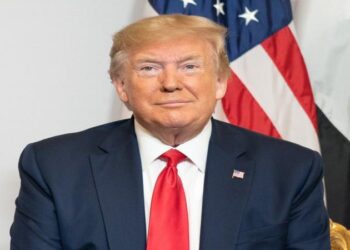
US President Donald Trump and Chinese President Xi Jinping will meet in the South Korean port city of Busan on Thursday, marking their first in-person meeting since Trump’s return to office in January. The meeting is expected to cover key strategic, economic, and geopolitical issues, laying the groundwork for a possible de-escalation of bilateral tensions between the world’s two biggest economies.
Before the meeting, President Trump wrote on Truth Social, “I’m very much looking forward to meeting with President Xi of China. It will take place within a few hours! “President DJT.”
Trump landed in South Korea on Wednesday after visiting Japan as part of an Asia tour aimed at bolstering regional alliances and tackling economic and defense challenges. The meeting with Xi follows renewed tensions over tariffs and technology controls, as well as China’s recent export restrictions on rare earth materials.
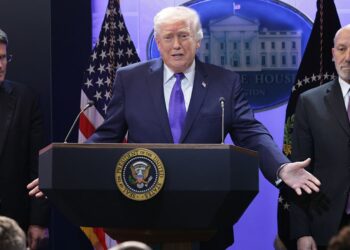
Earlier, speaking to reporters aboard Air Force One, Trump revealed that he may speak to Xi about Nvidia’s advanced Blackwell chips.
“I think we may be talking about that with President Xi,” Trump said. The statement caused an alarm in Washington as experts argued that the removal of export controls on advanced semiconductors would allow Beijing to close the technology gap on AI and hurt the American leadership.
Rush Doshi, a Senior Fellow at the Council on Foreign Relations and former National Security Council official under the previous Biden administration, wrote on X, “…seems we are effectively going to dismantle the export control regime on AI chips just as Beijing builds out its regime on rare earth minerals and magnets.”
On October 20, Treasury Secretary Scott Bessent, US Trade Representative Jamieson Greer, China’s Vice Premier He Lifeng, and trade negotiator Li Chenggang reached an agreement in Malaysia on a “framework” for a trade deal.
According to Bessent, the arrangement included a ‘final settlement’ on TikTok, China’s purchase of soybeans, and a one-year suspension in export limits for rare earths.
Li Chenggang described the meetings as “candid and in-depth discussions” that covered themes like as export controls, tariffs, the US investigation into Chinese shipbuilders, and the expansion of bilateral commerce, disclosing that the two sides had reached a “preliminary consensus.”
Days after the framework agreement, Chinese Foreign Minister Wang Yi spoke by phone with US Secretary of State Marco Rubio, stressing the importance of bilateral ties.
On his first tour to Asia in his second term, Trump announced trade agreements with Malaysia and Cambodia, as well as framework agreements with Thailand and Vietnam that contained promises to vital minerals.
On October 27, the United States and Japan also inked a vital minerals and rare earths pact, pledging to usher bilateral relations into a “new golden age.”
Source: PIB