







 Finance
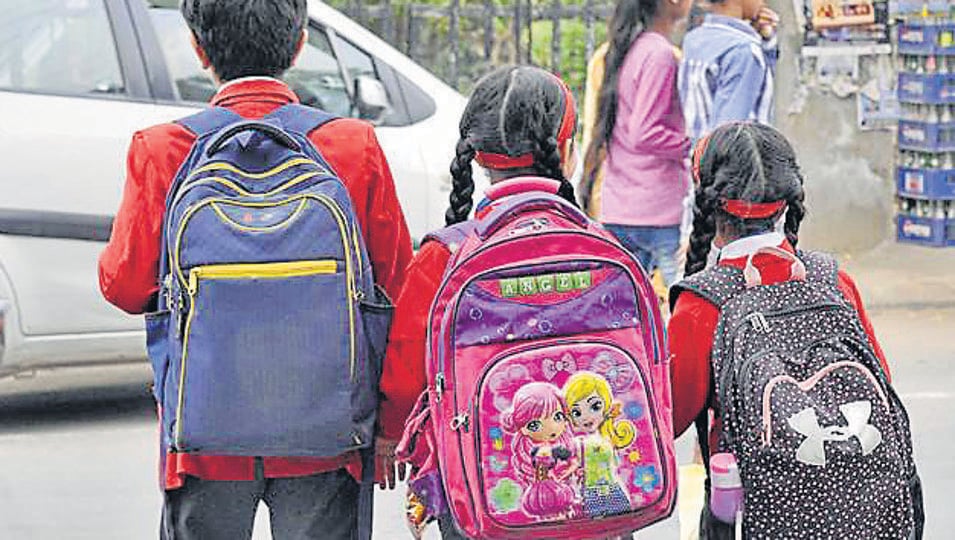
Every morning, we witness children walking to school with heavy bags on their small shoulders. Their shoulders slump forward, their backs arched, and their steps were heavy. What should be a positive start to their day is really putting pressure on their expanding bodies.
Doctors are now ringing the alarm. Overloaded school bags are causing serious health concerns in children as young as eight or nine years old.
“I’ve seen a big rise in children coming in with back pain, stiff necks, and shoulder aches,” says Dr Ashis Acharya, Senior Consultant, Orthopaedics and Sports Medicine. “Some of them even show early signs of spinal misalignment. And the most common reason is the weight of their school bag,” he added.
How much is too much weight?
Doctors recommend that a school bag weigh no more than 10% of the child’s body weight. That is, if a child weighs 30 kg, their school backpack should not weigh more than 3 kilograms.
However, the reality is far from ideal. Most pupils carry bags weighing 6 to 8 kgs, and in some cases even more. These bags contain textbooks, notebooks, lunch boxes, water bottles, stationery, and, in certain cases, technological gadgets such as tablets or laptop computers.
“When children carry heavy bags every day, their posture begins to change,” says Dr Acharya. “They lean forward to manage the weight, which can lead to poor spinal alignment, a hunched back, and even muscle fatigue. Using only one strap adds to the problem by causing an uneven distribution of weight, which can lead to muscle imbalance and, in some cases, scoliosis-like symptoms,” he further said.
The long-term impact on kids’ spine health
The human spine is particularly fragile throughout childhood because bones, muscles, and ligaments are still forming. Carrying a heavy bag for several hours per day for several years causes repetitive strain on the spine.
“This can lead to chronic back pain, shoulder strain, and even reduced lung capacity due to the constant hunching of the upper body,” explains Dr Acharya. “In some cases, children also experience numbness, tingling, or red marks on their shoulders—these are signs of nerve compression or excessive strain.”
And while the physical effects are worrying, the emotional toll is just as real. “Pain, discomfort, and fatigue affect a child’s energy, mood, and ability to focus in class. This physical burden adds to the already rising levels of mental stress in children,” he adds.
The solution starts at home and in schools
Parents, don’t worry! The good news is that this problem is entirely avoidable, and it can be fixed without the use of sophisticated equipment or pricey procedures.
According to Dr. Acharya, minor improvements in daily routines and school activities can make a tremendous difference.
To limit the quantity of books that students must carry, schools can provide lockers or implement digital learning methods.
Teachers can arrange timetables so that bulky textbooks are not required for numerous topics on the same day.
Parents should frequently inspect their child’s bag, remove any unneeded goods, and ensure that it is well-padded, lightweight, and correctly fitting.
Children should be trained to always use both shoulder straps and not carry the bag on one side.
Simple stretching and posture exercises at home can also assist increase strength and flexibility. In more serious cases, doctors may prescribe braces or physiotherapy to improve spinal alignment.
“We talk a lot about mental health in children, but physical discomfort is often overlooked,” says Dr Acharya. “If a child says their back hurts, we must take it seriously. Don’t wait for an MRI report to act.”
So, the next time you pack your child’s school bag, check the weight. A lighter bag is more than just comfortable; it also protects your child’s spine and overall well-being.