



 Finance
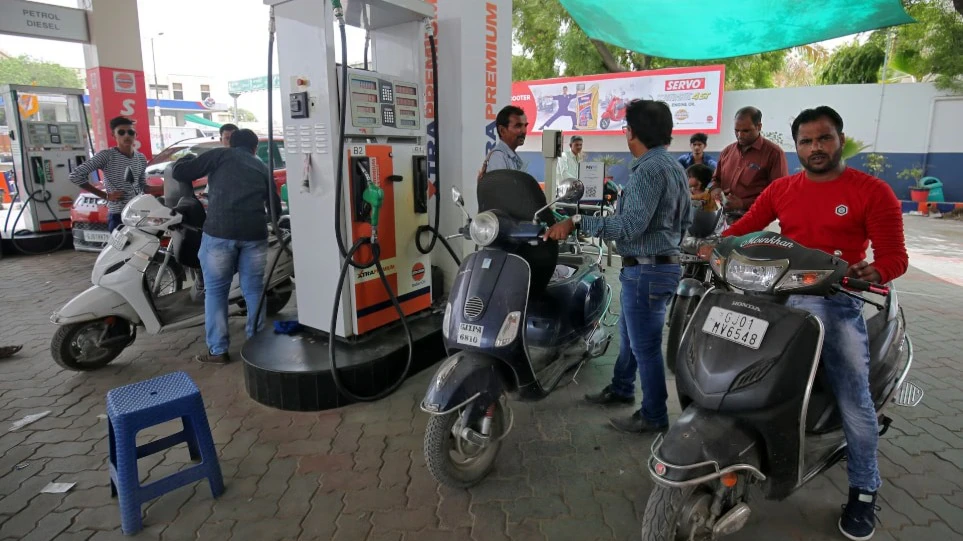
After days of anticipation, the Centre has finally raised retail petrol and diesel prices. The raise, which takes effect on Friday (May 15), is the first for retail consumers in four years. The price of CNG has also increased by Rs 2.
Here are the revised petrol prices (per litre) in the four metros:-
| City | Revised Petrol Price | Hike |
| Delhi | Rs 97.77 | +3.00 |
| Kolkata | Rs 108.74 | +3.29 |
| Mumbai | Rs 106.68 | +3.14 |
| Chennai | Rs 103.67 | +2.83 |
Here are the revised diesel prices for consumers in the four metros:-
| City | Revised Diesel Price | Hike |
| Delhi | Rs 90.67 | +3.00 |
| Kolkata | Rs 95.13 | +3.11 |
| Mumbai | Rs 93.14 | +3.11 |
| Chennai | Rs 95.25 | +2.86 |
Meanwhile, the CNG price in Delhi has been raised by Rs 2 per kg — from Rs 77.09 per kg to Rs 79.09 per kg. A day earlier, CNG price was also raised in Mumbai by Rs 2 per kg. The green fuel will now cost Rs 84 per kg across the Mumbai Metropolitan Region (MMR).
OMC Losses Mount
Before this increase in retail fuel prices, premium petrol prices were hiked in March. All three major oil firms, Indian Oil Corporation Limited (IOCL), Bharat Petroleum Corporation Limited (BPCL), and Hindustan Petroleum Corporation Limited (HPCL), have boosted premium petrol and diesel prices.
However, these state-run oil businesses were still losing almost Rs 1,600 crore every day. They were purchasing crude oil at a higher price but not passing on the cost to retail customers. They even sought the central government about this issue. According to media sources, the Modi government has refrained from boosting fuel costs (so far) to keep inflation under control, as a spike in fuel prices affects the price of every other product.
Before the Iran conflict began on February 28, India’s major oil marketing corporations (OMC) had a green balance sheet. When the battle began to affect global crude oil prices, they attempted to absorb the shock. However, the losses began to snowball within weeks, as the war pushed international oil prices up by more than 50%. In February, before the West Asian war started out, India’s crude oil import basket averaged $69 per barrel. It averaged $113-114 per barrel in the following months.
Several leading economists, including Finance Commission of India Chairperson Dr Arvind Panagariya, have argued that petrol and diesel prices should be allowed to rise.
PM Modi’s Appeal To Save Fuel
Earlier, Prime Minister Narendra Modi asked individuals to save petrol and work remotely (if possible). This, he claimed, would cut India’s foreign outflows and preserve FX reserves.
In response to the Prime Minister’s demand, the Delhi Government, led by Chief Minister Rekha Gupta, began a 90-day public campaign to encourage individuals to make lifestyle changes that cut fuel consumption and boost the domestic economy. She also scheduled two days of work-from-home for government departments.
Despite the continued instability in global energy markets, India retains over 60 days of fuel reserves and nearly 45 days of LPG inventory. The Centre has also frequently claimed that there is no gasoline scarcity in the country.
Petrol, Diesel Price Rise: Impact On Inflation
Increased gasoline, diesel, and CNG prices directly contribute to inflation by rising transportation and logistical expenses. Earlier last week, milk prices were raised. Any increase in the price of such vital commodities depletes household savings and diminishes people’s discretionary spending power, impeding on economic growth.
The argument is straightforward: when prices rise, real consumption tends to slow. Lower consumption dampens production. As output falls, overall economic growth (GDP) suffers.
However, the growth-inflation trade-off was mainly unavoidable. The ongoing Iran war has caused a spike in global crude oil and gas costs, making domestic prices unsustainable. As a result, some of the cost increases have to be passed on to customers.