

 Finance
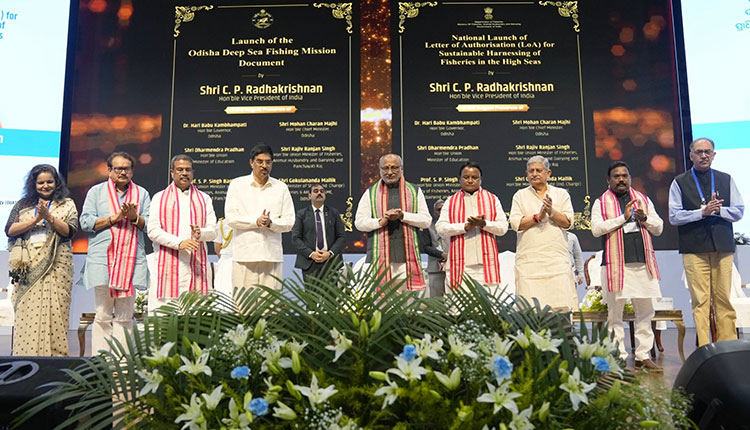
Vice-President C. P. Radhakrishnan launched the national Letters of Authorization (LoA) for Sustainable Harnessing of Fisheries in the High Seas program on Thursday, ushering in a new framework aimed at allowing Indian fishermen to sustainably exploit the country’s vast marine resources beyond coastal waters.
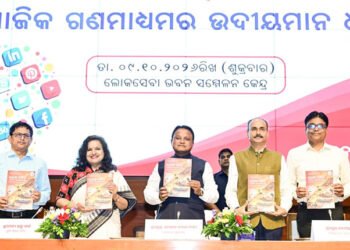
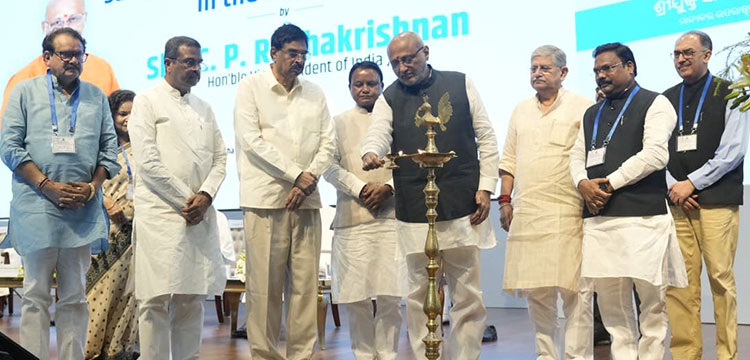
During the occasion in Bhubaneswar, the Vice-President also announced the Odisha Deep Sea Fishing Mission Document and presented Letters of Authorization to ten Fish Farmer Producer Organizations (FPPOs) and fishermen from throughout the country.
Addressing the audience, Radhakrishnan stated that the project marks a new chapter in India’s maritime history by allowing fishermen to sustainably tap the enormous potential of the country’s Exclusive Economic Zone (EEZ) and the High Seas. He stated that the plan shows the Union Government, the Odisha Government, and fishing communities’ shared commitment to promoting growth, sustainability, and prosperity in the fisheries sector.
The Vice-President emphasized India’s marine riches, stating that the country has a coastline of 11,000 kilometers and an Exclusive Economic Zone covering roughly 24 lakh square kilometers, with much of its marine treasure remaining untapped. He said fishing operations have traditionally been concentrated near the shore, but the new framework would enable Indian fishermen to venture into deeper waters for the sustainable harvesting of high-value species such as tuna.
According to Radhakrishnan, India has emerged as the world’s second-largest fish producer, accounting for approximately 8% of worldwide production. The fisheries sector employs about three crore fishermen and farmers, and seafood exports surpassed ₹73,000 crore in the previous fiscal year, according to the speaker.
The Vice-President expressed optimism that the High Seas program would boost India’s seafood exports while also creating jobs along the fisheries value chain, which includes harvesting, processing, cold storage, transportation, packing, logistics, and export services.
He described the new framework as a big step toward strengthening coastal communities, as it prioritizes the granting of Letters of Authorization to fisheries cooperatives, Fish Farmer Producer Organisations, and Indian fishermen.
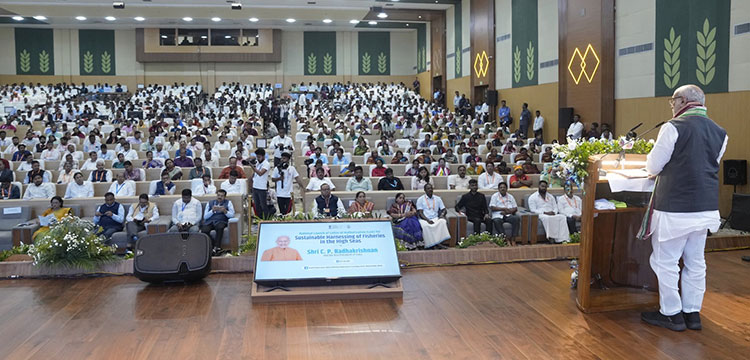
Radhakrishnan emphasized the importance of responsible resource management, saying sustainable fishing is a moral responsibility and that economic progress must be balanced with marine conservation. He emphasized the significance of digital authorization systems, vessel tracking, international certification, and strict adherence to measures designed to combat illegal, unreported, and unregulated fishing.
The Vice-President also encouraged young people to see fisheries as a modern, technology-driven profession with global opportunities, and he urged institutions to continue supporting fishing communities through knowledge, innovation, technology, and financial assistance in order to help realise the vision of Viksit Bharat 2047.
The programme was attended by Odisha Governor Hari Babu Kambhampati, Chief Minister Mohan Charan Majhi, Union Minister for Fisheries, Animal Husbandry and Dairying and Panchayati Raj Rajiv Ranjan Singh, Union Education Minister Dharmendra Pradhan, Union Minister of State for Fisheries, Animal Husbandry and Dairying and Panchayati Raj Prof. S. P. Singh Baghel, Odisha Minister of State for Fisheries and MSME Gokulananda Mallik, senior officials of the Union and State governments, representatives of fisheries institutions, fishermen’s organisations and other stakeholders.