



 Finance
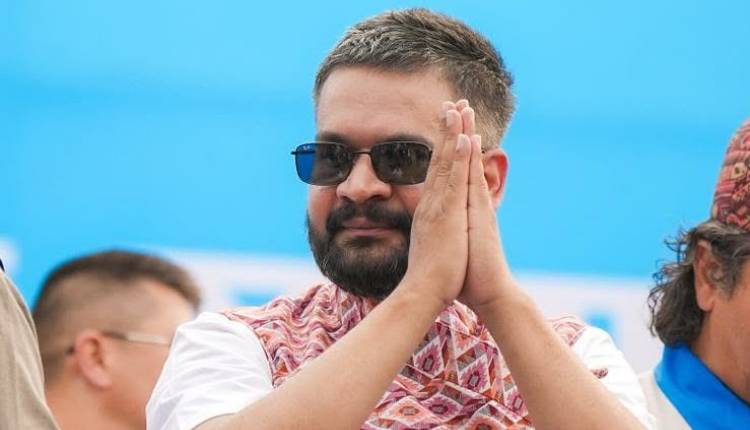
Balendra Shah, the parliamentary party leader of the Rastriya Swatantra Party (RSP), has been named Nepal’s new Prime Minister.
Former Kathmandu Metropolitan City mayor Shah—popularly known as Balen—was nominated to the job on Friday by President Ram Chandra Poudel under Article 76(1) of the Constitution, according to a statement from the President’s Office.
On Thursday, the RSP, which won the recent parliamentary elections with a nearly two-thirds majority, chose Shah as its parliamentary party leader, opening the path for him to become the country’s 47th Prime Minister.
Prime Minister Shah will take the oath of office at the President’s Office on Friday at 12:34 p.m., surrounded by Hindu rites. As per the plan, seven conch players will perform Shankha Naad, a ritual believed to ensure the success of auspicious beginnings.
As he takes the oath, he will also undertake other ceremonies. A group of 108 Batuks (Vedic priests) will recite Swasti Shanti, and 16 Buddhist monks will sing the Ashtamangala, both of which are regarded auspicious in Hindu and Buddhist traditions.
The 35-year-old former mayor is one of Nepal’s youngest prime ministers ever. The majority of parliamentarians elected in recent elections are younger, indicating a generational shift in Nepalese politics.
Shah is a popular figure among the younger generation, and his introduction into national politics on December 28 last year is said to have led to an increase in RSP votes. The nearly four-year-old party launched its election campaign with Shah as its prime ministerial candidate and won a landslide victory in the March 5 parliamentary elections, garnering 182 of 275 seats in the House of Representatives.
Shah defeated former Prime Minister K P Sharma Oli by 49,614 votes, winning 68,348 votes to Oli’s 18,734 in Jhapa-5, eastern Nepal. This is the most votes received by any candidate in Nepal’s parliamentary elections since 1991.
Shah entered politics in 2022, when he ran for mayor of Kathmandu and won as an independent candidate.
Shah was born on April 27, 1990, in Kathmandu to a Madhesi family that valued education and culture. He earned his bachelor’s degree in Kathmandu before pursuing a master’s degree in Structural Engineering at Visvesvaraya Technological University in India.
His engineering education provided him with a practical understanding of infrastructure, urban development, and public works, which influenced his administration style while serving as mayor of Kathmandu Metropolitan City.
Source: IANS