





 Finance
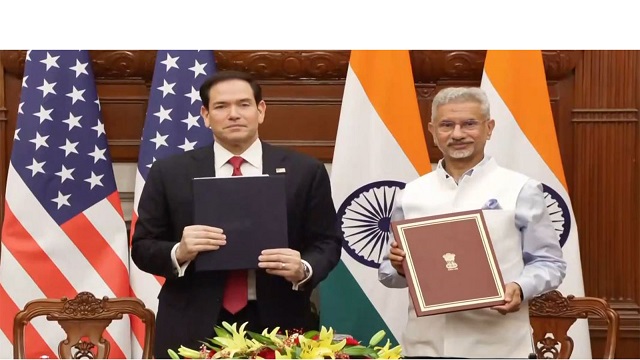
India and the US signed a bilateral framework on Tuesday to ensure the supply, mining, and processing of essential minerals and rare earth elements. This major bilateral agreement signed by India and the United States would have far-reaching repercussions for both countries.
Following bilateral consultations and a meeting of the Quad Foreign Ministers, External Affairs Minister S Jaishankar announced the major accord, emphasizing its strategic relevance in a highly contested global context. Notably, India and the United States signed a groundbreaking bilateral framework, which was a high point of these discussions.
“We are today signing a bilateral India-US framework on securing supplies of mining and processing of critical minerals and rare earths,” Jaishankar said.
Emphasising that the issue was also a key point of discussion during the Quad meeting, the minister noted that securing these resources is “very timely and critical,” regardless of whether it is pursued bilaterally, through the Quad format, or within a larger gathering of like-minded nations.
The framework is designed to deepen comprehensive cooperation across the entire critical minerals and rare earth supply chain. According to Jaishankar, the scope of the partnership will encompass mining, processing, recycling, and related investments. Moreover, the India-US sign landmark bilateral framework sets a new benchmark for such international agreements.
“It will strengthen resilient and diversified supply chains, help us to collaborate on financing, ,and with the effective management of critical minerals and rare earths,” the External Affairs Minister added.
Jaishankar said, calling the deal a tribute to the deepening Washington-New Delhi alliance, “It is one more sign of how close our cooperation is in a world where there are so many challenges but also so many opportunities.” Finally, the signing of a major bilateral framework by India and the United States is likely to strengthen ties between the two countries.
US Secretary of State Marco Rubio emphasized India’s importance to the United States, citing the signing of the deal as a real example.
“I have spoken often during my time here over the last few days about the strategic alliance between the United States and India and how important that is for our national interest in the United States. And today is a tangible example of it.”
He emphasized that India and the United States have strategic interests in securing stable long-term access to vital minerals and supply chains that are critical to their innovative economies.
Critical minerals and rare earth elements are essential components of cutting-edge electronics, clean energy technology, defense systems, and electric cars.
The move to diversify these supply chains coincides with global attempts to lessen reliance on single-source suppliers, particularly China, which now dominates the global processing industry.
Source: IANS