
 Finance
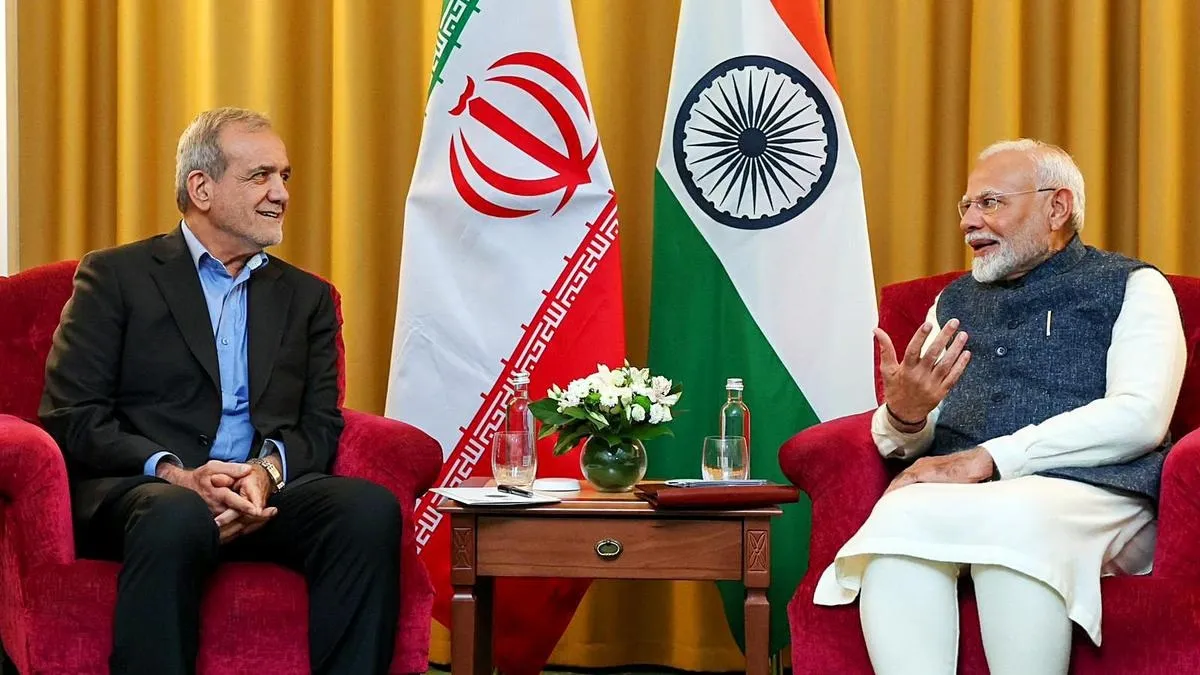
Iran has defined its connection with India as a long-standing and civilizational friendship, indicating that President Masoud Pezeshkian will utilize his impending visit to New Delhi to advance bilateral commerce and strategic collaboration. Tehran’s views come only days after Pezeshkian met with Prime Minister Narendra Modi on the sidelines of the Shanghai Cooperation Organization (SCO) Summit in Bishkek, Kyrgyzstan. With Pezeshkian planned to visit India for the BRICS Summit on September 12 and 13, Iran sees the multilateral grouping as a vital opportunity to advance negotiations with New Delhi on mutual interests.
When asked about Pezeshkian’s recent diplomatic contacts, Iranian Foreign Ministry spokeswoman Esmail Baghaei emphasized the significance Tehran places on its relations with New Delhi. He stated that India remains a key partner for Iran, especially in terms of trade and economic relations. The Iranian Embassy in India also emphasized the importance of the partnership in a post on X. Referring to Pezeshkian’s meeting with Modi, the embassy said, “One of the meetings that President Masoud Pezeshkian held was with the Prime Minister of India. Our relationship with India is a long-standing, historic and civilizational relationship, and we attach great importance to our ties with India.”
Baghaei said Tehran intends to make use of the BRICS platform to continue consultations with India and explore opportunities for closer cooperation. “We will certainly make use of the opportunity provided by the BRICS Summit to continue our discussions and consultations with India in areas of mutual interest,” Baghaei said.
Trade and economic cooperation remain key focus
Iran has highlighted trade and economic interaction as key areas where the two nations may further their partnership. Baghaei pointed out that India plays an important role in key international forums, as a member of both the SCO and the BRICS. “India is a member of both the Shanghai Cooperation Organization and BRICS,” he stated. “It is also one of the countries with which we have good relations in various areas, particularly trade and economic cooperation,” he said.
Tehran’s words indicate that the upcoming BRICS meeting will go beyond multilateral negotiations, with Iran eager to engage directly with India on bilateral economic concerns.
Chabahar Port remains central to India-Iran discussions
Connectivity and logistics infrastructure are also expected to remain high on the agenda between the two countries, with the Chabahar Port continuing to be a key subject of discussion. “Various issues are usually discussed during consultations between Iran and India, including the Chabahar Port, which is important to both countries,” Baghaei said. The Iranian spokesperson described the overall relationship with India as positive and said it continues to develop. “Overall, as I mentioned, our relationship with India is very good and continues to develop,” he added.
Modi-Pezeshkian meeting sets the tone for BRICS talks
The latest Iranian remarks come after a meeting between Modi and Pezeshkian in Bishkek last week. The encounter was notable because it was the two leaders’ first interaction in two years. During the discussions, India emphasized its support for efforts to achieve long-term peace and stability in the area. Modi also expressed India’s willingness to engage closely with Iran through international institutions like as BRICS and the SCO.
The Prime Minister informed Pezeshkian that he was looking forward to welcoming the Iranian President to India for the BRICS Summit. India also expressed its desire to improve economic ties with Tehran by developing and diversifying bilateral commercial channels.
In a post on X following the meeting, PM Modi wrote, “Met President Masoud Pezeshkian in Bishkek. Reiterated our commitment to strengthening India’s long-standing friendship with Iran across diverse sectors. We want to expand and diversify our trade basket in the times to come. We had a discussion on the prevailing situation in the region. India will continue to support all efforts aimed at ensuring lasting peace.”
West Asia situation also figured in Modi-Pezeshkian talks
The meeting of the two presidents occurred at a time when ongoing conflicts in West Asia have prompted concerns about regional stability, commercial movement, and maritime logistics. The Modi-Pezeshkian engagement was termed as a “fruitful meeting” by Ministry of External Affairs spokesperson Randhir Jaiswal. He stated that the presidents discussed many areas of bilateral ties as well as events in the West Asian region.
“The two leaders discussed various aspects of bilateral ties. They reviewed recent developments in the West Asia region. Prime Minister reiterated India’s consistent position that all issues must be resolved through dialogue and diplomacy. Prime Minister also underlined the need for continued efforts to ensure peace and stability in the region, and for safeguarding freedom of navigation and commerce,” Jaiswal wrote in a post on X.
Iranian delegation joins high-level India talks
Iranian Foreign Minister Seyed Abbas Araghchi and other senior officials from Tehran were also present during the meeting between Modi and Pezeshkian. The discussions took place against the backdrop of ongoing instability in West Asia, where conflicts have continued to affect regional security, maritime movement and commercial logistics.
Why the BRICS meeting matters for India-Iran ties
Pezeshkian’s upcoming visit provides another opportunity for both countries to build on their conversations in Bishkek. While BRICS provides a broader multilateral framework, Iran’s emphasis on trade, economic cooperation, connectivity, and the Chabahar Port indicates that bilateral interests will remain essential to the engagement. For New Delhi and Tehran, the immediate priority will be to retain their long-standing friendship while also exploring methods to expand economic cooperation and address shared regional concerns through conversation and multilateral institutions.
Source: In