



 Finance
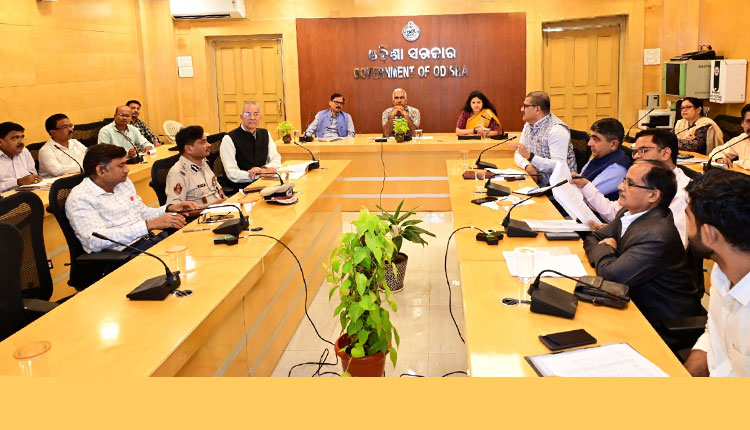
The Odisha government will conduct a special “Zero Fatality Fortnight” from November 16 to 30, 2025, in a concerted attempt to reduce road accident deaths to zero during this 15-day period.
Building on the positive results of the annual Zero Fatality Week, the state has expanded the increased campaign to a full fortnight this year.
The Commerce and Transport Department will lead the initiative, which will include large-scale public awareness campaigns, tough enforcement measures, engineering improvements, and improved emergency medical response.
A high-level conference, chaired by Chief Secretary Manoj Ahuja, was conducted at Lok Seva Bhawan this afternoon to finalize the action plan. Senior officials who attended the review included Principal Secretary Housing and Urban Development Usha Padhee, DG Crime Branch Vinaytosh Mishra, Transport Commissioner Amitabh Thakur, Bhubaneswar-Cuttack Police Commissioner S. Dev Datta Singh, and several principal secretaries and district collectors.
The meeting emphasized the critical need for action, with officials pointing out that 1.19 million people died in road accidents worldwide in 2023, while India recorded 1.72 lakh deaths and Odisha 5,739 deaths—figures that translate to more than 3,200 deaths globally, 474 in India, and nearly 16 in Odisha each day. The Supreme Court’s repeated directives to all states to adopt continuous and effective measures formed an important backdrop to the discussions.
The meeting noted that most fatal accidents arise from overspeeding, helmetless riding, drunken driving, violation of traffic rules, wrong-side driving and general road indiscipline.
With this in mind, the next fortnight will place a heavy emphasis on engineering upgrades, consistent enforcement, broad education, and prompt emergency care. Overspeeding, drunken driving, triple riding, and failure to wear helmets and seat belts will be strictly enforced throughout the state, with fines given via e-challans and the Intelligent Traffic Management System. Police and transportation officials will increase their joint patrols on national and state highways. District officials have been urged to hold frequent road safety committee meetings and to thoroughly monitor accident-prone locations, notably those near schools, colleges, and hospitals. Out of the 8,000 kilometers of roads previously audited, 300 black spots have been found, and rectification requests have been forwarded to the respective road-owning departments.
A massive awareness campaign will run concurrently under the banner of “Road Safety Platforms” in every district. More than one lakh students will take a road safety pledge virtually in the presence of the Chief Minister. Street plays, school-level programmes by Junior Red Cross volunteers, initiatives by self-help groups, campaigns in cinema halls, and extensive use of print, electronic and social media have been planned.
The government also discussed ways to tackle accidents caused by stray cattle, including establishing more gaushalas, affixing reflective tapes on cattle horns and publicising the animal helpline 1962 more widely.
Chief Secretary Manoj Ahuja emphasized the importance of decreasing road accident deaths to zero. He emphasized that the effort must continue not only during the fortnight, but throughout the year, especially during the December-March tourist and picnic season, when traffic volume increases dramatically. He asked all departments to work closely together and urged residents, civil society organizations, and voluntary groups to extend full cooperation in order to preserve precious lives and make Odisha’s roadways truly safe.