




 Finance
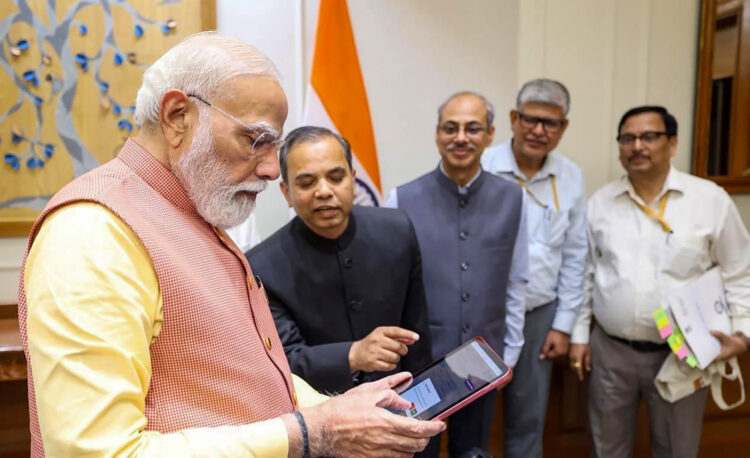
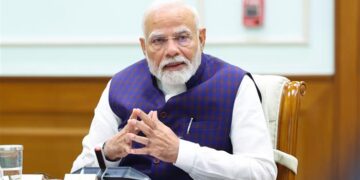
Prime Minister Narendra Modi on Wednesday, completed his self-enumeration for Census 2027, kicking off the first phase of India’s first totally digital census.
In a post on X, the Prime Minister said: “Completed my self-enumeration. Today marks the beginning of the first phase of Census 2027, relating to house listing and housing operations. This census is the first time data collection is being done through digital means. It also empowers the people of India to self-enumerate their household details. I appeal to the people of India to self-enumerate their household details themselves and participate in the Census process.”
The endeavor is crucial since Census 2027 will be India’s first totally digital census, a departure from the traditional paper-based system used for almost 150 years. It is being carried out in two phases under the Census Act of 1948.
The first phase, House Listing and dwelling Census (HLO), collects information on dwelling conditions, assets, amenities, and household details with 33 informed questions.
A crucial element is the implementation of self-enumeration, which allows residents to voluntarily enter household information online via a dedicated portal. This 15-day window precedes door-to-door enumeration in each state and union territory, with the goal of increasing accuracy, reducing errors, and encouraging greater participation.
The portal supports a variety of languages, including English, Hindi, and 14 regional languages.
The first phase of house listings will be implemented in stages throughout states from April to September 2026. Self-enumeration is open in numerous places, including sections of Delhi (NDMC and Delhi Cantonment), the Andaman & Nicobar Islands, Goa, Karnataka, Lakshadweep, Mizoram, Odisha, and Sikkim, from April 1 to April 15, followed by house-to-house listing from April 16 to May 15. Other states will use similar 15-day windows that coincide with their schedules.
The second phase, which includes population enumeration, is slated for early 2027, with March 1, 2027 as the reference date.
The census is also planned to include caste enumeration for the first time since 1931, making it an important tool for policy planning, welfare schemes, resource allocation, and development initiatives.
Prime Minister Modi’s presence and request are interpreted as an effort to increase digital usage and assure greater coverage. Officials have stated that strong data security procedures are in place, with data centres designated as essential information infrastructure and information used solely for statistical purposes.
Following a hiatus since the last census in 2011, the digital approach is supposed to provide faster and more reliable data, hence assisting governance and planning. The government has also prepared 33 frequently asked questions (FAQs) to help residents understand that no documentation are necessary for self-enumeration.
Source: IANS