




 Finance
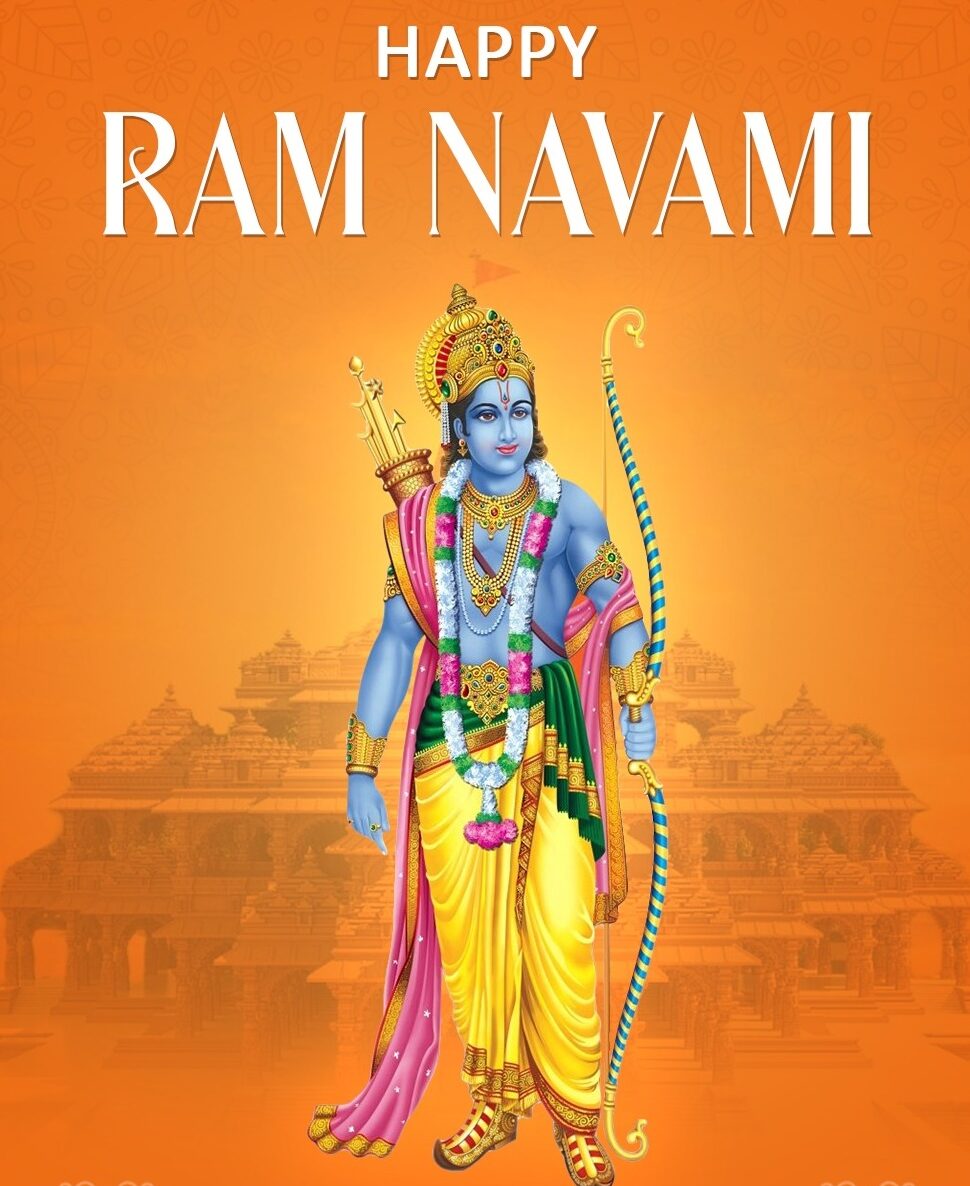
Ram Navami is a spring Hindu festival commemorating the birth of the Hindu god Rama, the seventh avatar of Lord Vishnu. This event concludes the spring holiday Vasanta Navratri. The celebration is part of Spring Navratri and takes place on the ninth day of the bright half of the Hindu calendar month Chaitra. This happens every year in March or April, according on the Gregorian calendar.
Hindus celebrate Rama’s birthday in their homes and temples, with special emphasis in the Indian city of Ayodhya, which they consider to be his birthplace and boyhood home.
Rama’s birth
The first section of the Ramayana, authored by sage Valmiki, describes Rama’s birth. King Dasharatha of Ayodhya aspires to have a male heir and, with the help of the guru Rishyashringa, performs an elaborate Vedic sacrifice (yajna) to achieve that objective. Meanwhile, the deities of heaven are scared of Ravana, a demon (rakshasa). Ravana’s boon of invincibility from the god Brahma did not include invincible against humans, forcing a creative remedy. Vishnu, at the encouragement of the other gods, chooses to take on human form as Dasharatha’s four sons (particularly Rama) in order to vanquish Ravana. Back on Earth, a divine being emerges from Dasharatha’s sacrificial fire with a vessel full of payasa (a milk-rice dish) and instructs the king to divide it among his wives. He gives Queen Kaushalya half, Queen Sumitra a third, an eighth to Queen Kaikeyi, and the rest to Sumitra. After a year of gestation, on the ninth of Chaitra, Rama is born to Kaushalya, Bharata to Kaikeyi, and twins Lakshmana and Shatrugna to Sumitra.
Why Is Ram Navami Celebrated?
Ram Navami is one of the five most important Hindu festivals because it commemorates the birth anniversary of the Hindu God Lord Rama, the son of King Dasharatha and Queen Kausalya, in Ayodhya. Lord Rama is regarded as the seventh avatar of Hindu deity Vishnu. On this auspicious day, devotees of Lord Rama and Lord Vishnu commemorate the occasion by performing the Rama Katha recital and chanting poems from Holy Hindu Scriptures such as the Shrimad Bhagavatam and Ramayana.
Devotees believe that by celebrating and saying prayers on Ramnavami, they bring divine power into their lives while also removing evil influences or energy from the planet. People celebrate Rama Navami in different ways, some devotees like to visit the temples, yet some just pray from their own homes, Bhajans and Kirtans are sung, religious offering like sweets and fruits are given in temples even elaborate Pujas are done in the name of Lord Rama and Lord Vishnu but the intent is same, to celebrate and show devotion to Lord Rama, to welcome positive energy in their lives.
Ram Navami Rituals
On Ram Navami, devotees fast for the entire day. The fast usually begins before or before sunrise and lasts until sunrise the next day. Recitals of Rama Katha and other Hindu scriptures such as the Shrimad Bhagavatam and Ramayana are performed. Bhajans and Kirtans are performed at temples and devotees’ homes, followed by holy ceremonies. Some followers commemorate the occasion by cleaning and dressing miniature sculptures of the child Lord Rama before placing them in a cradle, followed by Aartis and offerings, and a symbolic wedding between Lord Rama and the Goddess Sita. Community lunches are also organized at specific locations, however this is determined by the community itself.
Significance of Ram Navami
Ramnavami represents the victory of goodness over evil and the establishment of Dharma over Adharma. The day is generally begun at daybreak by presenting Jal (water) to the Hindu God Suraj Devta (The Sun), who is frequently regarded as an ancestor of Lord Rama in Hindu mythology.
The significance of Ramnavami is to brimg positive energy into your lives and to reduce negative vibrations from the ground. Recitals of Rama Katha and Shrimad Bhagavatam are performed to channel and recall the significance of this auspicious event.