


 Finance
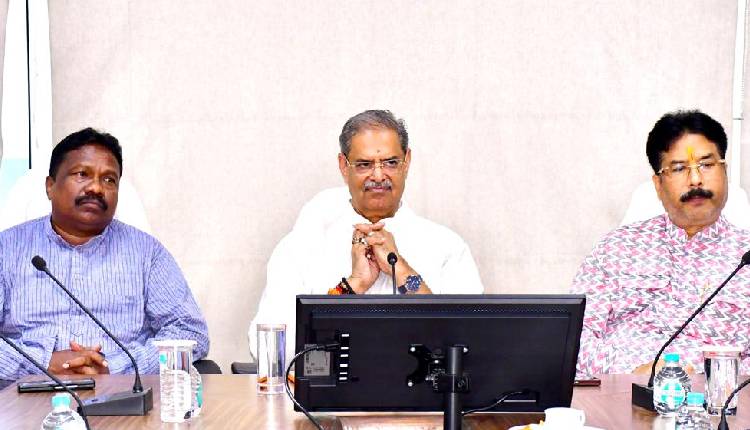
The Odisha government will integrate the PM-Surya Ghar Yojana with various state housing schemes, including the Pradhan Mantri Awaas Yojana (PMAY), to increase beneficiaries’ access to clean and affordable solar power, Deputy Chief Minister and Energy Minister Kanak Vardhan Singh Deo announced on Wednesday.
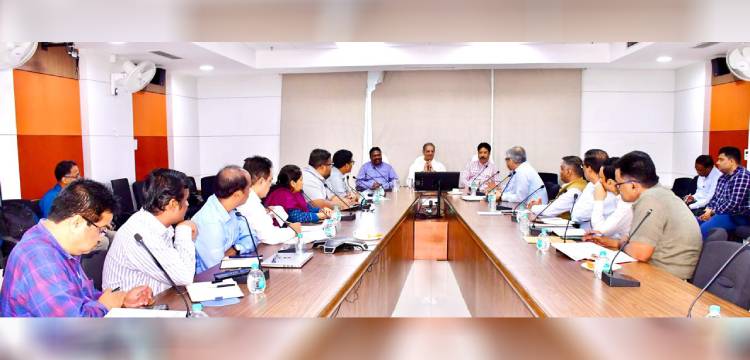
Singh Deo presided over a high-level review meeting on power sector reforms, safety measures, and the implementation of central and state initiatives. He also announced a Rs 3,708 crore underground cabling project throughout all four DISCOM areas to increase power safety and replace overhead lines.
The meeting was attended by Housing & Urban Development Minister Dr Krushna Chandra Mahapatra, Rural Development, Panchayati Raj & Drinking Water Minister Rabi Narayan Naik, Additional Chief Secretary (Energy) Vishal Kumar Dev, OPTCL CMD Bhaskar Jyoti Sarma, Commissioner-cum-Secretary, PR & DW, S.N. Girish, along with senior officials of the Energy Department and DISCOMs.
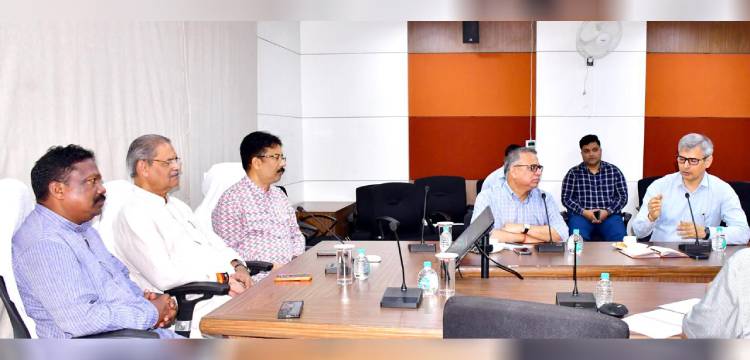
Highlighting the state’s focus on renewable energy and affordable electricity, Singh Deo said PM-Surya Ghar Yojana would be offered as an option to beneficiaries under Odisha’s housing programmes.
“Our aim is to ensure that every beneficiary under PMAY and other housing schemes gets the benefit of solar power. By linking PM-Surya Ghar with state housing programmes, we will provide 24×7 clean and affordable electricity to people while reducing their electricity bills,” he said.
The rooftop solar program will provide recipients in urban areas with a subsidy of Rs 30,000 from the Centre and Rs 25,000 from the Odisha Government for the installation of a 1 KW solar system. The beneficiary contribution for installation would be Rs 1,875.
During the review meeting, the Deputy Chief Minister urged DISCOMs to focus safety measures in both urban and rural areas while also ensuring that infrastructure projects are implemented on time.
As part of the electricity safety strategy, the four DISCOMs will install underground cabling worth Rs 3,708 crore to replace current overhead lines. The government will also create a detailed Safety Detailed Project Report (DPR) for Odisha’s DISCOMs.
The meeting also approved a number of safety measures, including the relocation of low-hanging wires, the replacement of bare conductors with insulated conductors, the installation of fencing at distribution substations, the construction of PSS boundary walls, and the installation of cradle and guard wires for low-tension protection.
Officials were also instructed to create a utility shifting portal/app and an LTDB system to increase LT safety measures and coordination during infrastructure construction.
Singh Deo examined the implementation of PM-SGMBY and the ULA Model for urban and rural electricity, including pole installation, wiring systems, and street lighting facilities.
The Deputy Chief Minister emphasized the government’s commitment to ensuring stable electricity supply and directed all departments and agencies to collaborate and complete projects within the time frames specified.
“The State Government is committed to providing safe, reliable and sustainable power to every household in Odisha,” Singh Deo said.