





 Finance
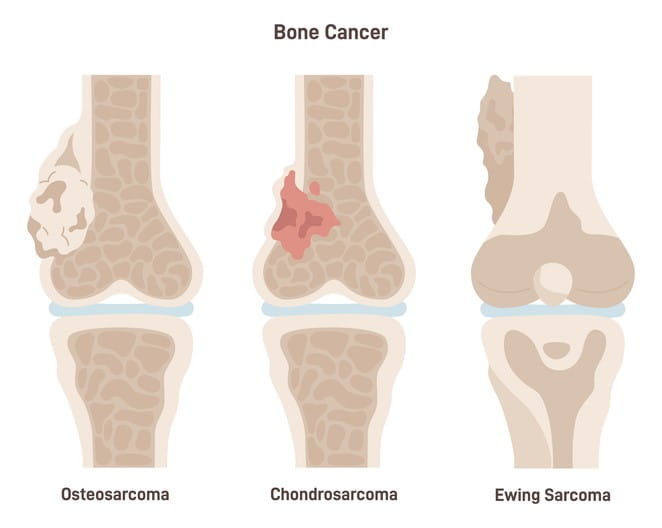
Bone cancer is a growth of cells that starts in a bone. Bone cancer can originate in any bone. But it usually affects the thighbone.
The phrase “bone cancer” excludes cancer that begins in another region of the body and travels to the bones. Instead, cancer that spreads to the bone is termed after where it began. For example, cancer that begins in the lungs and travels to the bones remains lung cancer. Healthcare professionals could refer to it as lung cancer that has metastasized to the bones.
Bone cancer is a rare disease. There are different forms of bone cancer. Some kinds of bone cancer predominantly affect children. Other types mostly affect adults.
Surgery, radiation, and chemotherapy are among the most common therapies for bone cancer. The optimal treatment for bone cancer is determined by the type of cancer, the afflicted bone, and other factors.
Symptoms
Signs and symptoms of bone cancer include:
- Bone pain.
- Swelling and tenderness near the affected area.
- Weakened bone, which can lead to a broken bone.
- Feeling very tired.
- Losing weight without trying
Causes
The cause of most bone cancers isn’t known. Bone cancer develops when cells in or near a bone change their DNA. A cell’s DNA contains the instructions that teach it what to do. In healthy cells, DNA directs growth and multiplication at a predetermined rate. The instructions command the cells to die at a specific moment. In cancer cells, DNA mutations provide distinct instructions. The modifications instruct cancer cells to produce many more cells quickly. Cancer cells can live even when healthy cells perish. This results in an abnormally large number of cells.
The cancer cells may develop a mass known as a tumour. The tumor can spread and destroy vital body tissue. Cancer cells might eventually separate and spread to other parts of the body. When cancer spreads, it’s called metastatic cancer.