







 Finance
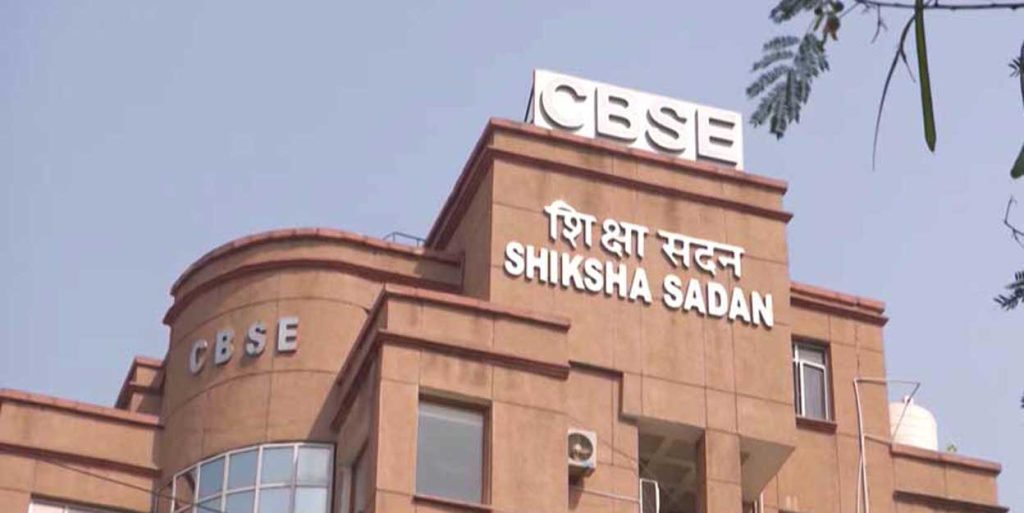
The Central Board of Secondary Education (CBSE) has announced a specific alternative assessment scheme for Class 12 students in West Asia, following the cancellation of board exams in many Gulf countries due to safety concerns.
In the midst of rising tensions and unprecedented conditions in some parts of the region, CBSE announced that the decision applies to CBSE-affiliated schools in Bahrain, Iran, Kuwait, Oman, Qatar, Saudi Arabia, and the United Arab Emirates.
The Class 12 board examinations scheduled for March 16 to April 10, 2026, could not be held, requiring the board to prioritize student safety and academic continuity.
With options for supplementary exams and fresh opportunities, the board’s student-centric approach aims to safeguard academic progression amid uncertainty.
WHY DID CBSE CANCEL CLASS 12 EXAMS IN WEST ASIA?
CBSE stated that the decision was made owing to “prevailing extraordinary circumstances” in West Asian countries, which made conducting examinations impossible.
All Class 12 exams scheduled between March 16 and April 10, 2026, have been cancelled. Exams that had already been postponed in March were likewise cancelled. The Board emphasized that student safety and educational security were the key reasons for the move.
However, examinations taken earlier in February 2026 are still valid. CBSE emphasized that actual performance in such subjects will be taken into account while calculating the final scores. For subjects that could not be conducted, the Board established an alternative evaluation mechanism.
HOW MANY EXAMS WERE CONDUCTED BEFORE CANCELLATION?
According to the official statement, examinations scheduled until February 28, 2026 were successfully completed. Prior to the disruption, 27 subjects were completed, including 17 academic and 10 skill courses. These results will be used to calculate final scores whenever they are available.
HOW WILL CBSE CALCULATE MARKS FOR AFFECTED STUDENTS?
CBSE has divided students into categories based on how many examinations they appeared for. These include students who attempted all subjects, some subjects, or none at all, as well as compartment candidates from prior years. The Board will compute results based on these categories, using exam performance data and school-based assessments.
The Board explained that the Class 12 evaluation consists of two parts: the theoretical examination and the practical/internal assessment. Depending on the subject, theoretical marks may be 80, 70, 60, 50, or 30, with the remainder awarded to internal assessment or practical work.
WHAT ROLE WILL SCHOOL ASSESSMENTS PLAY?
For students who are unable to appear in some or all subjects, schools will submit performance data from quarterly exams, half-yearly exams, and final pre-board exams. In topics having 80 or 70 theory marks, the best performance from these three evaluations will be considered.
The final pre-board examination marks will be utilized for topics with 60, 50, or 30 theory marks. The practical and internal assessment marks that schools have previously uploaded will stay unaltered.
WHAT ABOUT STUDENTS WHO DID NOT APPEAR IN ANY EXAM?
Students whose examinations were completely pending will be evaluated only on school-based criteria. However, CBSE has stated that pupils who are dissatisfied with their assessments may be allowed to retake them later, subject to feasibility. Marks acquired in those exams will be considered final.
Compartment applicants, or those participating in a single subject, will also have the opportunity to take supplemental exams, which are likely to be held in July 2026.
WHEN WILL SCHOOLS UPLOAD MARKS?
The CBSE has announced that schools must upload marks between April 6 and April 13, 2026. The Board declared that after marks have been uploaded, no corrections will be considered.
Schools must keep records for verification, and the CBSE may evaluate provided data to guarantee fairness and openness.
For students in the UAE and other Gulf nations, the policy offers certainty and reassurance. Results will be announced using a standardized procedure and released alongside other Class 12 results. The Board also announced that students who do not satisfy the qualifying criterion will be put in the compartment or necessary repeat category and given another shot in future examinations.
The cancellation of CBSE Class 12 examinations in West Asia demonstrates how geopolitical circumstances can have a direct influence on education. The CBSE tries to strike a balance between fairness and flexibility by implementing a structured alternative evaluation scheme.
The strategy assures that students in the UAE and other impacted nations do not face academic disadvantages while retaining credibility.
Source: IT