





 Finance
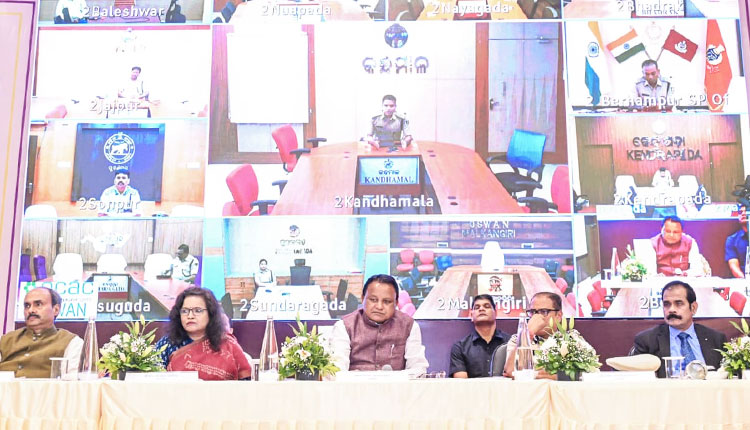
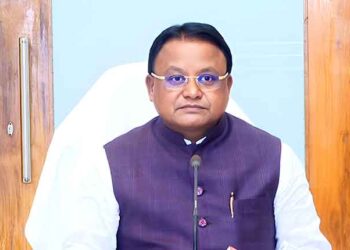
On Saturday, Chief Minister Mohan Charan Majhi issued a 10-point direction to Odisha Police, calling for a more proactive, technology-driven, and citizen-centric policing system that focuses on crime control, cyber security, drug trafficking, coastline security, and increasing conviction rates.
Majhi told the state-level DGP and IGP conference at the State Police Headquarters here that the government would provide the necessary resources, funds, and administrative support to implement police reforms and reinforce the state’s security architecture.
The Chief Minister emphasized the behavior of police officers toward regular individuals, stating that anyone attending a police station with a complaint should be considered as a victim and treated with empathy and understanding. He emphasized that the police should preserve the notion that “criminals will tremble at the sight of the police, not innocent citizens”.
Majhi’s ten priorities included a zero-tolerance policy against crime, increasing conviction rates, achieving a drug-free Odisha by 2029, strengthening coastal and maritime security, combating cybercrime and threats from the dark web, improving intelligence gathering, modernizing police stations, ensuring polite and trustworthy public interaction, combating ‘Dada Bati’ and forced donation collection, and establishing corruption-free and dedicated policing.
The Chief Minister stated that the government’s zero-tolerance policy for violence against women and organized crime will remain unchanged. Citing NCRB data, he stated that the state’s historically low conviction rate had now surpassed 40%, with a goal of increasing it to at least 75%. To enhance conviction rates, he advocated for more professional and technology-driven investigations.
With the Christmas season approaching, Majhi has urged the police to take strong action against ‘Dada Bati’ and illegal forced donation collection by anti-social groups.
Majhi believes that police activity should extend beyond seizures and arrests in order to achieve the government’s aim of keeping Odisha entirely drug-free by 2029. He directed the force to dismantle the entire narcotics supply chain, illegal trafficking networks and financial syndicates supporting the drug trade, expressing confidence that containing narcotics trafficking would also contribute to reducing crime.
The Chief Minister also reviewed steps to defend Odisha’s 575-kilometer coastline and deter infiltration via maritime routes. He emphasized the expansion of the Command and Control Center in Bhubaneswar, the acquisition process for ten drones, five trawlers, and ten contemporary interceptor boats, and beach patrols with All Terrain Vehicles. Special Police Officers and former defense personnel have also been hired to provide maritime security, he said.
Regarding cybercrime and financial fraud, Majhi advocated for ongoing surveillance of developing technologies and the dark web, as well as broad public awareness efforts. He urged the police to improve its intelligence capabilities using systems such as NATGRID and CCTNS.
The Chief Minister stated that Maoist violence has been completely controlled in Odisha, citing measures such as the OSSF battalion and the state’s surrender policy for the progress. He stated that the Union Ministry of Home Affairs had recognized Odisha’s efforts.
Majhi went on to say that 17,794 new positions have been created in the Police Department during the last two years, with 5,817 of them already filled. For upgrading of police stations, he said a special investigative fund of Rs 50 crore, along with requisite equipment, had been granted.
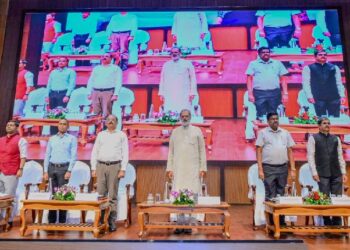
During the conference, Majhi interacted with police officers and took stock of their experiences and challenges in their respective areas of work. He urged them to discharge their responsibilities with dedication, integrity and professionalism, keeping in mind the Odisha Police motto, “We Serve and Protect”.
He called upon the force to work towards building a “Secure Odisha—Empowered Odisha—Prosperous Odisha”, particularly in view of the state’s industrial development and the need to ensure the safety and security of its citizens.
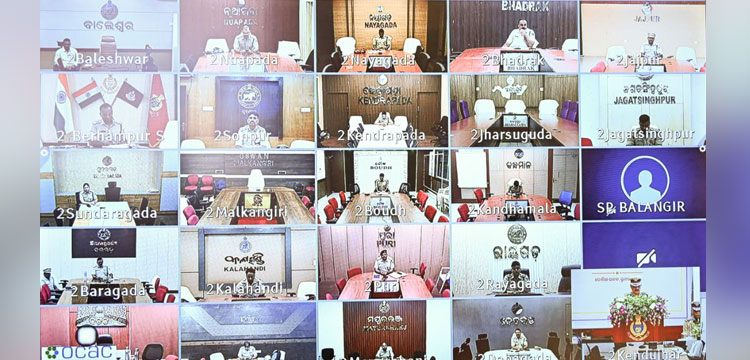
Chief Secretary Anu Garg, who also spoke at the conference, emphasized the need for ongoing qualitative development and reinforcement of police services for the public. She congratulated the Odisha Police on getting the prestigious President’s Color Award and praised the force’s unwavering dedication and service in making Odisha completely Naxal-free and successfully managing the world-famous Rath Yatra.
Vinaytosh Mishra, Director General of Police, thanked the Chief Minister for his comments and promised him that the police will implement more comprehensive cyber security measures. He stated that special campaigns against anti-social behavior, increased patrolling in sensitive and security-critical regions, and the war against illegal narcotics trafficking will be strengthened.
Mishra assured that, in accordance with the Chief Minister’s directions, the police force will strive tirelessly to strengthen peace and order in all districts of the state.
Hemant Sharma, Additional Chief Secretary, Home Department; R.P. Koche, Director of Intelligence and Director General of Police; Sanjeeb Panda, DGP (Anti-Naxal Operations); and other DGPs and IGPs from the state attended the conference.