


 Finance
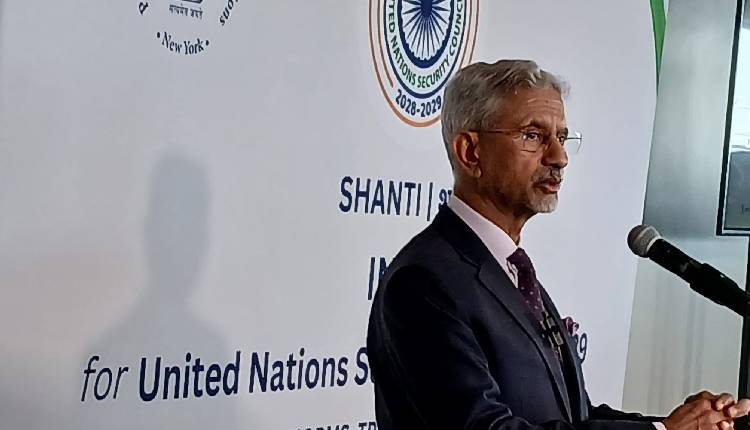
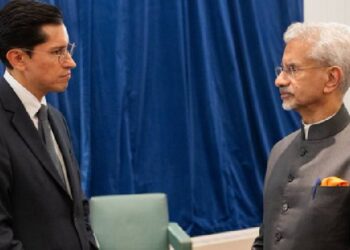
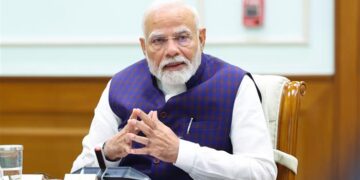
External Affairs Minister S. Jaishankar announced India’s Security Council candidacy on Monday with a six-point manifesto centered on Shanti, a profoundly significant acronym for “Securing Holistic Advancement through Norms, Trust [and] Integrity”.
Speaking to delegates and diplomats from around the world here, EAM Jaishankar stated that India would be the Voice of the Global South at the Council, citing its track record of assisting developing countries, participating in peacekeeping, and working to make the organization capable of dealing with the challenges of the modern world.
India will run in the General Assembly election next year for the Asia-Pacific non-permanent seat on the Council, which would begin in 2028. India, which has served eight terms as an elected member, will continue to fight terrorism in the Council, as it did during its most recent term in 2021-2022, he said.
New Delhi is taking a similar approach to the Council, continuing its drive for a permanent seat while seeking an elected seat to make its voice known. So far, only Tajikistan has announced its candidacy for the Asia Pacific seat that will be vacated by Bahrain when its tenure ends at the end of next year.
Dushanbe has been lobbying for the seat for several years, and the Organization for Islamic Cooperation (OIC) has backed it as far back as 2023. The OIC, which has 56 votes in the General Assembly, stated in its resolution that its support is based on “the principle of Islamic solidarity as inherent to the joint Islamic action.” India will require two-thirds of the votes in the 193-member Assembly.
India won 184 votes in its most recent election, having received unanimous support from the Asia Pacific group and running unopposed. The Asia Pacific Group of 53 countries spans the globe from Lebanon in the west to Kiribati in the east. The non-permanent seats are distributed by region. When possible, the regional groups select their representatives. Sometimes there is no unanimity, and at other times a country may decide to proceed on its own.
The holding of the Council meeting in India during its rotating chairmanship in October 2021 was a high point of India’s previous tenure. During its session in Mumbai, Council members honored the victims of the 2008 terrorist assault by Pakistan-based terrorists and witnessed firsthand the devastation of terrorism. The Council concentrated on preventing terrorists’ use of developing technology both there and in New Delhi.
India’s quest for the 2028-29 term is an attempt to close the gap of up to a decade between some of its previous mandates, allowing it to have a consistent voice in the UN’s highest decision-making bodies. India’s first term was in 1950-51, while the second came in 1967. That was followed by two-year terms starting in 1972, 1977, 1984, and 1991. There was then a 19-year gap till 2011, and the next tenure came a decade later in 2021.
Kyrgyzstan was elected to the Asia-Pacific seat in June, succeeding Pakistan, whose tenure expires at the end of the year. The OIC has sponsored Libya in the 2027 Africa election. Some countries plan their Council elections decades ahead of time. Malaysia, which is aiming for the 2035 election, began pressing for a UNSC seat at the start of the decade and obtained OIC support in 2023.
Source: IANS