



 Finance
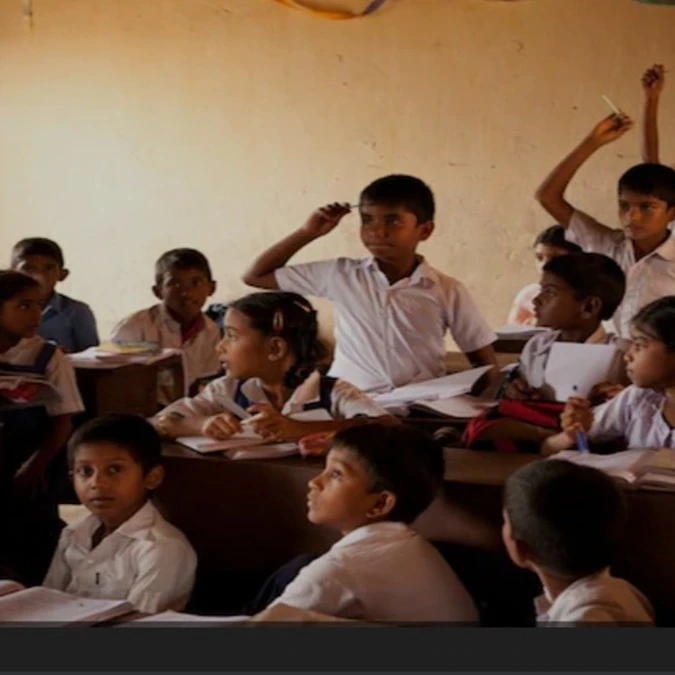
The Odisha government has released the Standard Operating Procedure (SOP) for its ambitious Gyanodaya-Shiksharu Samruddhi Scheme, opening the way for the KG-to-PG free education scheme to begin in the current academic session.
The Higher Education Department established rules outlining the qualifying requirements, reimbursement process, fee exemptions, and other operational features to guarantee that financial restraints do not prohibit students from completing higher education.
Higher Education Minister Suryabanshi Suraj stated on Tuesday that the SOP would increase openness in the implementation process and ensure that no eligible student is denied an education owing to economic difficulties. He also stated that universities covered by the initiative will not be permitted to increase tuition arbitrarily.
The scheme, which expands free education support beyond the current coverage of KG to Class VIII, will now include students in Classes IX through XII, as well as those enrolled in regular undergraduate and postgraduate programs at government universities, government colleges, and government-aided colleges.
According to the state government, the project is estimated to help over 32 lakh kids each year.
According to the SOP, students who have already paid admission costs during the first phase of admissions would receive a complete refund. The funds will be credited directly to the bank account from which the payment was made.
The measure intends to ensure that students who paid fees prior to the scheme’s launch do not suffer any disadvantages.
To provide financial help to institutions, the government has implemented a phased reimbursement scheme. Colleges will get 10% of the approved amount following admissions, with an additional 15% in the second instalment.
The remaining 75% will be released in three equal 25% payments throughout the academic year, ensuring that institutions have enough finances to meet their operational needs.
The SOP also specifies attendance standards for students seeking benefits from the initiative. Students must maintain a minimum attendance rate of 75% to stay eligible.
In rare circumstances, the attendance requirement can be lowered by up to 65%. Students who fail to satisfy the minimal attendance criteria will be ineligible for the scheme’s rewards.
Students participating in the initiative will not be required to pay entry fees, re-admission fees, or any institutional expenses imposed by approved institutions.
Students will still be responsible for paying examination fees. The government has also stated that hostel fees will not be covered by the initiative, and students who choose to stay in hostels will be responsible for such fees on their own.
According to the SOP, the scheme does not cover professional and technical courses, self-financing programmes, private unaided institutions, or institutions functioning under the Public-Private Partnership (PPP) model.
The government has also prohibited state universities, government colleges, and government-aided colleges from raising prices for ordinary courses covered under the initiative. Any proposal for fee adjustment must be approved by the designated Fee Regulation Committee.
The Gyanodaya-Shiksharu Samruddhi Scheme is part of the state government’s initiatives to increase access to inexpensive education while also removing financial hurdles for students.
With the new standards in place, the government expects the initiative to expand educational opportunities throughout Odisha, particularly for kids from economically disadvantaged backgrounds, by ensuring access to free education from elementary to postgraduate levels.