




 Finance
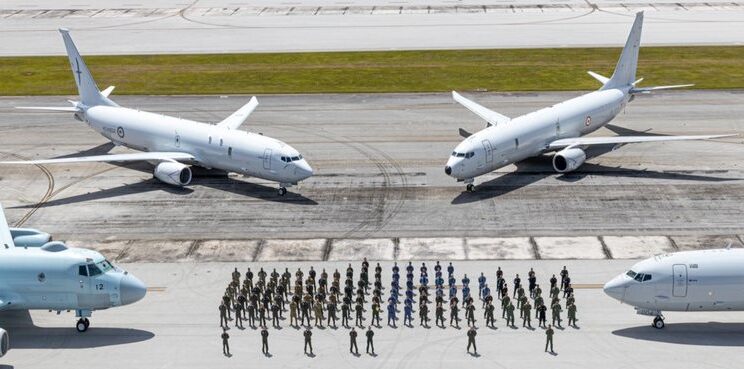
The United States and India joined Japan, Australia, and New Zealand in a 20-day antisubmarine warfare drill in Guam, authorities said, improving coordination among Indo-Pacific nations.
Exercise Sea Dragon 2026 ended on March 28 at Andersen Air Force Base following 20 days of intensive training aimed at identifying and neutralising undersea threats in a difficult operational environment, according to a media statement.
The exercise, hosted by Commander, Task Force 72, includes aircraft from the Indian Navy, Japan Maritime Self-Defense Force, Royal Australian Air Force, and Royal New Zealand Air Force, as well as US Navy P-8A Poseidons.
Officials stated that the drills were intended to improve interoperability and shared maritime domain knowledge among the five participating countries. The exercise built on previous editions to improve the ability to conduct coordinated antisubmarine warfare operations in a dynamic and contested environment.
“What we do in Sea Dragon builds more than skill — it establishes team across nations. The shared experience empowers us to fight together more effectively,” said Navy Lt. Paolo Aguilar, assigned to Patrol and Reconnaissance Squadron 4.
The training program includes systematic tracking drills with a mobile antisubmarine warfare training target known as the MK-30. Participants also took part in a live antisubmarine warfare exercise in which sailors searched for an operational Navy submarine operating in the region.
This year’s operations took place near Saipan, the capital of the Northern Mariana Islands, where forces used recoverable exercise torpedoes to demonstrate an increase in operational capability among participating nations.
The exercise had a competitive component, with each nation’s performance evaluated and scored under realistic scenarios. Japan’s Patrol and Reconnaissance Squadron 3 won the Dragon Belt award, which the Royal Australian Air Force held last year.
Exercises like Sea Dragon highlight the strength of US partnerships and alliances, officials said, emphasising the role of such drills in maintaining regional stability.
“They show that together we’re stronger, more capable and ready to deter any aggressor in the Indo-Pacific,” said Navy Lt. Caitlin Tucker, a pilot with Patrol and Reconnaissance Squadron 45.
Sea Dragon, conducted every year since 2019, has developed as a critical forum for improving cooperation among marine forces operating in the Indo-Pacific. India’s engagement, along with that of other US partners, demonstrates a continuous development of regional defence cooperation.
In recent years, India has increased its participation in multinational naval exercises as part of a larger drive to develop maritime security relationships and protect important sea routes. The Indo-Pacific region remains crucial to global economic flows and strategic competition, with an increased emphasis on undersea capabilities and surveillance.
Source: IANS