





 Finance
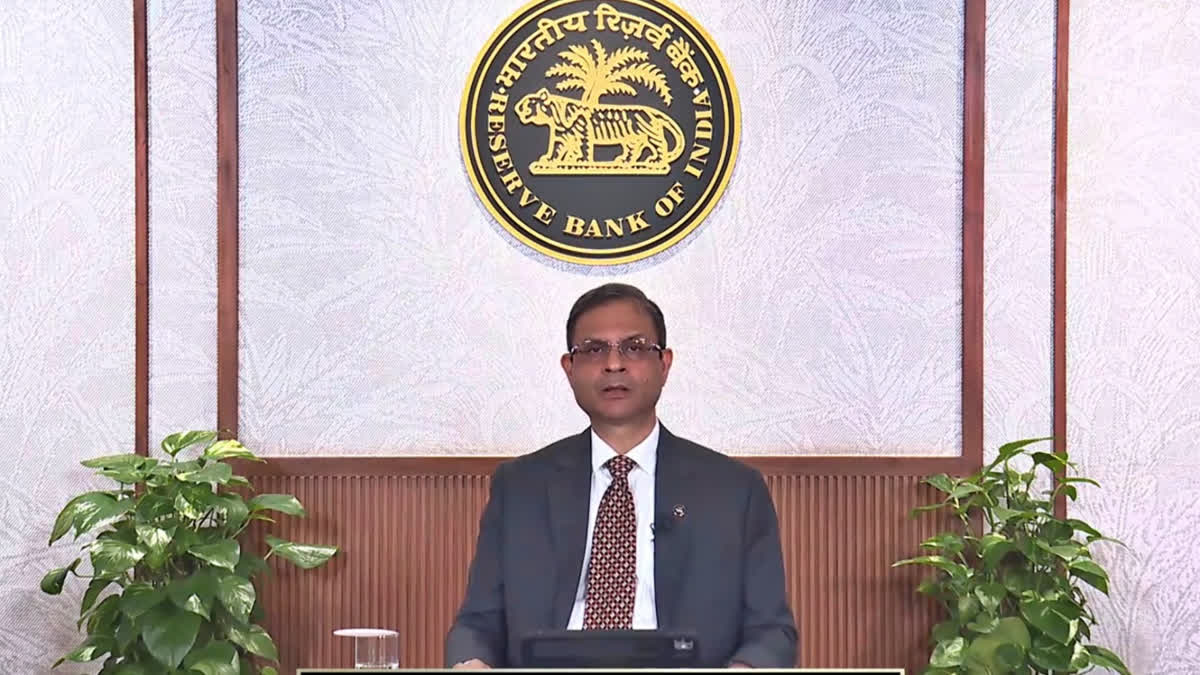
Following a thorough examination of the ongoing macroeconomic and financial developments and outlook, the Monetary Policy Committee (MPC) resolved unanimously to maintain the policy repo rate under the liquidity adjustment facility (LAF) at 5.25%.
As a result, the standing deposit facility (SDF) rate continues at 5%, while the marginal standing facility (MSF) rate and the Bank Rate both remain at 5.5%.
The MPC also decided to continue with the neutral stance.
Sanjay Malhotra, Governor of the Reserve Bank of India (RBI), announced the MPC decision, stating that the emergence of conflict in West Asia has caused major disruptions in global supply chains.
“This poses an unprecedented challenge for the global economy – higher prices and lower global growth. In this environment, monetary policy faces a difficult trade-off – anchoring inflation expectations through policy tightening while minimising its impact on growth forgone. Sovereign bond yields, already high from long-run fiscal sustainability concerns across major economies, have further hardened, driven by inflation fears.”
Furthermore, equity prices have corrected. The US dollar has risen due to global financial market volatility and demand for safe-haven assets, putting pressure on foreign currencies. He stated that the primary downside risks to the global outlook are the conflict’s further escalation, length, and growing geographical dispersion.
On the domestic front, he stated that the Indian economy would stay resilient in 2025-26. According to the Second Advance Estimates (SAE) of the new GDP series (base year 2022-23), real GDP is expected to expand by 7.6% (year on year) this year, he added.
Private consumption and fixed investment boosted total growth, although net foreign demand remained weak. On the supply side, the predicted 7.7% real GVA growth was led by a strong services sector and robust manufacturing activity, he explained.
“Looking ahead, elevated energy and other commodity prices coupled with supply shock due to disruptions in the Strait of Hormuz would act as a drag on domestic production in 2026-27,” Mr Malhotra said.
He predicted that increased volatility in global financial markets, with its spillover effects on local financial conditions, would have a negative impact on growth prospects.
Externally, delays to vital shipping routes, as well as the resulting increase in freight and insurance costs, may have a negative impact on merchandise exports if the conflict lasts long enough.
On the other hand, persistent momentum in the services sector, the ongoing impact of GST rationalisation, increased capacity utilisation in manufacturing, and solid balance sheets of financial institutions and corporations should continue to boost domestic demand, he stated.
“In this milieu, the Government’s focus on scaling up domestic manufacturing in several strategic and frontier sectors announced in the Union Budget 2026-27 bodes well for India’s ensuing growth trajectory,” he said.
Taking all of these factors into account, and assuming that the conflict’s negative impact will be controlled in the near term, real GDP growth for 2026-27 is estimated at 6.9%, with Q1 at 6.8%, Q2 at 6.7%, Q3 at 7.0%, and Q4 at 7.2%.
Aside from weather-related events, further escalation of the conflict, its extension across a larger geographical area, and uncertainty about the damage to energy infrastructure all represent threats to the domestic development forecast.
According to the revised CPI series (2024=100), headline inflation rose to 3.2% in February 2026 from 2.7% in January.
“The increase was predominantly driven by negative base effects, even though momentum remained modest. While food inflation rose in February, core inflation (excluding food and fuel) remained stable. Core inflation, excluding precious metals, remained low at 2.1% in January and February, indicating weak underlying inflation pressures.
The protracted battle has caused significant volatility in worldwide energy and other commodity prices, casting considerable doubt on the near-term inflation prospects. Higher global energy prices have resulted in price hikes for particular fuels such as premium gasoline, LPG, and diesel for industrial usage.
On the other hand, high rabicrop has bolstered the near-term food supply prospects, bringing some relief.
Given numerous circumstances, CPI inflation for 2026-27 is expected to be 4.6%, with Q1 at 4%, Q2 at 4.4%, Q3 at 5.2%, and Q4 at 4.7%.
“Persistently elevated energy prices due to the West Asia conflict and possible El Niño conditions [which could have a negative impact on southwest monsoon] pose upside risks to inflation,”
Core inflation is projected at 4.4% for 2026-27 and, excluding precious metals, it is even lower indicating that underlying inflation pressures are expected to remain contained.
The Governor said high frequency indicators till February 2026 suggest the continuation of strong momentum in economic activity.
“Growth impulses continue to be supported by robust private consumption and investment demand. However, the West Asia conflict will adversely impact growth. Higher input costs associated with increase in energy prices and international freight and insurance costs along with supply-chain disruptions could constrain availability of key inputs for downstream sectors, thus impairing growth,” he said.
The government has taken many measures to encourage exports and secure supply chains, which should help to offset the conflict’s negative impact, he explained.
The MPC observed during its meeting that the intensity and duration of the violence in West Asia, as well as the resulting damage to energy and other infrastructure, pose risks to inflation and GDP forecasts.
“However, the fundamentals of the Indian economy are on a stronger footing, giving it greater resilience to shocks now than in the past.” The economy is dealing with a supply shock. “It is prudent to wait and observe the changing circumstances and the evolving growth-inflation outlook,” Mr Malhotra stated.
Source: TH