






 Finance
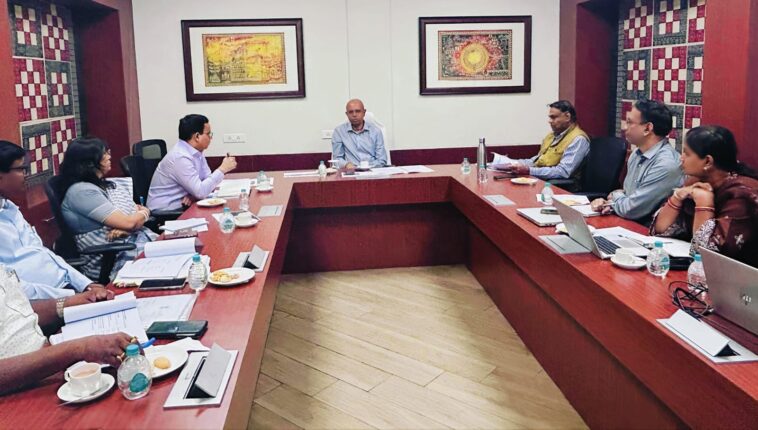
On Thursday, Ashok K.K. Meena, Secretary, Department of Drinking Water and Sanitation, Ministry of Jal Shakti, Government of India, reviewed the implementation of the Jal Jeevan Mission (JJM) and Swachh Bharat Mission (Gramin) in Odisha and praised the state’s progress in expanding rural drinking water coverage.
During a review meeting in Bhubaneswar, Meena expressed her delight with Odisha’s successes under the Jal Jeevan Mission, noting that the state government is carrying out the programme in accordance with the national mission’s aims and priorities.
He emphasized the need of long-term management of rural water supply infrastructure and recommended the state to strengthen Gram Panchayats to operate and maintain drinking water systems. He emphasized the necessity of transferring management duties for water supply assets to Gram Panchayats and Village Water and Sanitation Committees (VWSCs) through the Centre’s ‘Jal Arpan’ project.
The Union Secretary also asked the state to prioritize sanitation-related infrastructure development under the Swachh Bharat Mission (Gramin) and to speed efforts to achieve Open Defecation Free Plus (ODF+) status in more villages.
During his visit, Meena met with Odisha Chief Secretary Anu Garg to examine the progress, implementation problems, and future roadmap of the state’s Jal Jeevan Mission and Swachh Bharat Mission.
Following the review meeting, Meena traveled to Puri district with Panchayati Raj and Drinking Water Department Commissioner-cum-Secretary Girish S.N. and Drinking Water and Sanitation Mission Director Vineet Bhardwaj to evaluate the ground-level implementation of rural drinking water projects.
The delegation examined the Lohapur pipe water delivery project in Jagannathpur Gram Panchayat, Pipili block, and the Subalpur project in Jashuapur Gram Panchayat. Meena praised the efforts of field-level officials and engineers involved in the projects’ implementation as she reviewed their infrastructure and functionality.
He also spoke with local inhabitants to get direct feedback on the benefits and impacts of the drinking water projects, as well as to assess the operational status of the area’s water delivery infrastructure.
The visit was part of the Centre’s continuing monitoring and assessment of flagship rural water supply and sanitation initiatives, which aim to ensure universal access to safe drinking water and better sanitation facilities throughout the country.