



 Finance
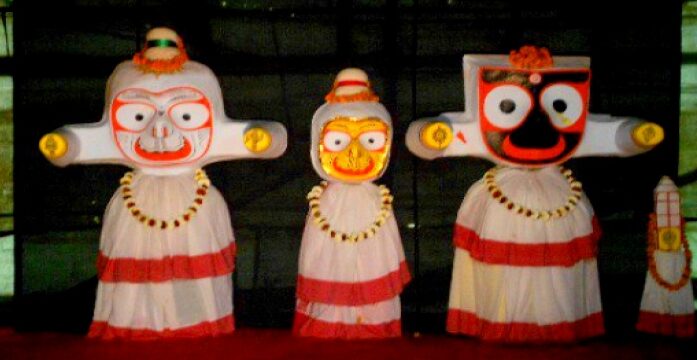
Every day in the holy hallways of the 12th-century Shree Jagannath Temple, a magnificent tradition known as Besha takes place, in which the deities are tenderly decked in resplendent robes and decorations.
In temple tradition, Besha represents attire, decoration, and divine embellishment. From the early morning Mangala Alati to the night Pahuda, Lord Jagannath, Lord Balabhadra, and Devi Subhadra are adorned in cotton and silk clothing such as Tadapa, Uttariya, and Paharana, as well as magnificent gold decorations, flowers, Tulasi leaves, sandalwood, camphor, and musk.
Significance Of Naba Joubana Besha
The term “Nabajoubana Besha” refers to the sacred youthful decoration of the Shri Jagannath Temple’s three sibling deities, Lord Jagannath, Lord Balabhadra, and Devi Subhadra. Far from being limited to one, this particular Besha honors the rebirth of all three divine siblings as they reclaim their dazzling, young appearances simultaneously.
After spending 14 days in seclusion in the Anasara Ghara for their annual ritualistic recuperation, the sister goddesses are ready to bless their devotees with a spectacular glimpse of their brilliant Nabajoubana Besha today. Without exaggeration we can say that the deities have shed their ailments and emerged with renewed youthful energy in the much-awaited Nabajoubana Besha after a fortnight of secluded recuperation in the Anasara Ghara. This special Besha marks their complete rejuvenation and celebrates the fresh vitality with which they will soon embark on their annual sojourn during the grand Rath Yatra on Thursday.
The holy town of Puri is alive with spiritual fervour as thousands of pilgrims gather to witness the hallowed Nabajoubana Darshan. The most important aspect of this divine change is the ancient Banakalagi or Srikumkha Sringara rite, in which the deities are painstakingly repainted with natural herbal paints. The temple’s Dutta Mohapatra and Khadiprasad Daitapati servitors apply Hingula (red), Haritala (yellow), Kasturi (musk), Keshara (saffron), and Kaitha (wood apple gum) with great devotion.
The servitors meticulously paint the deities’ eyes, brows, eyelashes, nose, and lips, following the old palm-leaf text Banaka Pothi’s exacting instructions. The ritual’s sacred finale is the painting of the eyeballs, which represents the complete restoration of their youthful glow and divine consciousness. The Nabajoubana Darshan, also known as Netra Utsav, generates an emotional atmosphere when devotees see the Lords for the first time in their renewed form.
This darshan not only marks the conclusion of the Anasara period, but it also acts as a spiritually uplifting precursor to the world-famous Rath Yatra, in which the deities ride their majestic chariots to the Gundicha Temple.
As the doors to the Srimandir open for this auspicious occasion, the air in Puri fills with chants, devotion, and joy. For millions of Christians, seeing the Naba Jaubana Besha is a moment of profound connection — a heavenly assurance of renewed hope, vitality, and benefits for the coming year.