



 Finance
Odisha’s ongoing Special Intensive Revision (SIR)-2026 of electoral registers has emerged as a model for other states, even as the Election Commission of India (ECI) held a high-level review of the program’s progress in the Bhubaneswar Municipal Corporation (BMC) area on Friday.
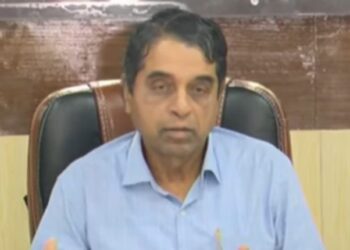
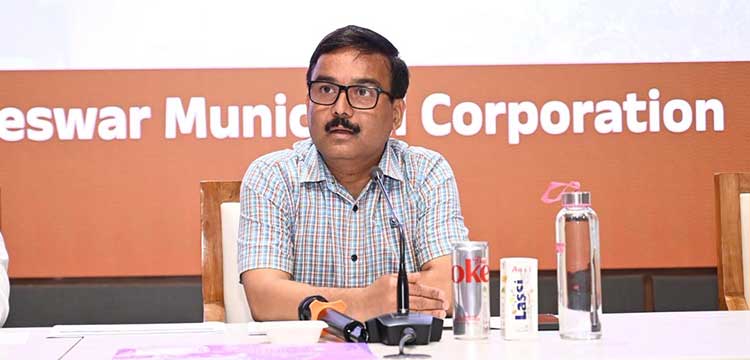
A review meeting headed by S.B. Joshi, Principal Secretary of the Election Commission of India, evaluated the progress of the ongoing revision exercise, with an emphasis on creating an accurate, inclusive, and up-to-date electoral roll.
During the meeting, Joshi discussed the status of Special Intensive Revision activities in Assembly Constituencies 112, 113, and 114 with the respective Electoral Registration Officers (EROs) and Assistant Electoral Registration Officers (AEROs). The review examined enumeration form distribution, voter data digitization, and program implementation at the field level.
Officials were urged to guarantee that the electoral process remains transparent and robust, with no qualified voter being excluded from the rolls. They were also requested to complete the revision exercise within the specified time frame.
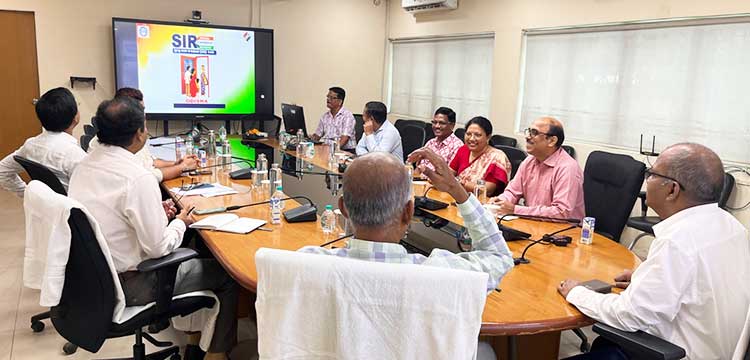
The meeting was attended by BMC Commissioner Chanchal Rana, Deputy Chief Electoral Officer Laxmiprasad Sahu, Additional Commissioners Shubhendu Kumar Sahu and Kailash Chandra Das, EROs, and other electoral authorities.
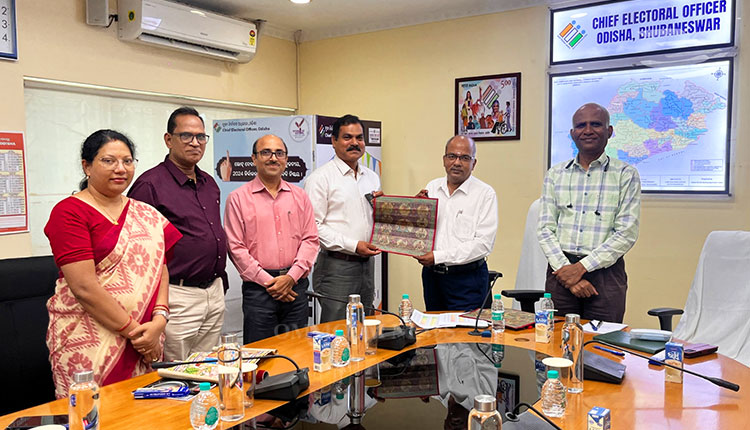
In a related event, Maharashtra Chief Electoral Officer S. Choklingam paid a visit to the office of Odisha’s Chief Electoral Officer to learn about the state’s implementation of the Special Intensive Revision program.
At a high-level meeting convened by Odisha Chief Electoral Officer R.S. Gopalan, Choklingam evaluated Odisha’s revision exercise procedures from planning to field execution.
The Maharashtra CEO reportedly praised Odisha’s field-level arrangements, the efficient distribution and collecting of enumeration forms, the digitization of voter data, and the state’s advanced monitoring system.
According to official numbers, enumeration forms were distributed to 99.44 percent of Odisha voters, totaling 3,32,13,393 electors. Of these, data for 2,20,61,739 voters, or 66.05 percent, has already been digitised.
Officials said Odisha’s experience and best practices in administering the Special Intensive Revision programme could be valuable as a model for future electoral procedures in other states.
Additional Chief Electoral Officer Sushant Kumar Mishra, Joint CEO Gopinath Kuonr, Finance Advisor Sanjay Kumar Lugun, Deputy CEO Anamika Singh, and other top officers also attended the meeting.