





 Finance
The six-member Monetary Policy Committee (MPC) of the Reserve Bank of India (RBI) maintained the key policy rate, the repo rate, at 5.5% on Wednesday. Additionally, the MPC maintained its neutral policy position. The RBI kept its prediction for real gross domestic product (GDP) growth for the current year at 6.5%, even though the inflation estimate for FY26 was reduced to 3.1%.
RBI keeps key rate unchanged
In a unanimous decision, the Monetary Policy Committee (MPC) maintained the repo rate at 5.5%.
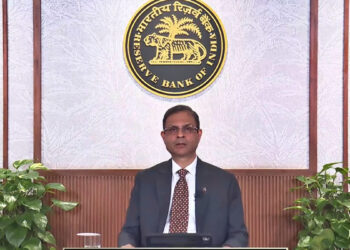
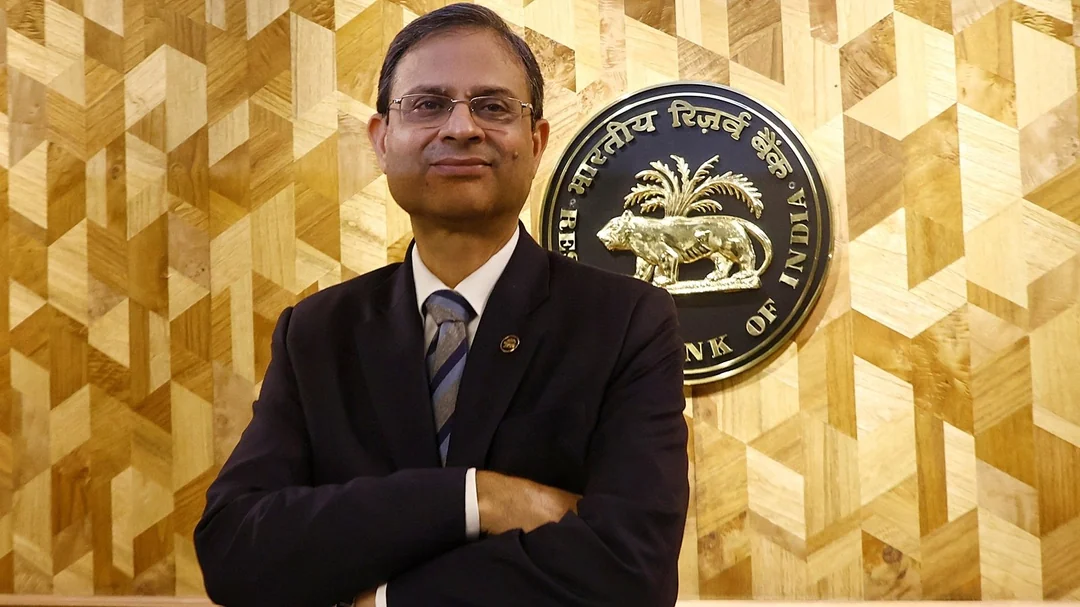
RBI Governor Sanjay Malhotra said the global climate continues to be tough. Geopolitical unpredictability and financial market volatility have partly subsided from their recent highs, but trade negotiation difficulties still exist, he said.
According to our judgment, domestic growth is still robust and is generally changing. He noted that fixed investment, bolstered by strong government capital expenditures, and private consumption, bolstered by rural demand, continue to stimulate economic activity.
“The current macroeconomic conditions, outlook and uncertainties call for continuation of the policy repo rate of 5.5 per cent and wait for further transmission of the front-loaded rate cuts to the credit markets and the broader economy. Accordingly, the MPC unanimously voted to keep the repo rate unchanged,” Malhotra said while announcing the policy.
The neutral policy stance was likewise maintained by the six-member rate-setting panel.
The MPC meeting took place as headline inflation moderated and trade tariff and geopolitical situations became more unclear.
RBI’s GDP and inflation projections for FY26
Despite headwinds emanating from prolonged geopolitical tensions and trade-related uncertainties, the RBI maintained the real GDP growth projection at 6.5 per cent for FY26.
“As for the growth outlook, the above normal southwest monsoon, lower inflation, rising capacity utilization and congenial financial conditions continue to support domestic economic activity,” RBI Governor said.
The supportive monetary, regulatory and fiscal policies including robust government capital expenditure should also boost demand, he said.
“Growth has held up well with some pick-up expected in the coming festive season and is evolving in line with our assessment of 6.5 per cent for 2025-26,” Malhotra said.
Prospects of external demand, however, remain uncertain amid ongoing tariff announcements and trade negotiations. “The headwinds emanating from prolonged geopolitical tensions, persisting global uncertainties, and volatility in global financial markets pose risks to the growth outlook,” he said.
The RBI lowered the forecast for consumer price index (CPI) inflation for FY26 to 3.1 per cent compared to the earlier projection of 3.7 per cent.
According to Malhotra, the prognosis for inflation in FY26 has improved since June. This moderation has been facilitated by large positive base effects, the southwest monsoon’s steady development, robust kharif sowing, sufficient reservoir levels, and comfortable buffer inventories of foodgrains, he said.
According to year-over-year increases in the all-India consumer price index (CPI), headline inflation fell from 2.8% in May to 2.1% in June 2025, the lowest level since January 2019. For the seventh straight month, June saw retail inflation stay below the 4% objective.
Impact on lending rates
All external benchmark lending rates (EBLR) associated with the repo rate will not be reduced down because the RBI maintained the repo rate at 5.5%. On loans that are based on the marginal cost of fund-based lending rate (MCLR), lenders have the authority to change their interest rates.
Source:IE